How to Choose a Sustainable Electric Vehicle Charger for Your Home (2027)
Choosing an EV charger for your home in 2027 involves more than just picking a plug. You need a system that works with your car, your home's electrical setup, and your goals for sustainability and cost savings. This guide breaks down the practical steps and considerations for making an informed choice.
1. Understand Charger Levels and Power Needs
Home EV chargers come in two main types: Level 1 and Level 2. For sustainability and practicality, focus on Level 2.
- Level 1 Chargers: These plug into a standard 120V wall outlet. They add about 2-5 miles of range per hour. They are slow, often taking 12-24 hours for a full charge, and are not efficient for daily use if you drive more than 30 miles a day. They use minimal electricity but are impractical for most EV owners.
- Level 2 Chargers: These use a 240V circuit, similar to an electric clothes dryer. They add 20-60 miles of range per hour. This means a full charge overnight (6-10 hours) for most EVs. The average cost for a Level 2 EV charger (240V, 32-48 amps) in 2026, including professional installation, ranges from $1,200 to $2,800. This price depends heavily on electrical panel upgrades and wiring complexity.
2. Prioritize Smart Charging Features
Sustainability in EV charging largely comes down to when and how you charge. Smart chargers give you control. As of Q3 2026, over 65% of new Level 2 home EV chargers sold in North America are Wi-Fi enabled, allowing for smart charging features.
Look for chargers with:
- Wi-Fi Connectivity: This is essential for remote control, scheduling, and energy monitoring.
- Scheduling: This lets you set charging times to coincide with off-peak electricity rates. The U.S. Department of Energy estimates that charging an EV at home during off-peak hours can reduce electricity costs by 30-50% compared to peak-hour charging, with off-peak rates averaging $0.10-$0.15 per kWh in many regions. This directly impacts your electricity bill.
- Energy Monitoring: The charger should track how much electricity it uses. This helps you understand your consumption and identify potential issues.
- Load Management: If you have other high-draw appliances or plan for a second EV, a charger with load management can prevent tripping your main breaker by dynamically adjusting power delivery.
- Integration with Home Energy Management Systems (HEMS) or Solar: This is where true sustainability shines. A charger that can communicate with your solar inverter or HEMS can prioritize charging when your solar panels generate excess power, or when grid carbon intensity is low.
3. Assess Your Home's Electrical Infrastructure
Before you buy, you need to know if your home can handle a Level 2 charger. This is a critical step that often leads to unexpected costs.
- Electrical Panel Capacity: A Level 2 charger requires a dedicated 240V circuit. A 32-amp charger needs a 40-amp breaker, and a 48-amp charger needs a 60-amp breaker. Check your main electrical panel's total amperage (e.g., 100-amp, 200-amp service). If your panel is old or already near its limit, you might need an expensive panel upgrade, which can add $1,000-$3,000 to the total installation cost.
- Wiring Path: The distance from your electrical panel to where you want to install the charger matters. Longer runs with thicker gauge wire cost more.
- Permits and Professional Installation: Always use a licensed electrician. They ensure safety, compliance with local codes, and can advise on panel upgrades. Many local jurisdictions require permits for EV charger installations.
4. Consider Efficiency and Embodied Carbon
While the operational efficiency of EV chargers is generally high, it's worth noting.
- Charger Efficiency: The average efficiency of modern Level 2 EV chargers (AC to DC conversion) is between 90% and 95%. This means 5-10% of electricity is lost as heat during the charging process. While this loss is small, choosing a more efficient model (e.g., 95% vs. 90%) can save a few dollars over a year.
- Embodied Carbon: The embodied carbon footprint of manufacturing a typical 7.7 kW Level 2 EV charger is approximately 150-250 kg CO2e, primarily from materials like copper and aluminum. While you can't directly control this, choosing a durable, long-lasting charger from a reputable brand reduces the need for premature replacement, thus avoiding additional embodied carbon.
5. Integration with Renewable Energy (Solar)
If you have a home solar system, or plan to install one, integrating your EV charger is a major step towards sustainable transportation.
- Solar-Aware Charging: Some advanced chargers and HEMS can detect when your solar panels are generating surplus electricity. They can then prioritize charging your EV during these periods, effectively powering your car directly from the sun. This maximizes your self-consumption of solar energy and reduces reliance on grid electricity, especially during peak hours.
- Battery Storage Integration: If you have a home battery (like a Tesla Powerwall), some systems can be configured to charge your EV from the battery, which was in turn charged by your solar panels. This offers even greater energy independence.
6. Future-Proofing and Compatibility
Technology evolves quickly. Choose a charger that won't become obsolete in a few years.
- J1772 Connector: Almost all EVs in North America (except Tesla, which uses an adapter) use the J1772 connector. Ensure your charger has this standard connector. Tesla vehicles come with a J1772 adapter, so a J1772 charger works for them too.
- Software Updates: Look for brands that offer over-the-air (OTA) software updates. This ensures your charger stays current with new features, bug fixes, and potentially new grid communication protocols.
- Open Standards: Chargers that support open communication protocols (like OCPP) are more likely to integrate with future HEMS or utility demand-response programs.
7. Warranty and Customer Support
A good warranty and reliable customer support are important for any appliance, especially one that costs over $1,000.
- Warranty Length: Most reputable chargers offer a 3-year warranty. Some premium brands might offer 5 years.
- Customer Service: Check online reviews for the manufacturer's customer service responsiveness. A charger is a critical piece of infrastructure; you want support if something goes wrong.
Data Comparison: Popular Level 2 Home EV Chargers (2026 Estimates)
| Feature | ChargePoint Home Flex (48A) | Wallbox Pulsar Plus (48A) | Enel X JuiceBox 48 (48A) | Emporia EV Charger (48A) |
|---|---|---|---|---|
| Max Amperage | 48A (11.5 kW) | 48A (11.5 kW) | 48A (11.5 kW) | 48A (11.5 kW) |
| Connector | J1772 | J1772 | J1772 | J1772 |
| Wi-Fi Enabled | Yes | Yes | Yes | Yes |
| Smart Features | Scheduling, Energy Mgmt | Scheduling, Energy Mgmt | Scheduling, Energy Mgmt | Scheduling, Energy Mgmt |
| ENERGY STAR Cert. | Yes | Yes | Yes | Yes |
| Approx. Price (Unit) | $750 | $650 | $700 | $550 |
| Solar Integration | Via HEMS/API | Via HEMS/API | Via HEMS/API | Via Emporia Vue HEMS |
| Warranty | 3 years | 3 years | 3 years | 3 years |
| Cable Length | 23 ft | 25 ft | 25 ft | 24 ft |
Note: Prices are for the unit only and do not include installation costs, which can add $500-$2,000+ depending on your home's electrical system.
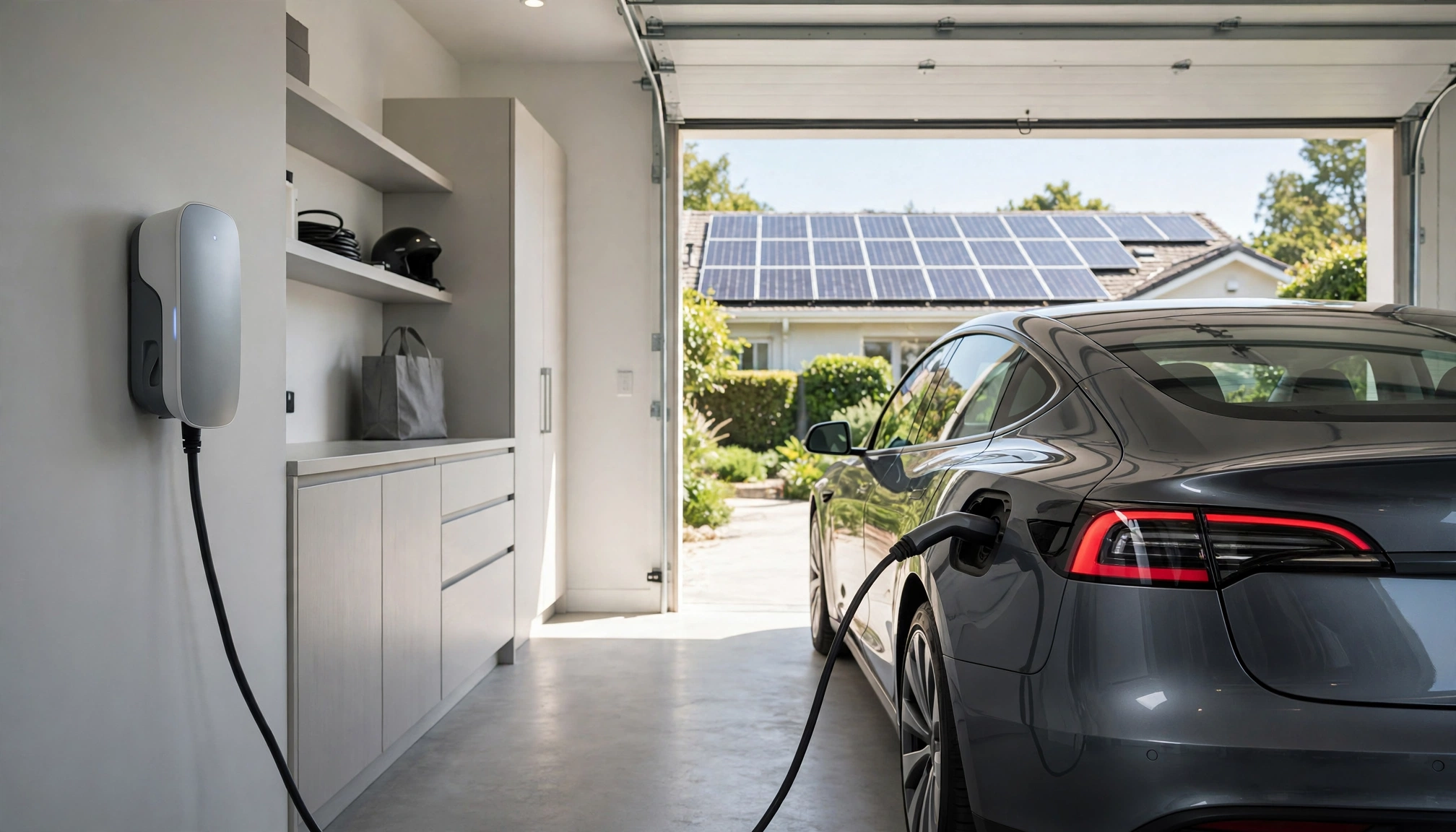
An electric vehicle charging in a home garage, with a solar panel array visible on the roof in the background.
Final Verdict & Practical Takeaways
Choosing a sustainable EV charger means looking beyond the initial purchase price. It involves understanding your home's electrical limits, leveraging smart technology for cost savings, and considering how the charger integrates with broader renewable energy efforts.
- Go Level 2, 32-48 Amps: This is the sweet spot for daily use and future-proofing.
- Demand Smart Features: Wi-Fi, scheduling, and energy monitoring are non-negotiable for managing costs and optimizing charging times.
- Get Professional Electrical Assessment: This prevents costly surprises and ensures safety. Budget $1,200-$2,800 for charger and installation.
- Prioritize ENERGY STAR: This indicates efficiency and often includes smart capabilities.
- Think Solar Integration: If you have or plan for solar, choose a charger that can work with your system to maximize self-consumption of renewable energy.
- Check Warranty and Support: A 3-year warranty is standard; good customer service is invaluable.
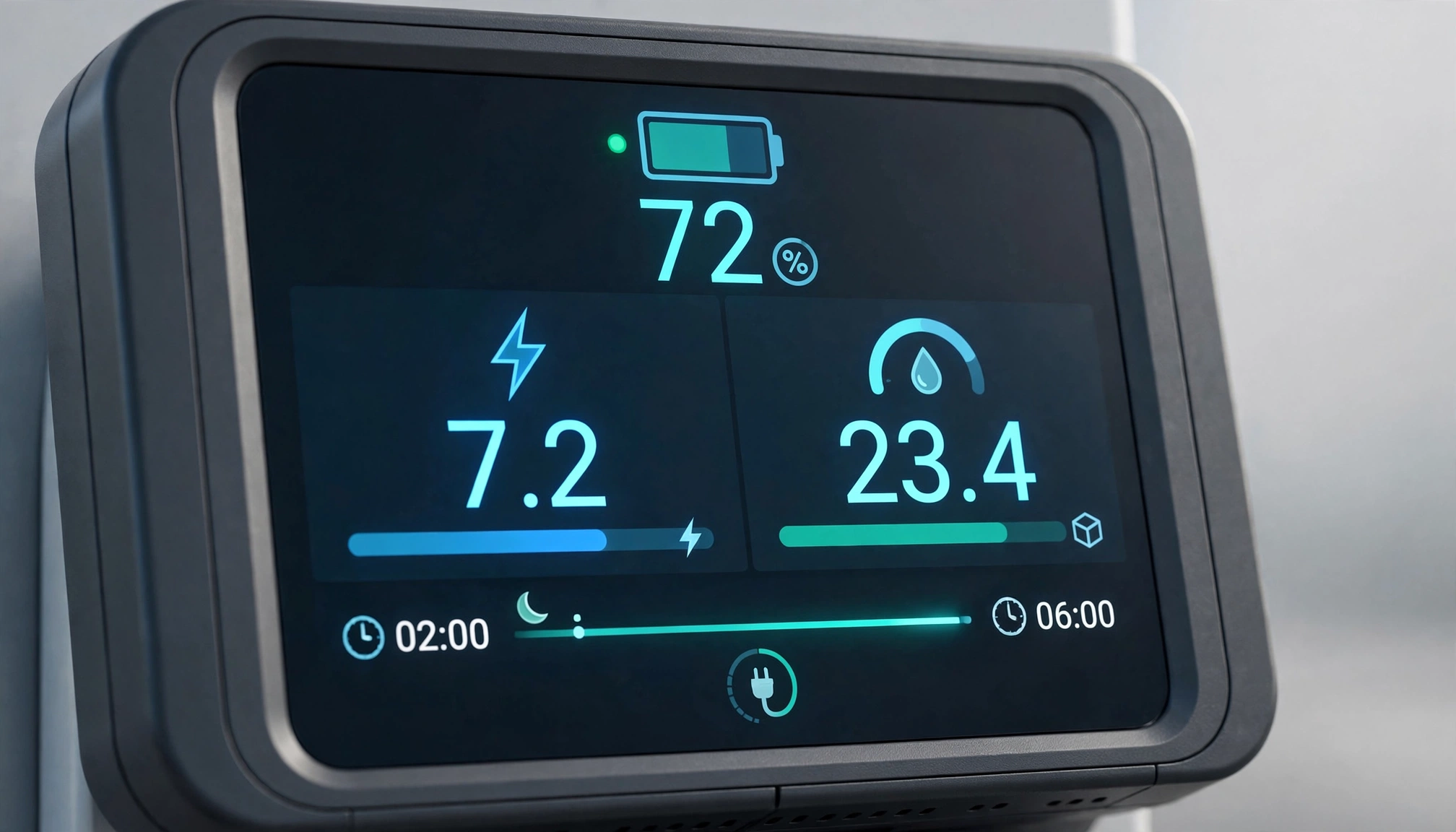
A close-up of a smart EV charger's display showing charging status, energy consumption data, and scheduled charging times.
Frequently Asked Questions
Q1: Will a Level 2 charger significantly increase my electricity bill?
A Level 2 charger will increase your electricity consumption, but the impact on your bill depends on your driving habits and how you charge. If you drive an average of 40 miles daily, you might add 12-15 kWh to your daily usage. By using smart charging features to charge during off