What to Look For in a Smart TV: A Buying Guide for Small Apartments (2026)
Understanding Your Space: Size and Viewing Distance
The biggest mistake people make in small apartments is buying a TV that is too large. A massive screen in a tiny room creates an uncomfortable, overwhelming viewing experience. In 2026, you do not need a huge TV to get a great picture.
Optimal Screen Size
For most small apartments, a TV between 32 and 43 inches is ideal.
- 24-32 inches: This size works well for very small studios, kitchens, or bedrooms where you sit close to the screen, typically 2-4 feet away.
- 32-43 inches: This is the sweet spot for most living rooms in small apartments. It offers a good balance of screen real estate and manageable footprint.
Wall Mounting vs. Stand
Small apartments benefit significantly from wall-mounted TVs. This frees up valuable surface space on TV stands or dressers. Most modern smart TVs are VESA compliant, meaning they have standard mounting holes on the back. Check the TV's specifications for its VESA pattern (e.g., 200x200mm) and weight to ensure you buy the correct wall mount.
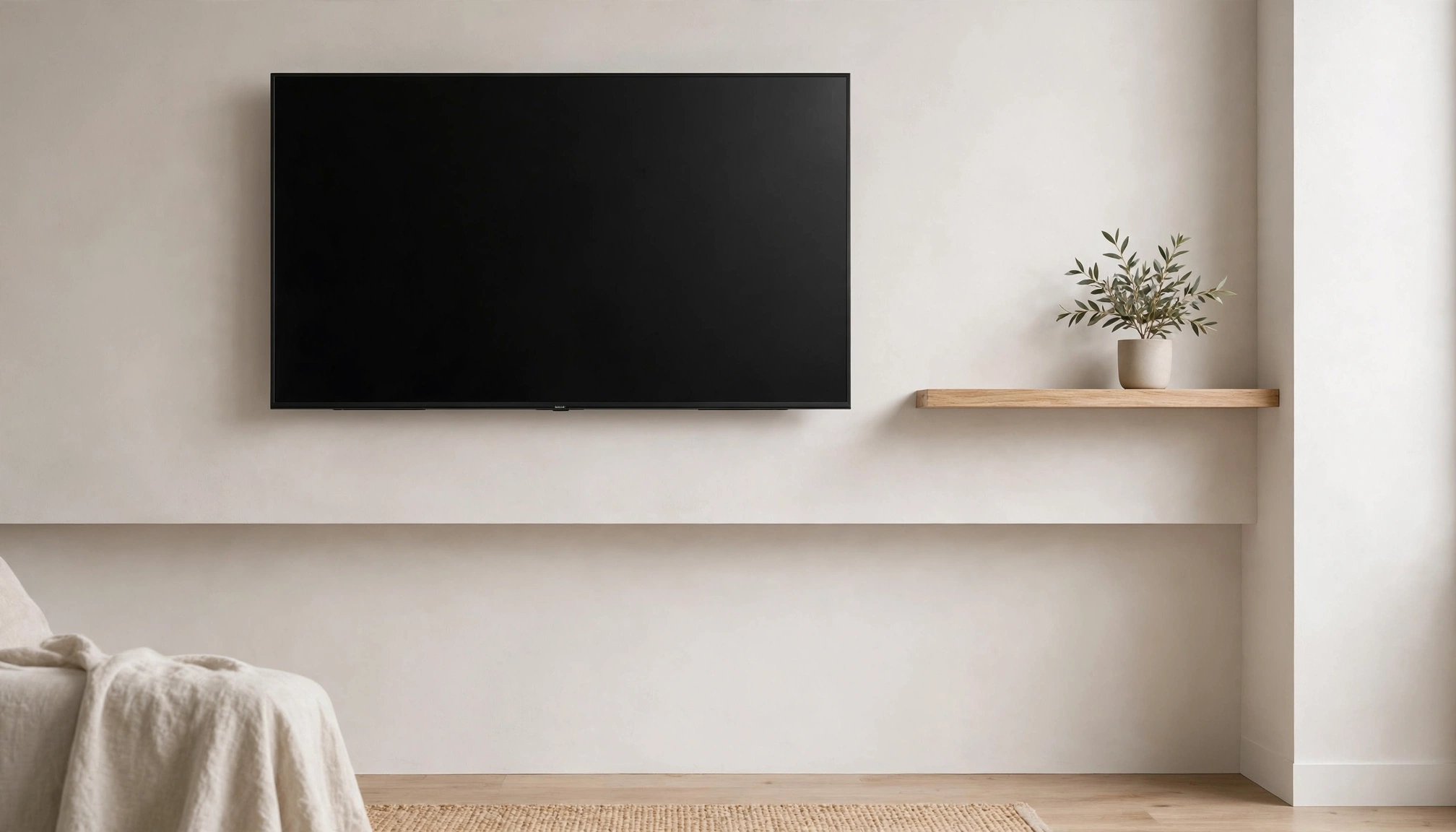
A sleek 43-inch smart TV wall-mounted in a modern, minimalist small apartment living room, showing ample space underneath.
Picture Quality: Don't Compromise on Clarity
The misconception that smaller TVs lack advanced features is outdated. In 2026, many compact smart TVs offer premium panel technologies.
4K Resolution
Always opt for a 4K (Ultra HD) resolution. Even on a 32-inch screen, the increased pixel density makes a noticeable difference in sharpness and detail, especially when viewing high-quality content or sitting closer. The average 32-inch 4K Smart TV (QLED/Mini-LED) in 2026 retails for approximately $380-$550 USD. This is a 12% increase from 2022 models, reflecting the advanced panel technology now available in smaller sizes.
Panel Technology: QLED vs. OLED vs. Mini-LED
- QLED (Quantum Dot LED): These TVs use quantum dots to enhance color and brightness. They offer excellent brightness, vibrant colors, and good contrast. QLEDs are generally more affordable than OLEDs and perform well in brightly lit rooms.
- OLED (Organic Light Emitting Diode): OLED TVs offer perfect blacks, infinite contrast, and wide viewing angles because each pixel emits its own light. This results in stunning picture quality, especially in darker rooms. However, they are typically more expensive and can be less bright than QLEDs.
- Mini-LED: This is an evolution of QLED, using thousands of tiny LEDs for backlighting. This allows for more precise local dimming zones, leading to much better contrast and black levels than traditional QLEDs, approaching OLED quality while maintaining high brightness. Many premium small TVs now use Mini-LED.
HDR (High Dynamic Range)
Look for HDR support (HDR10, HLG, Dolby Vision, HDR10+). HDR significantly expands the range of colors and contrast, making images more lifelike. Most 4K TVs in 2026 include some form of HDR. Dolby Vision and HDR10+ are dynamic HDR formats, meaning they optimize picture quality scene-by-scene, offering the best experience.
Smart Features and Operating Systems
A "smart" TV means it connects to the internet and runs apps like Netflix, Hulu, and YouTube without needing an external streaming device. The operating system (OS) is crucial for a smooth user experience.
Popular Smart TV Platforms
- Google TV (Android TV): This platform offers a vast app library, deep integration with Google services (Google Assistant, Chromecast built-in), and a personalized content discovery interface. It is generally responsive and user-friendly.
- Roku TV: Known for its simplicity and extensive app selection, Roku TV is very easy to navigate. It has a clean interface and works well for users who want straightforward access to streaming services.
- webOS (LG) & Tizen (Samsung): These proprietary platforms are polished, fast, and offer unique features like LG's Magic Remote or Samsung's SmartThings integration. They are excellent choices if you prefer a specific brand.
- Fire TV (Amazon): Integrates well with Amazon services and Alexa voice control. It offers a good selection of apps and a user-friendly interface.
Performance and Speed
A common complaint with cheaper smart TVs is slow performance and app crashes. This usually stems from an underpowered processor and insufficient RAM. Look for TVs with a quad-core processor and at least 2GB of RAM for a smooth experience. Read reviews specifically mentioning the TV's responsiveness and app loading times. Consumer Reports provides detailed reviews on smart TV performance.
Audio Quality: A Key Consideration for Small Spaces
In a small apartment, you often do not have space for a dedicated soundbar or a full home theater system. This makes the TV's built-in audio quality more important.
Many 2026 small-apartment-focused smart TVs feature integrated soundbars or enhanced audio processing, offering 20-30W total output. This is a significant improvement over older models that often had weak 10-15W speakers. Look for features like:
- Dolby Atmos/DTS:X support: While true immersive surround sound needs more speakers, these technologies can create a more spacious and enveloping audio experience through the TV's built-in speakers, especially for dialogue.
- Front-firing speakers: Speakers that face the viewer generally sound better than down-firing or rear-firing speakers, which can muffle sound.
- Higher wattage output: A TV with 20W or more total audio output will generally sound fuller and louder.
Connectivity and Ports
Even in a small apartment, you need enough ports for your devices.
- HDMI Ports: Aim for at least three HDMI ports. You will likely need one for a game console, one for a cable/satellite box (if you have one), and one for a Blu-ray player or other device. Look for HDMI 2.1 if you plan to connect a modern game console (PS5, Xbox Series X) for 4K 120Hz gaming, though this is less critical for smaller screens.
- USB Ports: One or two USB ports are useful for connecting external storage for media playback or powering streaming sticks.
- Ethernet Port: While Wi-Fi is standard, a wired Ethernet connection provides a more stable and faster internet connection, which is beneficial for 4K streaming.
- Optical Audio Out (TOSLINK): This is essential if you plan to connect an older soundbar or audio receiver.
- Bluetooth: Useful for connecting wireless headphones, which is great for late-night viewing without disturbing neighbors.
Energy Efficiency
Modern 24-inch to 43-inch smart TVs consume an average of 25-60 watts during operation. This is significantly less than the 80-150 watts of larger 65-inch models. Look for an Energy Star certification. This label indicates the TV meets strict energy efficiency guidelines, saving you money on electricity bills and reducing your environmental footprint.
Key Features Comparison Table (2026 Small Apartment Smart TVs)
| Feature | Budget (Under $400) | Mid-Range ($400-$700) | Premium ($700+) |
|---|---|---|---|
| Screen Size | 32-40 inches | 32-43 inches | 32-43 inches |
| Resolution | 4K UHD (some 1080p in 32") | 4K UHD | 4K UHD |
| Panel Type | LED (Direct Lit or Edge Lit) | QLED, Mini-LED | OLED, Mini-LED with advanced local dimming |
| HDR Support | HDR10, HLG | HDR10, HLG, Dolby Vision, HDR10+ | Dolby Vision IQ, HDR10+ Adaptive |
| Smart Platform | Roku TV, Fire TV, basic Android TV | Google TV, webOS, Tizen, advanced Roku TV | Latest Google TV, webOS, Tizen with AI enhancements |
| Processor | Dual-core, 1GB RAM (can be slow) | Quad-core, 2GB RAM (smooth) | Quad-core/Hexa-core, 3-4GB RAM (very fast) |
| Audio Output | 10-15W (basic stereo) | 20-30W (enhanced stereo, some virtual surround) | 30-40W+ (integrated soundbar, Dolby Atmos processing) |
| HDMI Ports | 2-3 (often HDMI 2.0) | 3-4 (mix of HDMI 2.0 and 2.1) | 3-4 (mostly HDMI 2.1) |
| Connectivity | Wi-Fi 5, 1-2 USB | Wi-Fi 5/6, Bluetooth 5.0, 2 USB, Ethernet | Wi-Fi 6E, Bluetooth 5.2, 2-3 USB, Ethernet |
| Voice Assistant | Basic integration (Roku Voice, Fire TV Voice) | Google Assistant, Alexa (full integration) | Advanced Google Assistant/Alexa, far-field mics |
| Energy Rating | Often standard | Energy Star certified | Energy Star certified |
| Typical Price | $250-$400 | $400-$700 | $700-$1200+ |
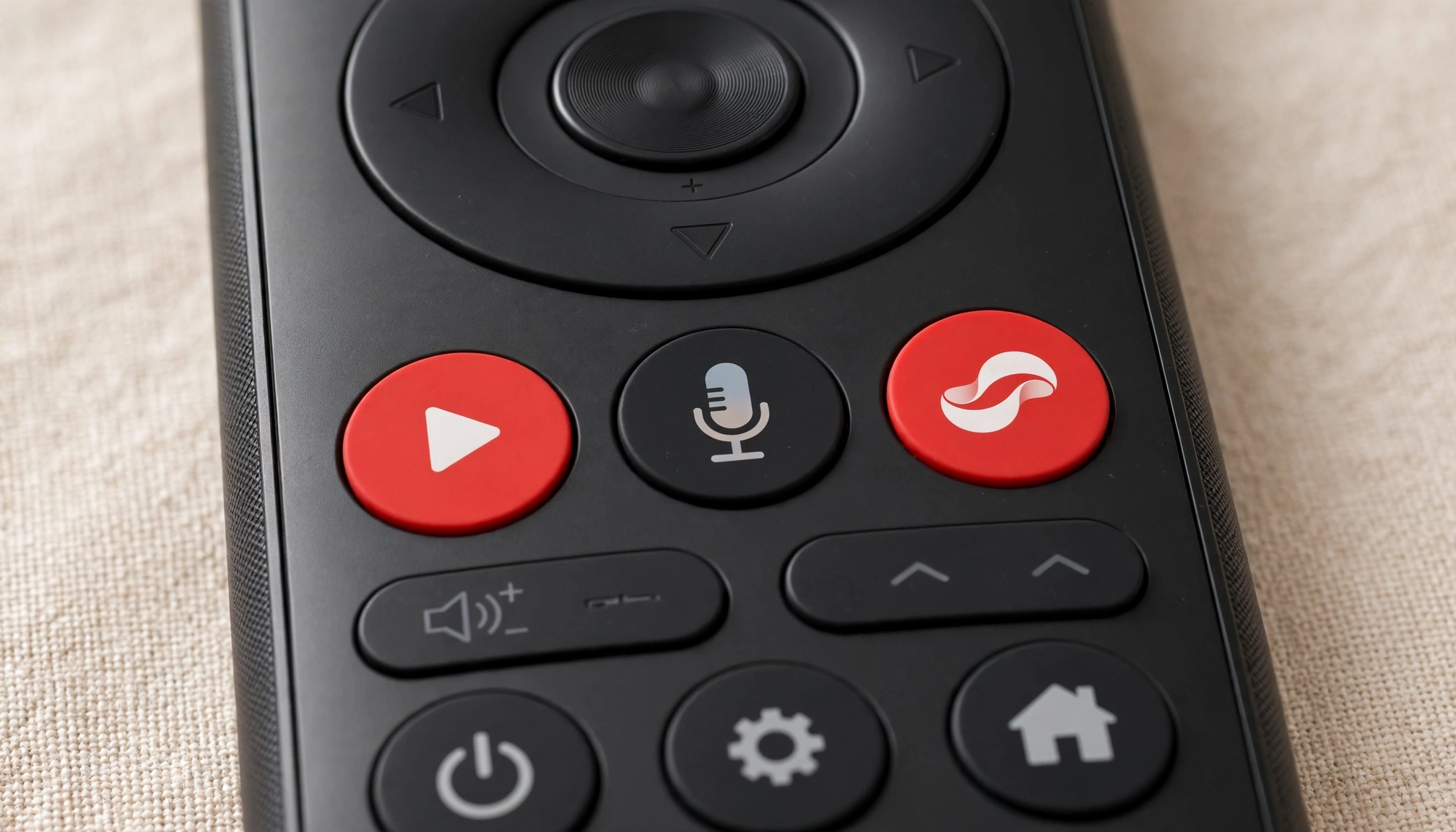
A close-up of a smart TV remote control with prominent buttons for Netflix, YouTube, and a voice assistant, indicating ease of use.
Final Verdict & Practical Takeaways
Choosing a smart TV for a small apartment in 2026 means focusing on smart compromises and maximizing value. You do not need the largest screen, but you should not settle for poor picture quality or a sluggish smart experience.
- Size Matters (But Smaller is Better):