Best Electric Bikes for Urban Commuting Under $1500 in 2026
Finding a reliable electric bike for city commutes without breaking the bank is entirely possible in 2026. While the average price for a new urban e-bike is around $2,150, significant advancements in battery tech and competitive manufacturing mean you can get a solid, feature-rich model for under $1500. This guide cuts through the noise to help you pick the best option for your daily grind, considering range, weight, motor power, and crucial practical features.
What to Expect from an E-Bike Under $1500
When you're shopping in this price bracket, you're generally looking at Class 1 or Class 2 e-bikes. These bikes have a maximum assisted speed of 20 mph (32 km/h), which is perfectly adequate for most urban environments and complies with regulations in most US states, as outlined by the NHTSA's e-bike classifications.
You'll typically find a 250W to 500W rear hub motor. This motor type is cost-effective and provides enough power to tackle city inclines up to a 10-12% grade without excessive strain. Battery technology has improved, with many entry-level urban e-bikes now offering 35-50 miles (56-80 km) on a single charge. This is a 15% increase in range compared to 2025 models at similar price points, which directly addresses the common problem of batteries dying mid-commute.
Weight is a factor. E-bikes in this category typically weigh between 45 lbs (20.4 kg) and 60 lbs (27.2 kg). This weight comes from the battery and the often more robust, but heavier, aluminum frames used to keep costs down. If you live in an apartment building without ground-floor storage, this weight can be a real challenge.
Key Features to Prioritize
When your budget is capped at $1500, every dollar counts. Here's what to focus on:
- Battery Range: Aim for at least 35 miles (56 km) of advertised range. Real-world range is always less than advertised due to factors like hills, rider weight, and headwind. A 35-mile claim usually translates to a reliable 25-30 miles (40-48 km) in mixed urban riding, which covers most daily commutes. Look for batteries from reputable manufacturers like Samsung, LG, or Panasonic cells, even if the bike brand is less known.
- Motor Power & Type: A 250W or 350W rear hub motor is standard and sufficient for flat to moderately hilly cities. If your commute involves steeper hills (over 8% grade), try to find a 500W hub motor. Mid-drive motors are rare at this price point but offer better hill-climbing and balance; if you find one, it's a bonus.
- Integrated Lights: Front and rear lights powered by the main battery are a non-negotiable safety feature for urban commuting, especially if you ride in low light. They eliminate the need for separate battery-powered lights that need constant recharging.
- Fenders and Rack: These are practical additions. Fenders keep road spray off you and your clothes, and a rear rack lets you carry a backpack, groceries, or a laptop bag without straining your back. Many bikes under $1500 include these as standard.
- Brakes: Mechanical disc brakes are common and effective. Hydraulic disc brakes offer better stopping power and less maintenance but are less common at this price. Ensure the bike has at least 160mm rotors for reliable stopping.
- Tires: Puncture-resistant tires (often with a Kevlar belt) are a huge time-saver in the city. Look for tires between 1.75 and 2.25 inches wide for a good balance of comfort and efficiency.
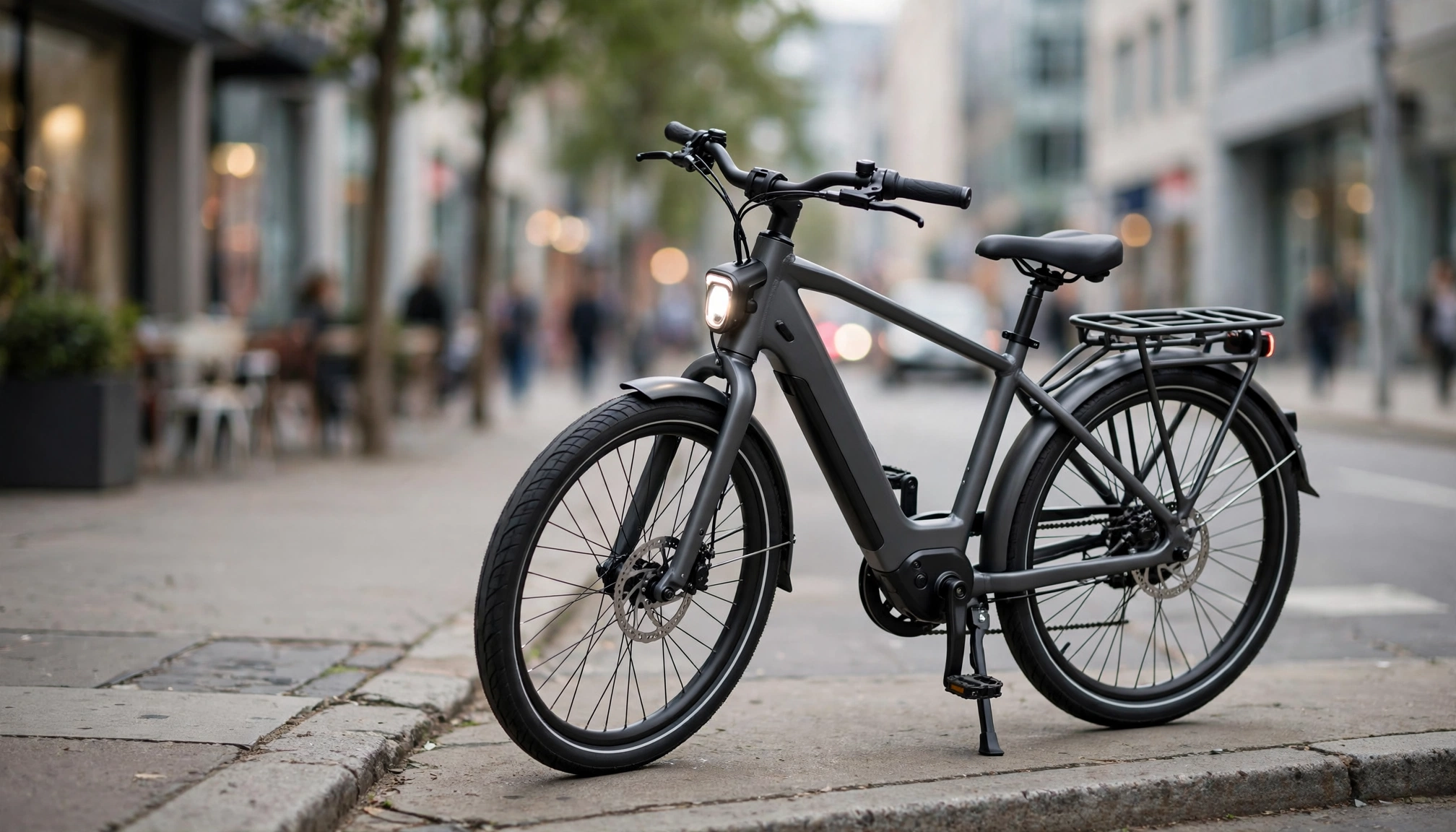
Urban commuter e-bike parked on a city street
Top Contenders Under $1500 (2026 Models)
While specific models change, these brands consistently offer strong value in the sub-$1500 category. Always check their official websites for the latest 2026 models and pricing.
1. Rad Power Bikes RadMission 1 (or equivalent 2026 model)
- Price: Often around $1,199 - $1,299
- Motor: 500W rear hub
- Range: Up to 45 miles (72 km)
- Weight: Around 48 lbs (21.8 kg)
- Why it's good: Rad Power Bikes consistently delivers solid value. The RadMission (or its successor) is a no-frills, single-speed e-bike that is light for its class and very reliable. It usually comes with integrated lights. The single-speed drivetrain simplifies maintenance, though it can be tougher on very steep hills. Rad Power Bikes has a strong support network.
2. Lectric XP Lite (or equivalent 2026 model)
- Price: Typically $799 - $899
- Motor: 300W (720W peak) rear hub
- Range: Up to 40 miles (64 km)
- Weight: 46 lbs (20.9 kg)
- Why it's good: This is a folding e-bike, which is a huge advantage if you need to carry it up stairs or store it in a small apartment. It's surprisingly peppy for its price and weight. While it lacks some features like integrated fenders and racks by default, its portability and low cost make it a strong contender for those with storage constraints. Assembly is usually minimal.
3. Aventon Pace 350.2 (or equivalent 2026 model)
- Price: Around $1,299 - $1,399
- Motor: 350W rear hub
- Range: Up to 40 miles (64 km)
- Weight: 49 lbs (22.2 kg)
- Why it's good: Aventon offers a more refined ride feel and often better component quality than some competitors at this price. The Pace 350.2 is comfortable, has a good upright riding position, and includes integrated lights. It's a solid all-rounder for city riding.
4. Ride1Up Roadster V2 (or equivalent 2026 model)
- Price: Around $1,095 - $1,195
- Motor: 500W rear hub (geared)
- Range: Up to 30-40 miles (48-64 km)
- Weight: 33 lbs (15 kg)
- Why it's good: This bike stands out for its exceptionally low weight, making it much easier to carry up stairs. It achieves this by using a smaller battery and a more minimalist design (no suspension, single-speed). If weight is your absolute top priority and your commute is relatively flat, this is a strong choice. It looks more like a regular bike, which some prefer.
Comparison Table: Key Urban E-Bike Features Under $1500
| Feature | RadMission 1 (example) | Lectric XP Lite (example) | Aventon Pace 350.2 (example) | Ride1Up Roadster V2 (example) |
|---|---|---|---|---|
| Price (approx.) | $1,249 | $849 | $1,349 | $1,145 |
| Motor Power | 500W Rear Hub | 300W Rear Hub | 350W Rear Hub | 500W Rear Hub |
| Advertised Range | 45 miles (72 km) | 40 miles (64 km) | 40 miles (64 km) | 30-40 miles (48-64 km) |
| Weight | 48 lbs (21.8 kg) | 46 lbs (20.9 kg) | 49 lbs (22.2 kg) | 33 lbs (15 kg) |
| Integrated Lights | Yes | No (optional) | Yes | No |
| Fenders/Rack | Optional | No (optional) | Optional | No |
| Folding | No | Yes | No | No |
| Gears | Single Speed | 5-Speed | 7-Speed | Single Speed |
Note: Prices and specifications are for illustrative purposes based on typical 2026 models and can vary. Always check the manufacturer's current offerings.
The Federal E-Bike Tax Credit: A Game Changer
As of October 2026, the federal tax credit for new e-bike purchases is still active. It offers up to 30% of the purchase price, capped at $900, for bikes under $4,000. This means a $1500 e-bike could effectively cost you as little as $1050 after the credit, making higher-quality options more accessible. Make sure to keep your receipt for tax purposes. You can find more details on the U.S. Department of Energy's website.
Person riding an e-bike through a city park
Assembly and Maintenance Considerations
One common user problem is difficult assembly. Many direct-to-consumer e-bikes require some assembly. Look for brands that provide clear video instructions or offer local assembly services. If you're not confident, factor in the cost of having a local bike shop assemble it (typically $75-$150).
For maintenance, e-bikes share many components with regular bicycles, so most bike shops can handle basic tune-ups. However, for electrical issues, you'll rely on the manufacturer's warranty and support. Choose brands with a good reputation for customer service and readily available spare parts. Consumer Reports often reviews e-bike reliability and customer satisfaction, which can be a good resource when making your decision, as seen in their Electric Bicycle Buying Guide.
Final Verdict & Practical Takeaways
For urban commuting under $1500 in 2026, you don't have to compromise on core functionality. You can get a reliable e-bike with a decent range (35+ miles), a capable motor (250-500W), and essential features like integrated lights.
Practical Takeaways:
- Factor in the Tax Credit: The federal tax credit can significantly lower your out-of-pocket cost, potentially allowing you to stretch your budget for a better model.
- Assess Your Commute: If you have hills, lean towards a 500W motor. If you have stairs, prioritize lighter bikes or folding models.
- Don't Skimp on Safety: Integrated lights and reliable disc brakes are non-negotiable.
- Check Local Support: Even if buying online, see if the brand has local service partners or a strong reputation for online support and warranty claims. This is