Best Compact Smart Garden System for Small Apartments 2026
Living in a small apartment often means sacrificing space for hobbies. Indoor gardening, especially, can seem like a luxury you cannot afford. However, compact smart garden systems change this. These devices let you grow herbs, leafy greens, and even some small vegetables year-round, right on your countertop. They automate lighting, watering, and nutrient delivery, making gardening accessible even if you have a black thumb or limited natural light.
This guide focuses on systems that fit well in tight spaces, consume minimal energy, and offer a good return on investment in terms of fresh produce. We evaluate models based on size, energy efficiency, ease of use, plant capacity, and overall value in 2026.
Why a Smart Garden for Apartment Living?
Traditional gardening in an apartment presents several hurdles: lack of outdoor space, insufficient natural light, and the mess of soil. Smart garden systems address these directly. They use hydroponics or aeroponics, which means no soil. Integrated LED grow lights provide the full spectrum plants need, regardless of window access. Automated pumps and timers handle watering and lighting schedules. This setup makes them ideal for kitchen counters, small shelves, or even a desk.
The market for smart indoor gardening systems is growing, projected to reach $2.5 billion globally by 2027, up from $1.8 billion in 2026. This growth means more options, but also more noise to cut through.
Key Features to Look for in 2026
When choosing a compact smart garden for a small apartment, several features matter more than others:
- Footprint: This is critical. Measure your available counter or shelf space before you buy. Most compact systems have a base roughly 10-12 inches wide and deep.
- Plant Capacity: Compact systems typically hold 6 to 12 plant pods. Six pods are usually enough for a steady supply of herbs or a small amount of lettuce for one or two people.
- Lighting: LED grow lights are standard. Look for models with adjustable light height to accommodate different plant growth stages. The lights should also have a timer function, ideally with customizable on/off cycles. Some advanced models offer dimming or specific light spectrum adjustments.
- Water Reservoir: A larger reservoir means less frequent refilling. Typical compact systems hold 1.5 to 3 liters. Expect to refill every 1-3 weeks, depending on plant type and growth stage.
- Nutrient Delivery: Most systems use liquid nutrients added to the water reservoir. Some have indicator lights or app notifications to remind you when to add more.
- Connectivity (Optional but useful): Wi-Fi enabled systems allow you to monitor water levels, light cycles, and even get reminders via a smartphone app. This is convenient if you travel or want more control.
- Noise Level: Pumps can make noise. Look for systems that market themselves as quiet or have user reviews confirming low noise output.
- Seed Pod Availability & Cost: Check the cost and variety of proprietary seed pods. Some brands offer a wider selection and better pricing than others. Seed pod kits for popular herbs and leafy greens cost between $12.99 and $19.99 for a pack of 3-9 pods.
Top Compact Smart Garden Systems for Small Apartments (2026)
We evaluated several models based on the criteria above, focusing on those that deliver consistent results without taking over your living space.
1. AeroGarden Harvest Elite '26
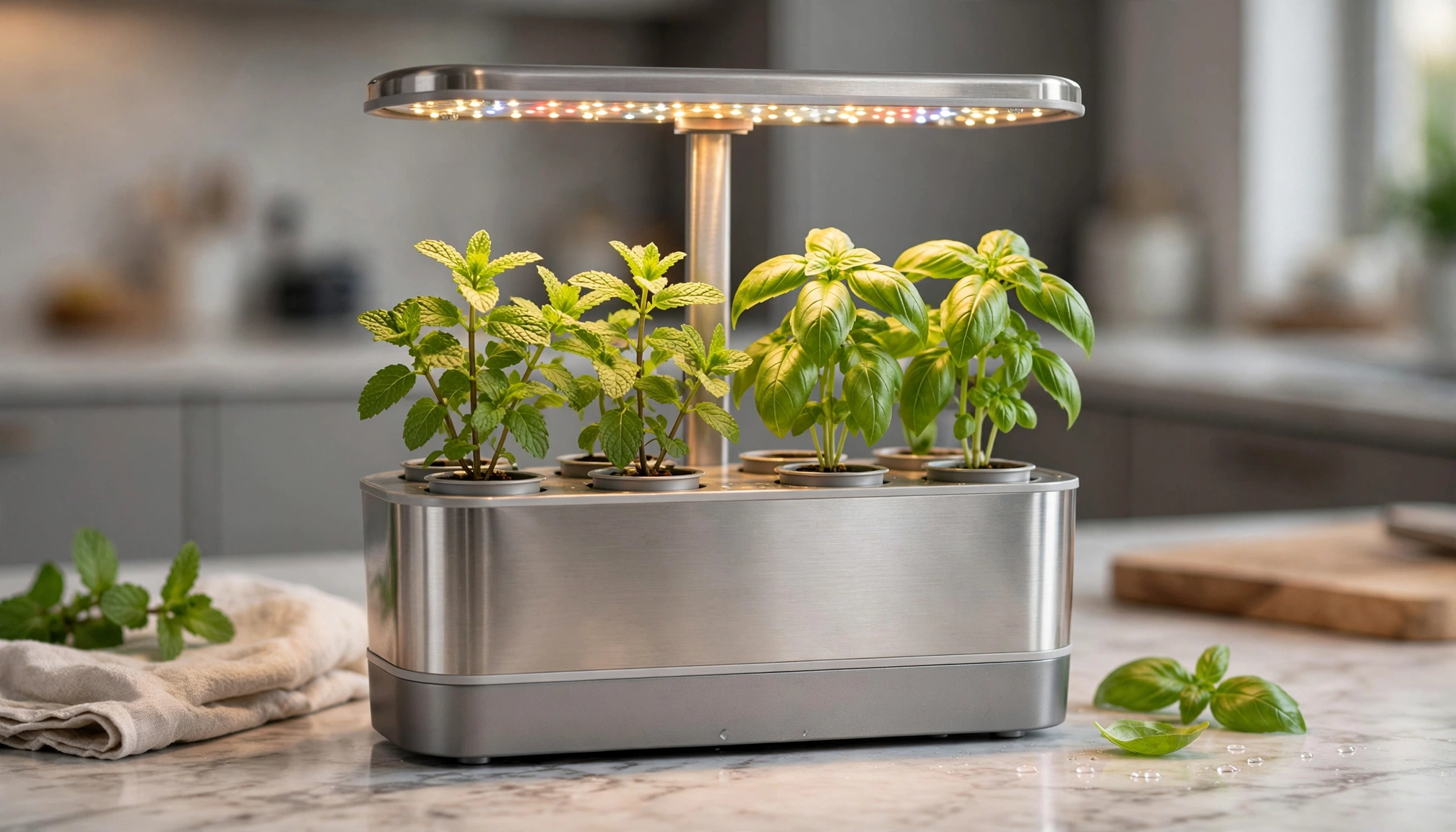
AeroGarden Harvest Elite on a kitchen counter with growing herbs
The AeroGarden Harvest Elite '26 remains a strong contender for its balance of features, reliability, and compact design. It is a 6-pod system that fits easily on most kitchen counters.
- Footprint: 11" L x 8" W x 15-34" H (height adjustable).
- Plant Capacity: 6 pods.
- Lighting: 20-watt full-spectrum LED grow light. It runs on a 15-hour on/9-hour off cycle, which is standard for most herbs and greens. The light arm extends up to 12 inches for taller plants.
- Water Reservoir: 1.2-liter capacity. Expect to refill every 7-10 days for mature plants.
- Connectivity: Wi-Fi and Bluetooth enabled. The AeroGarden app lets you monitor water levels, nutrient reminders, and adjust light cycles.
- Energy Use: Approximately 10-12 watts, costing about $0.03 per day.
- Price: $179.95 MSRP.
- Pros: Very user-friendly, good app integration, reliable performance, wide variety of seed pods available directly from AeroGarden.
- Cons: Proprietary seed pods can be more expensive long-term. The pump makes a faint hum, noticeable in very quiet rooms.
2. Click & Grow Smart Garden 3 '26
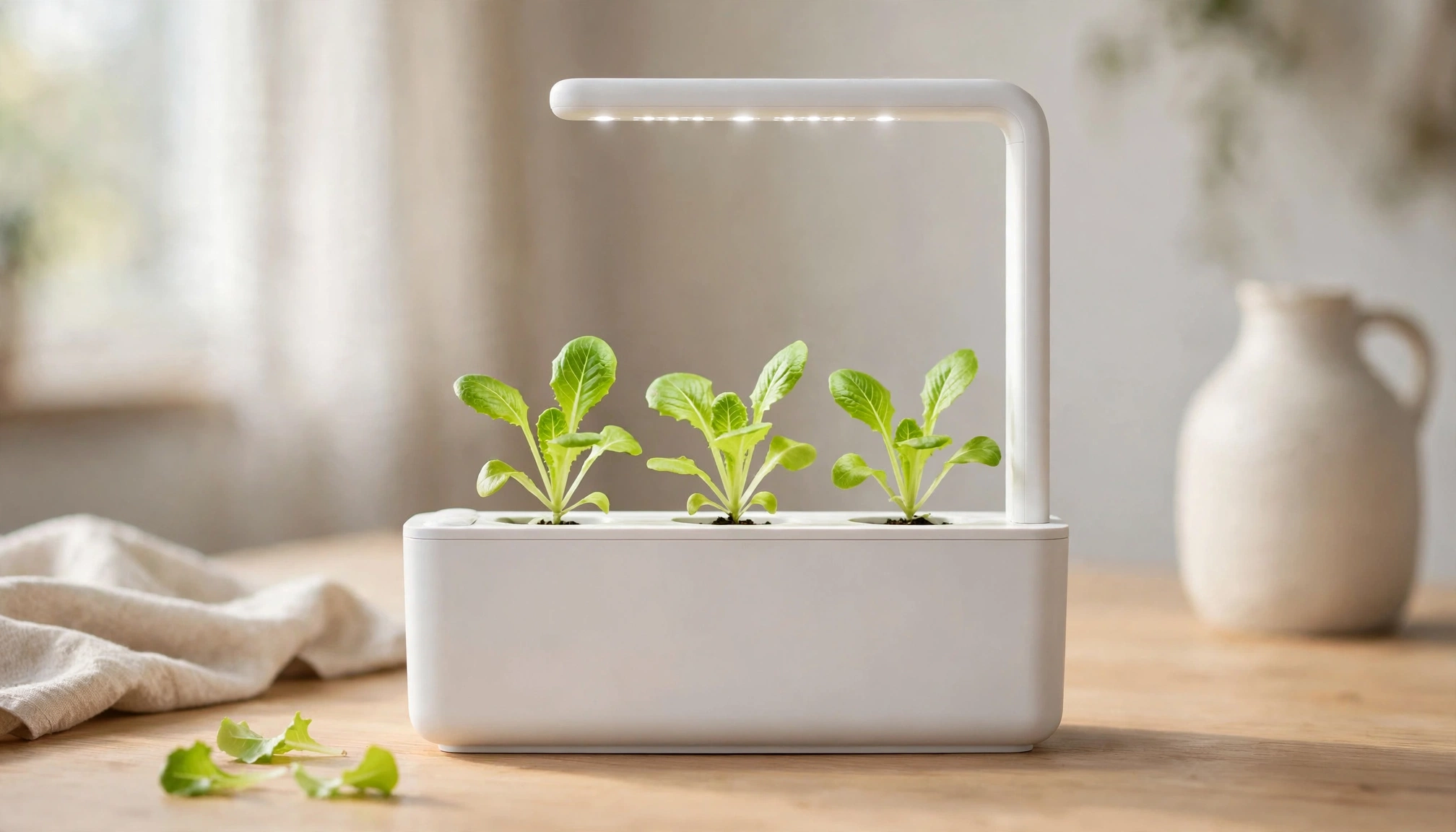
Click & Grow Smart Garden 3 with three growing lettuce plants
The Click & Grow Smart Garden 3 is an excellent choice for those prioritizing minimalist design and extreme simplicity. It is a 3-pod system, making it the most compact option on our list.
- Footprint: 12" L x 4.7" W x 13.8" H.
- Plant Capacity: 3 pods.
- Lighting: 8-watt LED grow light. It runs on a 16-hour on/8-hour off cycle. The light arm is fixed height but suitable for most herbs and leafy greens.
- Water Reservoir: 1.2-liter capacity. Refills are typically needed every 2-3 weeks.
- Connectivity: No smart app connectivity. It is a plug-and-play system.
- Energy Use: Approximately 8 watts, costing about $0.02 per day.
- Price: $99.95 MSRP.
- Pros: Extremely simple to use, very quiet operation, sleek design, low energy consumption.
- Cons: Limited to 3 pods, fixed light height limits plant variety, proprietary "Smart Soil" plant pods are required and can be pricey.
3. iDoo Hydroponics Growing System (12 Pods) '26
The iDoo system offers a larger capacity for its price point, making it a good value if you have slightly more space. This model has 12 pods.
- Footprint: 14.2" L x 10.2" W x 15-20" H (height adjustable).
- Plant Capacity: 12 pods.
- Lighting: 23-watt full-spectrum LED grow light. It has three light modes (vegetable, flower/fruit, general) and a 24-hour timer with 14/10 hour cycles.
- Water Reservoir: 4.5-liter capacity. This larger reservoir means less frequent refills, often every 3-4 weeks.
- Connectivity: No smart app connectivity. It has a basic control panel on the unit.
- Energy Use: Approximately 15-20 watts, costing about $0.04-$0.05 per day.
- Price: $129.99 MSRP.
- Pros: High plant capacity for its footprint, large water reservoir, good value for the price, includes a fan for air circulation.
- Cons: Not as aesthetically refined as AeroGarden or Click & Grow, no app control, fan can be slightly audible.
Comparison Table: Compact Smart Garden Systems 2026
| Feature | AeroGarden Harvest Elite '26 | Click & Grow Smart Garden 3 '26 | iDoo Hydroponics (12 Pods) '26 |
|---|---|---|---|
| Price (MSRP) | $179.95 | $99.95 | $129.99 |
| Plant Capacity | 6 pods | 3 pods | 12 pods |
| Footprint (LxWxH) | 11" x 8" x 15-34" | 12" x 4.7" x 13.8" | 14.2" x 10.2" x 15-20" |
| LED Wattage | 20W | 8W | 23W |
| Water Reservoir | 1.2 Liters | 1.2 Liters | 4.5 Liters |
| Energy Cost/Day | ~$0.03 | ~$0.02 | ~$0.04-$0.05 |
| Connectivity | Wi-Fi, Bluetooth | None | None |
| Light Height | Adjustable (12") | Fixed | Adjustable (5") |
| Noise Level | Low hum | Very quiet | Low fan hum |
Note: Energy costs are estimates based on a national average electricity rate of $0.16/kWh.
Addressing Common User Problems & Misconceptions
Many people believe smart gardens are entirely self-sufficient. This is a common misconception. While they automate much of the process, they still need regular attention.
- "My plants keep getting moldy." Mold often results from poor air circulation or overwatering. Ensure your apartment's ambient temperature is 68°F-75°F (20°C-24°C) and humidity is 40%-60%. Prune plants regularly to improve airflow around the base. Some systems, like the iDoo, include a small fan to help with this. If you see mold, remove affected parts and consider adding a small USB fan nearby. The USDA National Institute of Food and Agriculture (NIFA) offers resources on indoor plant health.
- "The grow lights are too bright and disrupt my sleep." This is a valid concern in small studio apartments. Most smart gardens have a fixed light cycle (e.g., 15 hours on, 9 hours off). Position the garden away from your sleeping area if possible. For systems with app control (like AeroGarden), you might be able to adjust the light cycle start time to better suit your schedule. You can also use a small curtain or screen to block the light.
- "I can't find replacement seed pods for my specific model." This is a common issue with proprietary systems. AeroGarden and Click & Grow have wide distribution, so finding their pods is usually not a problem. However, if you have a lesser-known brand, check the manufacturer's website or major online retailers for availability before buying the system. Alternatively, many systems let you use "grow anything" kits or empty baskets, allowing you to use your own seeds and growing medium (like rockwool or coco coir). This offers more flexibility and can save money in the long run.
Maintenance and Practical Tips
Even the best smart garden needs some care.
- Water Refills: Check the water level daily or every few days. Refill with fresh, filtered water when the indicator light comes on or the level drops significantly.
- Nutrient Additions: Add liquid nutrients according to the manufacturer's schedule, usually every 1-2 weeks. Do not over-fertilize.
- Pruning: Trim your plants regularly. This encourages bushier growth, prevents overcrowding, and improves air circulation, reducing the risk of mold. Harvest outer leaves first.
- Cleaning: Every 2-4 months, or between plant cycles, empty the reservoir, clean it thoroughly with warm, soapy water, and rinse well. This prevents