How to Choose an Eco-Friendly Mattress in 2026
Choosing an eco-friendly mattress today means cutting through a lot of marketing noise. Many brands claim "natural" or "green" without real substance. As someone who has pulled apart more than a few mattresses and dug into the supply chains, I can tell you that certifications are your best defense against greenwashing. You need to know what materials matter, what certifications mean, and where your money actually goes.
Understanding "Eco-Friendly" in Mattresses
"Eco-friendly" for a mattress means a few things: it uses sustainable, non-toxic materials, its production has a low environmental impact, and it does not off-gas harmful chemicals into your home. This is more than just a label; it is about verifiable standards.
The biggest misconception is that "natural" on a mattress label automatically means it is eco-friendly and free of harmful chemicals. Many "natural" mattresses still use chemical adhesives, fire retardants, or synthetic blends that undermine any environmental benefit. For example, a mattress might contain "natural latex" but still use petroleum-based glues to bind layers.
Key Materials for Eco-Friendly Mattresses
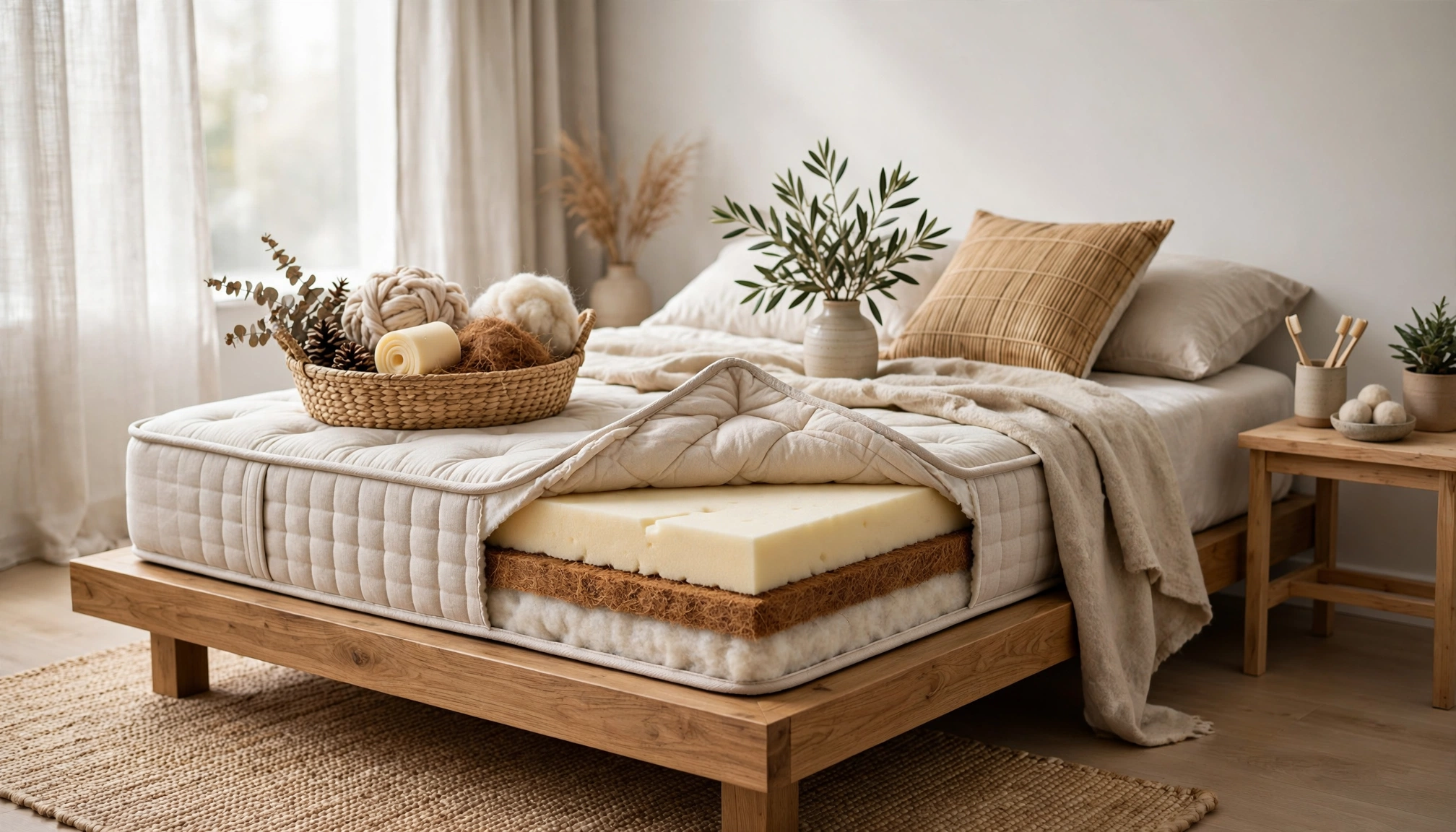
The core of an eco-friendly mattress lies in its materials. Not all materials are created equal, and even within a category, quality and sustainability vary widely.
1. Organic Latex
Organic latex comes from the sap of rubber trees (Hevea brasiliensis). It is durable, naturally hypoallergenic, and resistant to dust mites and mold. For it to be truly eco-friendly, the latex must be organic.
- GOLS Certification: This is the gold standard for organic latex. The Global Organic Latex Standard (GOLS) ensures that at least 95% of the latex material is organic, from the plantation to the finished product. It also covers social and environmental criteria in processing. Without GOLS, "natural latex" can still have synthetic fillers or be processed with harsh chemicals.
- Durability: Organic latex mattresses often last 15-20 years, significantly longer than traditional innerspring or memory foam, which typically last 7-10 years. This reduces waste over time.
- Cost: As of Q3 2026, a queen-sized GOLS-certified organic latex mattress averages $2,850 in the US. This is a 7.2% increase from 2025, reflecting rising demand and production costs for certified organic materials.
2. Organic Cotton
Cotton is a common mattress cover material. Conventional cotton farming uses significant pesticides and water. Organic cotton avoids these issues.
- GOTS Certification: The Global Organic Textile Standard (GOTS) is crucial here. Version 7.0, updated in March 2026, mandates that at least 70% of fibers in a certified product must be organic. It also sets strict limits on chemical inputs throughout the processing, manufacturing, and labeling of textiles. This means no formaldehyde, heavy metals, or aromatic solvents in the fabric.
- Breathability: Organic cotton covers are breathable, which helps regulate temperature and prevents moisture buildup.
3. Organic Wool
Wool is a natural fire retardant, eliminating the need for chemical flame barriers. It also regulates temperature and wicks away moisture.
- Source: Look for wool from farms that practice ethical animal husbandry and sustainable land management. Certifications like GOTS also apply to wool used in textiles.
- Fire Barrier: This is a major advantage. Many conventional mattresses use chemical fire retardants like boric acid or antimony, which can off-gas into your bedroom. Wool offers a natural, effective alternative.
4. Recycled Steel Coils
For innerspring or hybrid mattresses, the coils are a significant component.
- Environmental Impact: Recycled steel significantly reduces the carbon footprint. Approximately 35% of innerspring mattresses now use recycled steel coils, which cuts the carbon footprint of coil production by an estimated 60% compared to virgin steel.
- Durability: Recycled steel coils perform just as well as virgin steel coils in terms of support and longevity.
5. Plant-Based Foams (with caution)
Some companies market "plant-based" or "bio-based" foams. These typically replace a small percentage of petroleum with plant oils (like soy or castor).
- Limited Impact: Often, the plant content is minimal (e.g., 5-20%), and the foam still relies heavily on petrochemicals and can off-gas VOCs. Do not confuse these with truly organic or natural materials.
- Certifications are Key: If considering a foam, look for certifications like CertiPUR-US (for polyurethane foams) which tests for harmful chemicals, even if it does not address the "eco-friendliness" of the raw materials. However, CertiPUR-US does not certify organic content.
Crucial Third-Party Certifications
Certifications are your best tool for verifying "eco-friendly" claims. They provide independent verification that a product meets specific environmental and health standards.
1. GOTS (Global Organic Textile Standard)
- What it covers: Organic fibers (cotton, wool) in mattress covers and internal layers.
- Why it matters: Ensures organic status, prohibits toxic dyes and chemicals, and includes social criteria for workers. Version 7.0, updated in March 2026, has strict requirements for organic content (min 70%) and chemical limits.
2. GOLS (Global Organic Latex Standard)
- What it covers: Organic latex foam.
- Why it matters: Guarantees that latex is at least 95% organic, processed without harmful chemicals, and sourced sustainably. This is essential for truly organic latex.
3. Cradle to Cradle Certified®
- What it covers: A comprehensive assessment of a product across five categories: material health, material reutilization, renewable energy and carbon management, water stewardship, and social fairness.
- Why it matters: The Cradle to Cradle Certified® Product Standard Version 4.1, released in April 2026, requires a minimum Bronze level for certification. This is a rigorous standard that looks at the entire lifecycle and supply chain, aiming for products that can be safely returned to nature or industry. It is one of the strongest indicators of true sustainability.
4. GREENGUARD Gold
- What it covers: Low chemical emissions (VOCs) from products.
- Why it matters: While not an "organic" certification, GREENGUARD Gold ensures that a mattress meets strict chemical emission limits, contributing to healthier indoor air quality. This is especially important for reducing off-gassing, which can be a significant concern. A typical memory foam mattress (non-eco-certified) off-gasses Volatile Organic Compounds (VOCs) for up to 90 days, with peak emissions occurring in the first 72 hours. GREENGUARD Gold helps mitigate this.
5. OEKO-TEX Standard 100
- What it covers: Tests for harmful substances in textiles.
- Why it matters: Similar to GREENGUARD Gold, it focuses on the absence of harmful chemicals in the finished product, including dyes, heavy metals, and pesticides. It is a good indicator of material safety but does not certify organic content or sustainable production processes.
6. Energy Star
- What it covers: Energy efficiency in manufacturing facilities.
- Why it matters: As of January 2026, the Energy Star program includes criteria for mattress manufacturing facilities, requiring a 15% reduction in energy consumption per unit compared to 2020 baselines for certification. While not directly about mattress materials, it indicates a company's commitment to reducing its operational environmental footprint.
Avoiding Greenwashing: What to Look For (and Avoid)
Greenwashing is rampant in the mattress industry. Here is how to spot it:
- Vague Language: Phrases like "natural," "eco-friendly," "green," or "plant-based" without specific certifications or percentages are red flags. "Made with natural materials" can mean 1% natural, 99% synthetic.
- Missing Certifications: If a brand claims "organic" but does not show GOTS or GOLS logos, be skeptical. Ask for proof.
- Focus on One "Green" Feature: A mattress might have an organic cotton cover but use conventional foam and chemical fire retardants. True eco-friendliness is holistic.
- Proprietary Terms: Brands sometimes invent their own "eco-certifications." These are meaningless without independent verification.
- "CertiPUR-US Certified Foam": This certification is for polyurethane foams and ensures they are made without certain harmful chemicals (like ozone depleters, heavy metals, formaldehyde). It is good for reducing VOCs in synthetic foams, but it does not make the foam "eco-friendly" or "organic." It is a safety standard for a synthetic product.
Budget Considerations & Trade-offs
Eco-friendly mattresses often cost more upfront, but they can save money and reduce environmental impact in the long run due to durability.
| Feature | Eco-Friendly Mattress (Queen) | Conventional Mattress (Queen) |
|---|---|---|
| Average Price (2026) | $2,850 (GOLS Latex) | $800 - $1,500 (Memory Foam/Innerspring) |
| Typical Lifespan | 15-20 years | 7-10 years |
| Primary Materials | Organic latex, organic cotton/wool, recycled steel | Polyurethane foam, synthetic fabrics, virgin steel |
| Off-gassing (VOCs) | Minimal to none (certified) | High (first 72-90 days) |
| Certifications | GOTS, GOLS, Cradle to Cradle, GREENGUARD Gold | CertiPUR-US (for foam), none for materials |
| Fire Retardant | Natural wool, silica | Chemical sprays, fiberglass |
- Upfront Cost: A queen-sized GOLS-certified organic latex mattress averages $2,850 in 2026. This is significantly higher than a conventional memory foam mattress, which might cost $800-$1,500.
- Long-Term Value: An eco-friendly mattress often lasts twice as long. Over 15 years, you might buy one organic mattress or two conventional ones, potentially evening out the cost.
- Health Benefits: Reduced exposure to VOCs and chemical fire retardants is a significant health benefit, hard to quantify in dollars. The U.S. Environmental Protection Agency (EPA) provides extensive information on indoor air quality and the health impacts of VOCs.
- Prioritize: If your budget is tight, prioritize GREENGUARD Gold or OEKO-TEX Standard 100 for low emissions, even if you cannot afford full GOTS/GOLS organic. Look for mattresses with natural wool as a fire barrier.
Practical Steps for Buying
- Identify Your Needs: What firmness do you prefer? Do you sleep hot? This helps narrow down material types (e.g., latex is cooler than memory foam).
- Research Brands: Look for companies that are transparent about their supply chain and certifications. Many reputable eco-friendly brands list all their certifications prominently on their websites.
- Verify Certifications: Do not just trust a logo. Check the certification body's website (e.g., GOTS, GOLS, Cradle to Cradle) and search for the specific product or company to ensure the certification is current and valid.
- Read Reviews (Critically): Look for reviews that mention off-gassing, durability, and customer service. Be wary of reviews that sound overly promotional. Consumer Reports offers detailed mattress buying guides and reviews that can be helpful.
- Ask Questions: Contact