Are AI-Powered Robot Vacuums Worth It in 2026?
The robot vacuum market has changed dramatically since its early days. What started as simple, random-bouncing pucks has evolved into sophisticated home cleaning devices, largely thanks to artificial intelligence. In 2026, the question isn't just "Do robot vacuums work?" but "Are AI-powered robot vacuums worth the investment?" The answer depends on your expectations, your home environment, and your budget.
When these devices first came out, they were often more frustrating than helpful. They got stuck constantly, missed large areas, and required frequent rescue missions. Today, AI has addressed many of these core problems. Modern AI robot vacuums use advanced sensors, machine learning, and sophisticated algorithms to map your home, identify obstacles, and plan efficient cleaning routes. This capability is the main reason for their increased utility and higher price points.
The Evolution of Robot Vacuum Intelligence
Early robot vacuums relied on basic bumper sensors and random algorithms. They cleaned by bumping into objects and changing direction, often missing spots or getting trapped. The introduction of basic mapping technology, like SLAM (Simultaneous Localization and Mapping), was the first major leap. This allowed vacuums to understand their location within a room and build a rudimentary map.
AI has taken this a step further. Current AI-powered models do not just map; they understand the environment. They use cameras, LiDAR, and ultrasonic sensors to create detailed, multi-dimensional maps of your home. This data feeds into machine learning models that help the vacuum differentiate between a chair leg and a charging cable, or a rug and a cliff edge. This intelligence is what allows them to avoid problems that plagued older models.
Key AI Features and Their Impact
Several specific AI features define the current generation of robot vacuums:
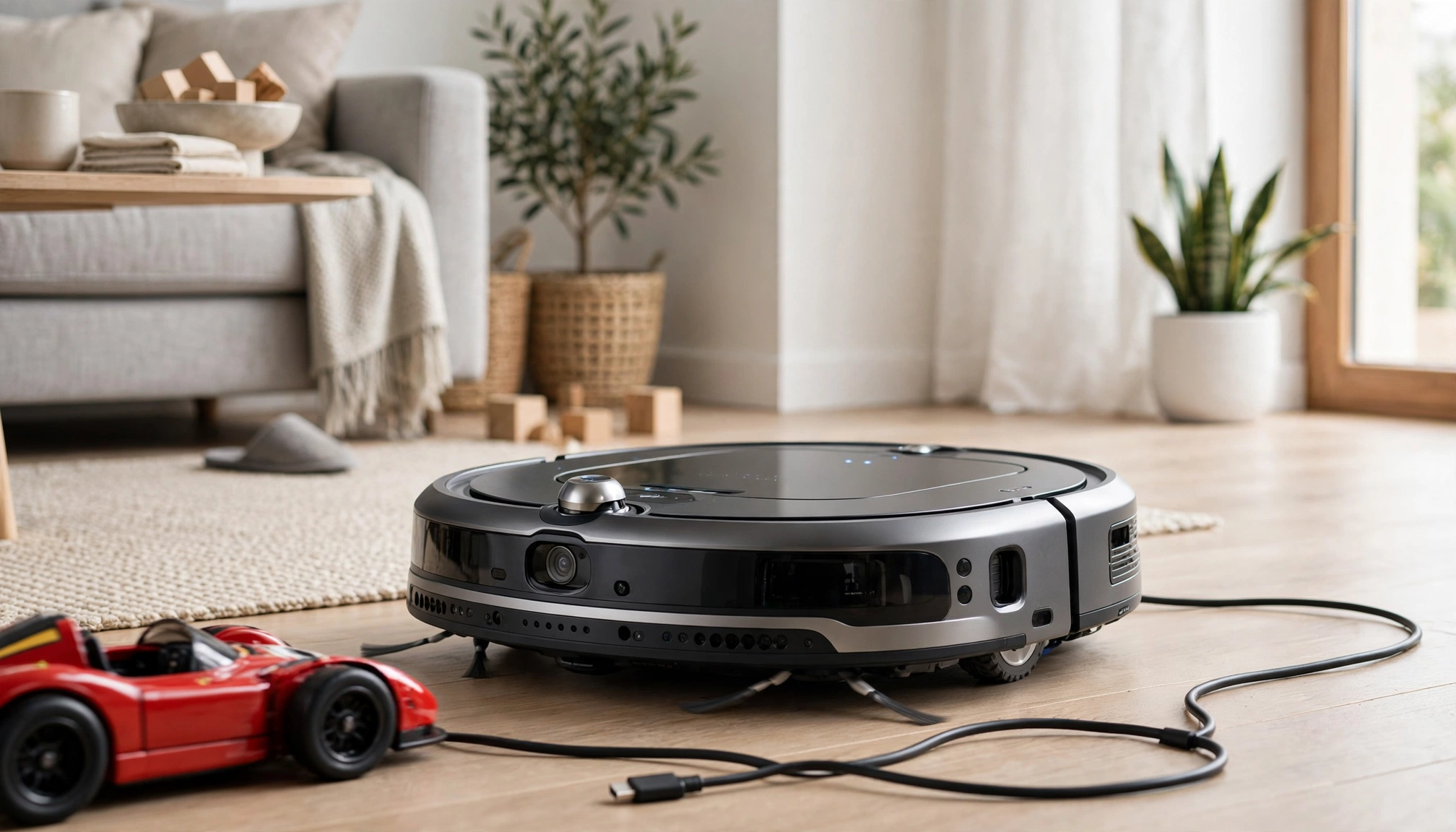
- Advanced Object Recognition and Avoidance: This is perhaps the most significant improvement. Leading AI robot vacuums in 2026 can identify and avoid over 150 distinct household objects. This includes common nuisances like pet waste, charging cables, socks, and small toys. They achieve a 98.5% accuracy rate in avoiding these items, which drastically reduces the need for pre-cleaning tidying. This feature directly addresses the common user problem of vacuums getting stuck or spreading messes.
- Precision Mapping and Navigation: AI-driven mapping systems in 2026 can create multi-floor plans with room-specific cleaning preferences. For a 2,000 sq ft (185 sq m) home, a detailed map can be generated in under 5 minutes. This allows users to set "no-go zones," "no-mop zones," and direct the vacuum to clean specific rooms or areas on demand. This level of control was impossible with older, less intelligent models. The vacuum knows where it is, where it has been, and where it needs to go, leading to more thorough and efficient cleaning patterns.
- Adaptive Cleaning: AI allows the vacuum to adapt its cleaning strategy based on floor type or dirt levels. Some models can automatically increase suction power when they detect carpet or a particularly dirty area. They learn over time, optimizing routes and cleaning patterns based on past performance and user feedback. This means less missed spots, even around tricky areas like furniture legs.
- Self-Emptying and Maintenance: While not strictly AI, many AI-powered vacuums pair with self-emptying bases. The AI manages the vacuum's return to the base for emptying, and some even manage water tank refills for mopping functions. This reduces human intervention significantly.
Cost vs. Value: Is the Price Justified?
The average retail price for a premium AI-powered robot vacuum with advanced navigation and object recognition is $1,150 USD in 2026. This marks a 12% increase from 2022 models. This is a significant investment compared to a traditional upright vacuum or even older robot vacuum models.
To determine if this cost is justified, consider the value proposition:
- Time Savings: A robot vacuum handles daily or weekly cleaning, freeing up your time. With advanced object avoidance, you spend less time preparing the house for the vacuum or rescuing it from jams.
- Convenience: Schedule cleaning sessions from an app, even when you are not home. The ability to specify rooms, adjust suction, and set no-go zones offers unparalleled convenience.
- Consistent Cleanliness: For many, the biggest benefit is simply coming home to a consistently clean floor. The vacuum maintains cleanliness between deeper manual cleans.
- Reduced Manual Effort: If you have mobility issues, a large home, or simply dislike vacuuming, an AI robot vacuum significantly reduces the physical effort required.
Performance Metrics in 2026
Let's look at some concrete performance data for top-tier AI robot vacuums in 2026:
| Feature | 2022 Mid-Range Model (Avg.) | 2026 AI-Powered Premium Model (Avg.) | Improvement |
|---|---|---|---|
| Price (USD) | $650 | $1,150 | +$500 |
| Object Avoidance | Basic (large objects only) | 150+ distinct objects | Significant |
| Accuracy Rate | ~70% | 98.5% | High |
| Battery Life (min) | 120 | 240 | 100% |
| Coverage (sq ft) | 1,500 | 3,500 | 133% |
| Mapping Time (2k sq ft) | 15-20 min | Under 5 min | 75% faster |
| Noise Level (dB) | 65-70 | 58-62 | Quieter |
- Battery Life: Top-tier models average 240 minutes on a single charge. This allows them to cover up to 3,500 square feet (325 square meters) before needing to recharge. This is a substantial improvement over older models that often needed multiple recharges for larger homes.
- Noise Levels: Most AI robot vacuums operating on standard mode range from 58-62 decibels. This is comparable to a quiet conversation, making them less disruptive than traditional vacuums. You can easily have a phone call or watch TV while the vacuum is running in another room.
- Market Growth: The global market for robot vacuums is projected to reach $10.5 billion USD by the end of 2026, with AI-powered models accounting for 65% of new sales. This market trend indicates strong consumer confidence and adoption of these advanced devices.
AI Robot Vacuum navigating a living room, avoiding toys and cables
Real-World Trade-offs and Considerations
While impressive, AI robot vacuums are not perfect for every situation:
- Dark Rugs: Some users still report issues with dark rugs. While improved, the cliff sensors (which prevent the vacuum from falling down stairs) can sometimes misinterpret dark colors as a drop-off, causing the vacuum to avoid or get stuck on them. This is less common with 2026 models but can still occur depending on the specific rug and vacuum.
- Around Furniture Legs: While navigation is vastly improved, no robot vacuum can perfectly clean every millimeter around complex furniture legs or tight corners. They get much closer than before, but some manual touch-ups might still be needed in very specific spots.
- App Complexity: While powerful, the companion apps for these devices can have a learning curve. Setting up multi-floor maps, no-go zones, and specific cleaning schedules requires some initial effort and understanding of the app's interface. However, once configured, daily operation is simple.
- Maintenance: Filters, brushes, and dustbins still need regular cleaning and replacement. Pet hair can quickly clog brushes, requiring manual removal every few days for homes with shedding pets. The self-emptying bases mitigate the dustbin issue but do not eliminate all maintenance.
- Initial Setup: The first run often involves mapping your home. This can take an hour or more, and you need to ensure the vacuum can access all areas. This is a one-time process, but it requires patience.
Who Benefits Most?
AI-powered robot vacuums are particularly beneficial for:
- Pet Owners: The advanced object avoidance is a game-changer for pet owners, drastically reducing the risk of "pet waste incidents." The improved suction also handles pet hair effectively.
- Busy Professionals/Families: Anyone short on time who wants to maintain a consistently clean home without daily manual effort.
- Homes with Mixed Floor Types: The ability to automatically adjust suction and cleaning patterns for carpets, hardwoods, and tiles is a major advantage.
- Multi-Story Homes: Multi-floor mapping capabilities make them practical for homes with more than one level.
- Tech Enthusiasts: Those who appreciate smart home integration and advanced technology will find these devices compelling.
AI Robot Vacuum charging on its self-emptying dock in a modern home
Comparing Brands and Features
When choosing an AI robot vacuum, consider these factors:
- Navigation Technology: Look for LiDAR, vSLAM (visual SLAM), or a combination for the best mapping.
- Object Recognition: Check the number of objects it can identify and its accuracy rate. Brands like iRobot with their Roomba j9+ or Roborock are leaders in this area.
- Suction Power: Measured in Pascals (Pa), higher numbers mean stronger suction, especially important for carpets and pet hair.
- Battery Life: Ensure it can cover your home size on a single charge.
- Self-Emptying Base: This adds convenience but also increases the overall footprint and cost.
- Mopping Functionality: Some models offer integrated mopping. Evaluate if it uses simple wet pads or more advanced sonic scrubbing or rotating mop heads.
- App Features: Look for intuitive apps with customizable cleaning zones, schedules, and cleaning preferences.
- Privacy: Consider how the vacuum handles the data it collects, especially if it uses cameras. Reputable brands have clear privacy policies.
Final Verdict & Practical Takeaways
In 2026, AI-powered robot vacuums are a significant leap forward from their predecessors. They offer genuine convenience, superior cleaning performance, and a substantial reduction in the manual effort required to maintain clean floors. The $1,150 average price tag for premium models is a considerable investment, but for many, the time saved and the consistent cleanliness they provide justify the cost