Preparing Patio Furniture for Winter Storage (2026)
Winterizing your patio furniture protects your investment and extends its lifespan. Skipping this step leads to cracked plastics, rusted metals, faded fabrics, and moldy cushions. This guide outlines practical steps to ensure your outdoor pieces survive the cold months intact.
Why Proper Winterization Matters
Outdoor furniture faces harsh conditions during winter. Freezing temperatures, snow, ice, and strong winds all cause damage. Consistently cold temperatures below 32°F (0°C) for over 72 hours create micro-fractures in many plastic and composite materials. Moisture, especially when trapped, leads to rust on metal frames, rot on wood, and mildew on fabrics. Proper storage prevents these issues, saving you money on replacements and repairs.
Step 1: Thorough Cleaning - The Foundation of Protection
Before you store anything, everything must be clean and dry. Dirt, pollen, and food residue attract pests and promote mold growth during storage.
For All Furniture Types:
- Brush Off Loose Debris: Use a stiff brush or vacuum to remove leaves, dirt, and cobwebs.
- Wash with Mild Soap: Mix a few drops of dish soap with warm water. Use a soft cloth or sponge to wipe down all surfaces. For stubborn grime, a gentle scrub brush works.
- Rinse Thoroughly: Use a garden hose on a low setting to rinse off all soap residue. Ensure no soap remains, as it attracts dirt.
- Dry Completely: This is critical. Air dry furniture in the sun for several hours, or wipe it down with clean towels. Any trapped moisture leads to mold, mildew, and rust.
Specific Material Considerations:
- Wood: After washing, apply a wood preservative or sealant if your furniture does not already have one. This protects against moisture and rot. The USDA Forest Service provides guidance on protecting outdoor wood structures.
- Metal (Aluminum, Wrought Iron, Steel): Check for rust spots. Sand down any surface rust with fine-grit sandpaper, then apply a rust-inhibiting primer and touch-up paint. This prevents further corrosion.
- Wicker/Rattan (Natural & Synthetic): Use a soft brush or vacuum attachment to clean crevices. For synthetic wicker, a gentle soap and water wash is fine. Natural wicker needs careful drying to prevent warping.
- Plastic/Resin: These are generally low-maintenance. A simple soap and water wash is sufficient. Avoid abrasive cleaners that scratch the surface.
Step 2: Cushion and Fabric Care - Preventing Mold and Mustiness
Cushions and other fabric items are the most vulnerable to mold, mildew, and pest infestations if not stored correctly.
- Remove All Cushions and Pillows: Take them off the furniture frames.
- Clean Fabric Covers:
- Removable Covers: Check care tags. Most are machine washable on a gentle cycle with cold water and mild detergent. Air dry completely; do not put them in a dryer unless the tag explicitly allows it.
- Non-Removable Covers: Spot clean with a fabric cleaner or a solution of mild soap and water. Rinse thoroughly and allow to air dry completely.
- Inspect for Damage: Look for tears, loose seams, or pest evidence. Repair small issues now.
- Ensure Complete Dryness: This cannot be stressed enough. Even slightly damp cushions will develop mold in storage. Let them air dry for at least 24-48 hours in a well-ventilated area before storing.
- Store Indoors: Cushions and pillows must go indoors. A garage, shed, basement, or spare room works. The key is a dry, pest-free environment.
- Humidity Control: The average humidity level for storing upholstered items to prevent mold and mildew is below 50%. Consider a dehumidifier if your storage area is damp. The EPA offers advice on humidity control for mold prevention.
- Storage Bags: Use breathable storage bags designed for cushions. These protect against dust and pests. A premium outdoor furniture storage bag (e.g., 48"x24"x18" / 122cm x 61cm x 46cm) costs an average of $34.99 USD. Avoid sealing them in airtight plastic bags, which can trap moisture and promote mold.
Step 3: Covering and Storing Furniture - Protecting Frames and Surfaces
After cleaning and drying, decide whether to store furniture indoors or outdoors. A 2026 survey by the Outdoor Living Association found that 68% of homeowners store at least one piece of patio furniture indoors during winter.
Option A: Indoor Storage (Best Protection)
If you have space, indoor storage is always the best option.
- Disassemble (If Possible): For larger items like dining tables or lounge chairs, disassembling them saves significant space. Keep all hardware in a labeled bag.
- Stack Chairs: Stackable chairs save floor space.
- Elevate from Ground: If storing in a garage or basement, place furniture on pallets, cinder blocks, or furniture dollies. This keeps it off cold, damp concrete floors, preventing moisture absorption and potential damage.
- Cover Lightly: A simple sheet or light tarp protects against dust and accidental scratches.
Option B: Outdoor Storage (Requires Durable Covers)
If indoor space is limited, outdoor storage with proper covers is your next best bet. This is where many people make mistakes, leading to damaged furniture.
- Use High-Quality Covers: This is not the place to skimp. Cheap tarps rip easily and offer poor protection. Look for covers made from durable, weather-resistant materials like 600D Oxford fabric with UV protection. The average cost for a 10'x10' (3m x 3m) cover is $78.50 USD.
- Tear Strength: Polyethylene (PE) tarps, a common temporary option, typically offer a tear strength of 150-200 PSI (10.3-13.8 bar) in 2026 models. While decent, purpose-built furniture covers often exceed this for longevity.
- Ensure Proper Fit: Covers should fit snugly but not be so tight they tear when wind whips them. Loose covers flap and abrade furniture surfaces.
- Secure Covers: Most quality covers have drawstrings, buckles, or elastic hems. Use these to secure the cover tightly around the furniture legs. This prevents wind from lifting and tearing the cover. Consider adding bungee cords or heavy objects to further anchor covers in windy areas. "My patio furniture covers always rip or blow away in strong winter winds" is a common complaint solved by proper securing.
- Create a Peak for Water Runoff: For flat-topped tables or large seating areas, place an inverted bucket or a ball under the center of the cover. This creates a peak, allowing rain and melting snow to run off, preventing water pooling and ice formation.
- Elevate Furniture: Even with covers, elevate furniture off the ground using blocks or risers. This prevents moisture from wicking up from the cold, damp ground and improves air circulation, reducing condensation under the cover.
- Group Furniture: Consolidate furniture into a smaller footprint. This makes covering easier and more efficient.
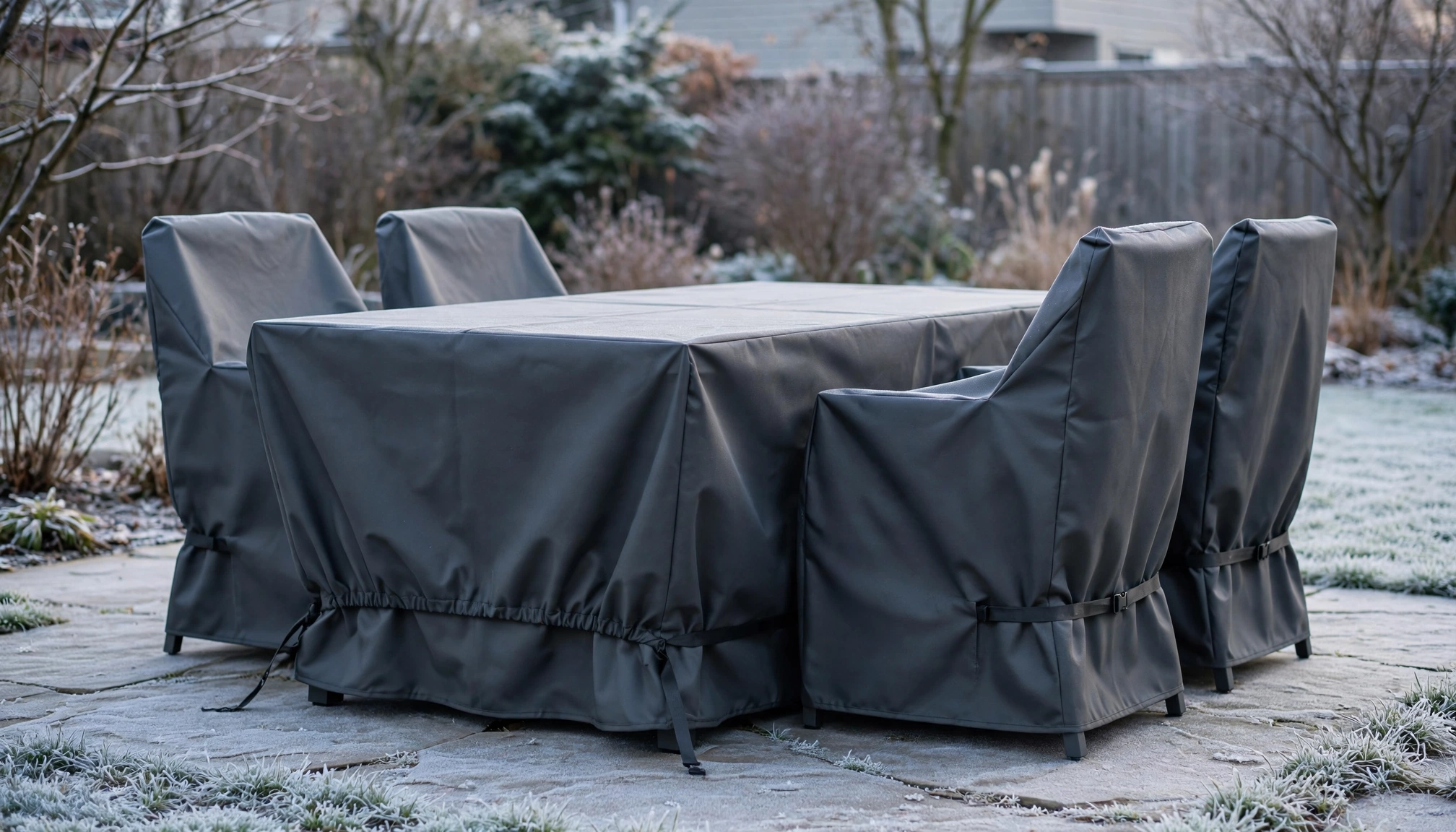
Patio furniture covered for winter
Step 4: Small Items and Accessories
Don't forget the smaller details.
- Decorative Pillows, Throws, and Rugs: Clean thoroughly and store indoors with cushions.
- Umbrellas: Clean the canopy, ensure it's completely dry, and store it in a closed position, ideally indoors or in a protective cover.
- Planters: Empty ceramic or terracotta planters. Freezing water expands and cracks them. Store them upside down or indoors. Plastic or fiberglass planters are more resilient but benefit from being emptied and stored.
- Fire Pits and Heaters: Clean out ash, disconnect propane tanks (store tanks upright in a well-ventilated outdoor area), and cover them with a dedicated, heavy-duty cover. Store igniters and sensitive components indoors.
Winter Storage Checklist
Use this checklist to ensure you cover all bases:
| Item/Task | Status (Complete/N/A) | Notes