Navigating Eco-Friendly Furniture in 2026
Choosing eco-friendly furniture means looking beyond marketing claims to understand what makes a product genuinely sustainable. In 2026, the global market for sustainable furniture is projected to hit $82.5 billion, showing a significant consumer shift. This guide cuts through the noise, identifying key brands and criteria for making informed, environmentally responsible furniture choices.
What Makes Furniture "Eco-Friendly"?
True eco-friendly furniture meets several criteria, not just one. It involves the entire lifecycle, from raw material sourcing to manufacturing processes and end-of-life disposal.
- Sustainable Materials: This includes rapidly renewable resources (bamboo, cork), recycled content (recycled steel, plastic, glass), reclaimed materials (barn wood, factory scraps), and certified wood (FSC).
- Non-Toxic Finishes: Low-VOC (Volatile Organic Compound) paints, stains, and adhesives reduce indoor air pollution.
- Ethical Production: Fair labor practices, safe working conditions, and transparent supply chains.
- Durability & Longevity: Well-made furniture lasts longer, reducing the need for frequent replacements and decreasing waste.
- Reduced Carbon Footprint: Brands that minimize energy consumption in manufacturing and shipping, often using renewable energy. For example, a dining chair made from reclaimed timber uses about 15 kWh of energy, significantly less than the 45 kWh for a virgin tropical hardwood chair.
Key Certifications to Look For
Certifications are your best defense against greenwashing. They provide independent verification of a product's environmental and social claims.
- FSC (Forest Stewardship Council): This certification ensures wood products come from responsibly managed forests that provide environmental, social, and economic benefits. FSC-certified wood products carry a 10-25% price premium over non-certified options in 2026, reflecting their sustainable origins Forest Stewardship Council (FSC) International.
- GOTS (Global Organic Textile Standard): For upholstered items or mattresses, GOTS certifies organic fibers. A GOTS-certified organic latex and recycled steel queen mattress averages $2,850 in 2026 Global Organic Textile Standard (GOTS) Official Website.
- GREENGUARD: This certification focuses on indoor air quality, testing products for chemical emissions. GREENGUARD Gold has even stricter criteria, suitable for schools and healthcare facilities GREENGUARD Environmental Institute.
- OEKO-TEX Standard 100: Certifies textiles free from harmful substances.
- Cradle to Cradle Certified: This certification assesses products for material health, material reutilization, renewable energy and carbon management, water stewardship, and social fairness.
Top Eco-Friendly Furniture Brands in 2026
These brands consistently demonstrate a commitment to sustainability through their materials, processes, and transparency.
1. Medley
Medley specializes in handcrafted, custom furniture made in Los Angeles. They use FSC-certified solid wood frames, GOTS-certified organic latex, and natural Dunlop latex for cushions. Their fabrics include organic cotton, hemp, and recycled polyester.
- Materials: FSC-certified wood, organic latex, natural Dunlop latex, organic cotton, hemp, recycled polyester.
- Manufacturing: Made in the USA, low-VOC finishes.
- Price Point: High. A custom sofa costs $3,000-$6,000.
- Lead Time: Typically 8-12 weeks due to custom, made-to-order production.
2. Avocado Green Mattress (Furniture Line)
Known for their organic mattresses, Avocado has expanded into furniture. They use FSC-certified wood for bed frames, dressers, and nightstands, finished with zero-VOC natural wood oils.
- Materials: 100% FSC-certified solid wood, organic cotton, organic latex.
- Manufacturing: Made in Los Angeles, GOTS and GOLS (Global Organic Latex Standard) certified.
- Price Point: Mid-High. A queen bed frame costs $1,800-$2,500.
- Certifications: FSC, GOTS, GOLS, GREENGUARD Gold.
3. Thuma
Thuma focuses on minimalist, easy-to-assemble bed frames. They use repurposed, solid wood (often rubberwood, a byproduct of the latex industry) and recycled plastic legs. Their mattresses and pillows are GREENGUARD Gold certified.
- Materials: Repurposed solid wood, recycled plastic, CertiPUR-US certified foams.
- Manufacturing: Designed for easy assembly, reducing packaging waste.
- Price Point: Mid-High. A queen bed frame costs $1,000-$1,300.
- Sustainability Focus: Circular design, minimal packaging.
4. Sabai Design
Sabai offers customizable sofas and sectionals made with recycled and natural materials. Their frames use FSC-certified wood, cushions use CertiPUR-US certified foam, and fabrics include recycled velvet and upcycled polyester.
- Materials: FSC-certified wood, CertiPUR-US foam, recycled velvet, upcycled polyester.
- Manufacturing: Made in North Carolina.
- Price Point: Mid-Range. A sofa costs $1,500-$2,500.
- Unique Feature: "Repair Don't Replace" program, offering replacement parts to extend product life.
5. West Elm (Sustainable Collection)
While a larger retailer, West Elm has a significant "Fair Trade Certified" and "FSC-Certified" collection. They offer a wide range of furniture made with sustainably sourced wood, organic cotton, and recycled materials.
- Materials: FSC-certified wood, organic cotton, recycled content, Fair Trade Certified materials.
- Manufacturing: Global supply chain with a focus on Fair Trade factories.
- Price Point: Mid-Range. A dining table costs $800-$1,500.
- Certifications: FSC, Fair Trade Certified, GREENGUARD.
6. VivaTerra
VivaTerra specializes in unique, globally-inspired home furnishings made from natural and recycled materials. They feature pieces crafted from reclaimed wood, recycled glass, and sustainable fibers like jute and abaca.
- Materials: Reclaimed wood, recycled glass, jute, abaca, natural fibers.
- Manufacturing: Artisan-made, often supporting fair trade practices.
- Price Point: Mid-High. A reclaimed wood console table costs $600-$1,200.
- Aesthetic: Rustic, natural, global.
Data Comparison: Conventional vs. Sustainable Furniture
Understanding the tangible differences helps justify the investment in sustainable options.
| Feature | Conventional Sofa (Typical) | Sustainable Sofa (Example: Sabai Design) |
|---|---|---|
| Frame Material | Mixed hardwoods, particle board, non-certified plywood | FSC-certified solid wood (e.g., maple, birch) |
| Fabric Material | Virgin polyester, conventional cotton, synthetic blends | Recycled polyester, upcycled velvet, organic cotton, hemp |
| Cushion Fill | Polyurethane foam (non-certified) | CertiPUR-US certified foam, natural latex, recycled fiber fill |
| Adhesives/Finishes | High-VOC glues, chemical flame retardants | Low-VOC or water-based adhesives, natural oils/waxes, no added flame retardants |
| Carbon Footprint | Higher (e.g., 180 kg CO2e more than sustainable equivalent) | Lower (e.g., 180 kg CO2e reduction compared to conventional) |
| Durability | Varies, often shorter lifespan due to cheaper materials | Generally higher due to solid wood frames and quality construction, often repairable |
| Average Price (2026) | $800 - $1,800 | $1,500 - $2,500 (reflects 5-25% premium for certified materials) |
| Certifications | Few to none | FSC, CertiPUR-US, OEKO-TEX, sometimes GREENGUARD |
| Manufacturing Energy | Higher (e.g., 45 kWh for a virgin wood chair) | Lower (e.g., 15 kWh for a reclaimed wood chair), often uses renewable energy in production facilities |
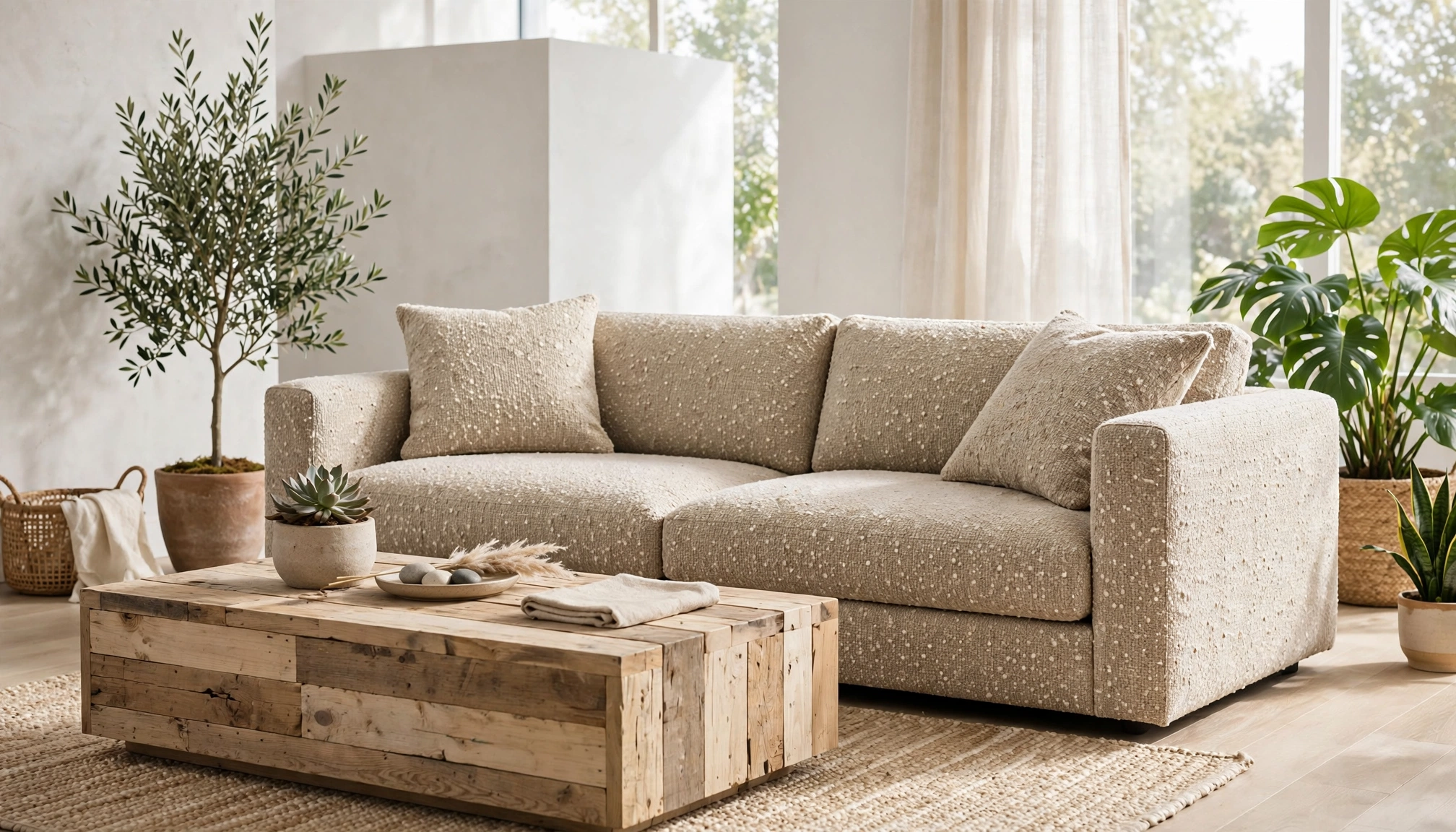
A modern living room with a sustainable sofa made from recycled materials and a coffee table made from reclaimed wood.
Addressing Common Concerns
Many people hesitate to buy sustainable furniture due to perceived drawbacks. Let's tackle these directly.
"Is it really eco-friendly, or just greenwashing?"
This is a valid concern. The best way to cut through greenwashing is to look for verifiable third-party certifications like FSC, GOTS, GREENGUARD, and Cradle to Cradle. Brands that are truly committed to sustainability are transparent about their materials, supply chains, and manufacturing processes. They provide detailed information on their websites and often publish sustainability reports. If a brand only uses vague terms like "natural" or "eco-conscious" without specific certifications or data, be skeptical. The U.S. Environmental Protection Agency (EPA) provides resources on sustainable materials management that can help identify genuine efforts.
"Sustainable furniture is too expensive."
While some sustainable pieces carry a higher initial price tag (a 10-25% premium for FSC wood, for example), this often reflects the true cost of quality materials, ethical labor, and reduced environmental impact. In 2026, 68% of consumers in North America and Europe are willing to pay at least 5% more for verifiable eco-friendly furniture. Consider the long-term value:
- Durability: Sustainable furniture, often made with solid wood and quality construction, lasts much longer than cheaper, conventional alternatives. This reduces replacement costs over time.
- Health Benefits: Non-toxic finishes and materials contribute to better indoor air quality, potentially reducing health-related costs.
- Environmental Cost: The price reflects the avoidance of environmental damage, which has significant societal costs.
"Will it be durable and stylish?"
Absolutely. The misconception that eco-friendly furniture sacrifices aesthetics or durability is outdated. Many brands now prioritize both.
- Durability: Brands like Medley and Avocado use solid, FSC-certified wood frames, which are inherently more durable than particle board or engineered wood found in many conventional pieces. Natural latex and high-quality recycled foams maintain their shape and support longer.
- Style: The aesthetic range is vast. You can find minimalist modern designs (Thuma), rustic artisan pieces (VivaTerra), classic contemporary (West Elm's sustainable lines), and customizable options (Sabai Design). Sustainable design has evolved significantly, offering sophisticated and diverse styles that fit any home.
A close-up of a sustainably sourced wooden dining table with a smooth, natural finish, showing the grain detail.
Final Verdict & Practical Takeaways
Choosing eco-friendly furniture in 2026 means making informed decisions based on verifiable certifications, material transparency, and a brand's overall commitment to sustainability. While there might be a modest price premium, the long-term benefits of durability, reduced environmental impact, and healthier indoor air quality often outweigh