Robot Vacuum vs. Cordless Stick Vacuum: 2026 Performance Review
Deciding between a robot vacuum and a cordless stick vacuum in 2026 means understanding their distinct roles in home cleaning. I've used both extensively in my own home, and they are not interchangeable. One handles the daily grind, the other tackles the real dirt.
Robot Vacuums: The Automated Maintainers
Robot vacuums are for consistent, hands-off floor care. They move around your home, picking up dust, pet hair, and small crumbs. Think of them as your daily floor sweeper.
What They Do Well:
- Daily Maintenance: A robot vacuum runs on a schedule, keeping floors consistently tidy. This reduces the build-up of dust and allergens. A 2026 study by the Home Appliance Research Institute found that robot vacuums reduce airborne dust particles by an average of 35% in homes with daily use. This is a significant benefit for indoor air quality, as the National Institute of Environmental Health Sciences highlights the impact of indoor air pollutants on health.
- Convenience: You set it and forget it. Many premium models, like the iRobot Roomba j9+, come with self-emptying bases, meaning you only interact with them every few weeks.
- Navigation & Obstacle Avoidance: Advanced AI in 2026 allows robot vacuums to identify and navigate around over 150 common household objects, including pet waste and charging cables, with 98% accuracy. This means fewer "stuck" notifications. LiDAR navigation creates precise maps of your home, allowing for efficient cleaning paths.
- Quiet Operation: The quietest robot vacuums operate at approximately 55 decibels (dB) on hard floors, which is comparable to a normal conversation. You can run them while working or watching TV without much disturbance.
- Deep Cleaning: Robot vacuums are not designed for deep-seated dirt in carpets or heavily soiled areas. Their suction power, while improved, typically reaches 8,000 Pascals (Pa). This is good for surface debris but not for embedded grime.
- Targeted Cleaning: You cannot direct a robot vacuum to clean a specific spill instantly. They follow programmed paths.
- Corners and Edges: Their round or D-shaped design means they struggle to clean tight corners and flush against baseboards perfectly.
- Stairs and Uneven Surfaces: They cannot climb stairs. They also get stuck on high-pile rugs, thick fringe, or under low-clearance furniture (like some couches with less than 4 inches of clearance).
- Cost: The average retail price for a premium LiDAR-navigating robot vacuum with self-emptying capabilities in Q3 2026 is $985.00 USD. This is a significant investment.
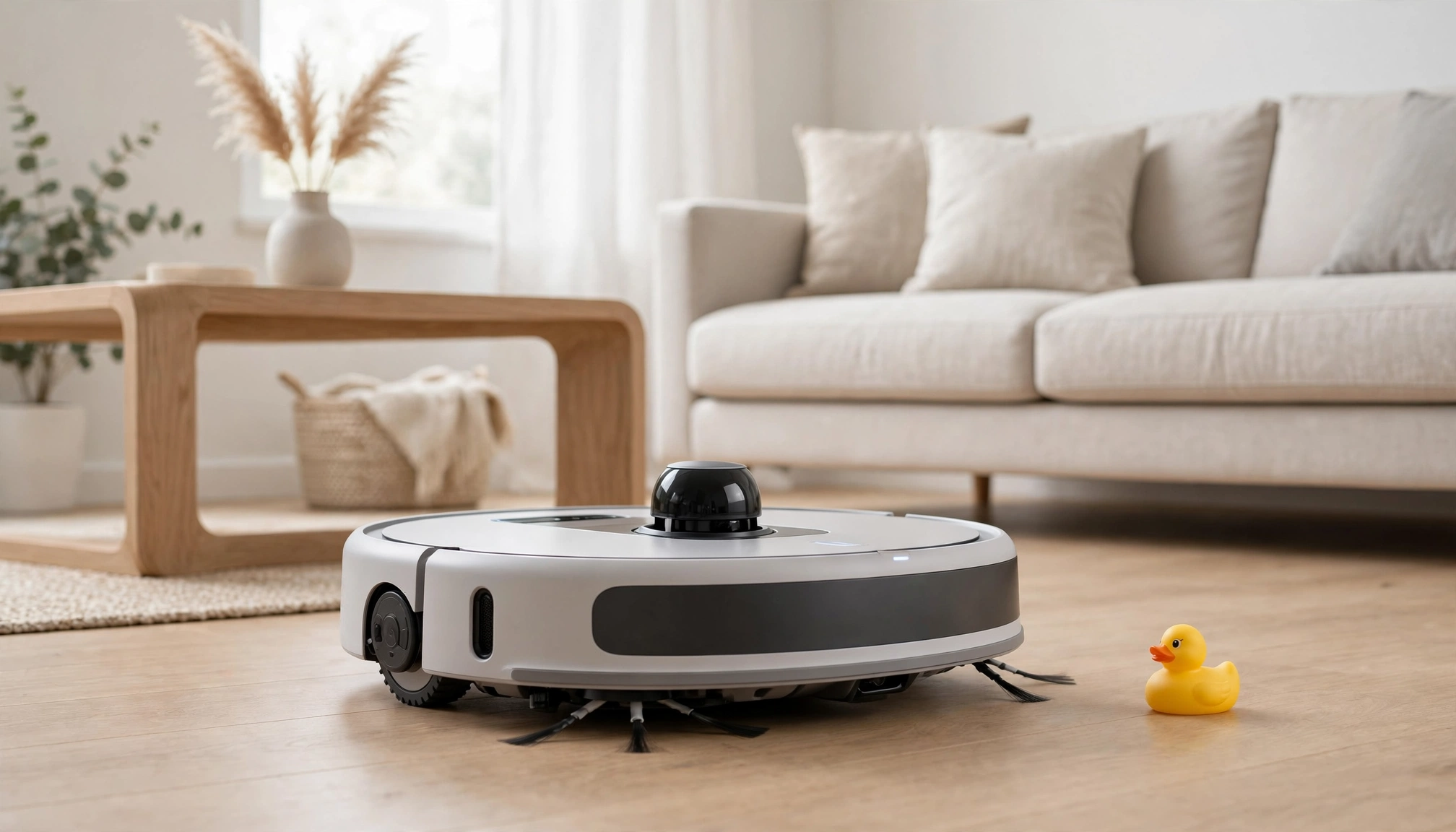
Robot vacuum cleaning a living room
Cordless Stick Vacuums: The Versatile Powerhouses
Cordless stick vacuums are your go-to for powerful, immediate cleaning. They offer flexibility and strong suction for both floors and above-floor tasks.
What They Do Well:
- Deep Cleaning & Suction Power: Top-tier cordless stick vacuums in 2026 reach up to 250 Air Watts (AW). This power effectively pulls dirt from carpets, handles larger debris, and tackles stubborn messes. Dyson's official website details their cordless vacuum technology.
- Versatility: With various attachments, a stick vacuum transforms into a handheld unit for cleaning upholstery, car interiors, stairs, and cobwebs on ceilings. This makes them incredibly adaptable.
- Targeted Cleaning: You control exactly where the vacuum goes. Spilled cereal? Quick mess under the kitchen table? A stick vacuum handles it in seconds.
- Maneuverability: They are lightweight (often 5-7 lbs) and easy to steer around furniture, into tight spaces, and up and down stairs.
- Immediate Availability: No mapping or scheduling needed. Grab it off the charging dock and clean.
- Battery Life: While improved, battery life remains a limitation. High-end models offer up to 90 minutes of run time on a single charge in eco mode. However, using max power mode often cuts this to 10-20 minutes, which might not be enough for a large home. Recharging can take 3-5 hours.
- Manual Effort: You have to physically push and carry the vacuum. This is not a hands-off solution.
- Dust Bin Capacity: Stick vacuums typically have smaller dust bins than robot vacuums or traditional uprights, requiring more frequent emptying.
- Noise Level: Cordless stick vacuums generally operate louder than robot vacuums, especially on higher power settings, often exceeding 70 dB.
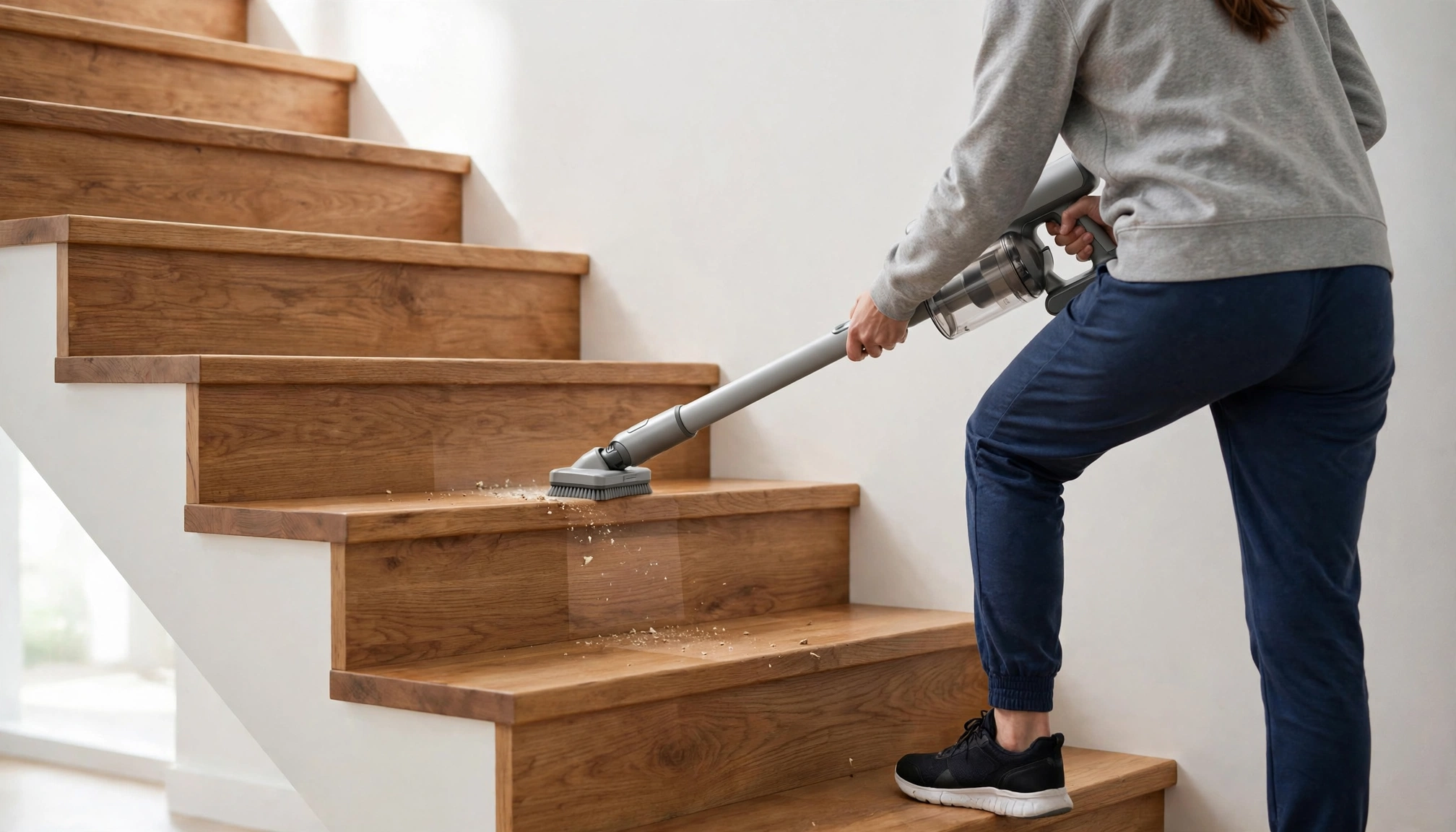
Person using a cordless stick vacuum to clean stairs
Performance Comparison: Robot vs. Cordless Stick (2026 Models)
| Feature | Robot Vacuum (Premium 2026 Model) | Cordless Stick Vacuum (Premium 2026 Model) |
|---|---|---|
| Primary Use Case | Daily maintenance, dust/pet hair upkeep | Deep cleaning, targeted messes, versatile surface cleaning |
| Suction Power | Up to 8,000 Pa | Up to 250 AW |
| Navigation | LiDAR, AI obstacle avoidance (98% accuracy for 150+ objects) | Manual, user-directed |
| Battery Run Time | Varies by model (often 90-180 min per charge cycle) | Up to 90 min (eco mode); 10-20 min (max power) |
| Recharge Time | 3-6 hours | 3-5 hours |
| Noise Level | ~55 dB (hard floor, quiet mode) | ~70-80 dB (standard to max power) |
| Self-Emptying | Common feature in premium models | Not applicable |
| Cost (Avg. Q3 2026) | $985.00 USD | $500-$800 USD |
| Versatility | Limited to floor cleaning, some mopping functions | High (floors, stairs, upholstery, car, ceiling with attachments) |
| Maintenance | Hands-off daily, periodic bin/filter/brush cleaning | Manual operation, frequent bin emptying, filter cleaning |
| Ideal Home Size | Medium to large homes (multi-room mapping) | Any size home, especially effective for quick clean-ups in larger ones |
Real-World Trade-offs and User Pain Points
From my experience, and consistent with common user feedback, neither vacuum is a perfect standalone solution for every household.
- Robot Vacuum Limitations: "My robot vacuum keeps getting stuck under my couch and on my rug fringes." This is a common complaint. While AI has improved, low furniture clearance (under 3.5 inches) and certain rug types (shag, thick tassels) remain challenges. You often need to "robot-proof" your home by tidying cables and securing rugs.
- Cordless Stick Vacuum Limitations: "The battery on my cordless stick vacuum dies halfway through cleaning my house, and it takes forever to recharge." This is a genuine frustration. For larger homes or extensive cleaning, you might need a second battery or accept cleaning in stages. The 90-minute run time is almost always in the lowest power setting.
- Both Miss Spots: "I feel like my robot vacuum misses spots, and I still have to manually clean corners and stairs." This is true. Robot vacuums are great for general coverage but don't replace the precision of a human-operated vacuum for edges, corners, and vertical surfaces like stairs.
The Misconception: Robot Vacuums as a Total Replacement
The biggest misconception is that robot vacuums are a complete replacement for all other vacuuming methods. This is incorrect. They are best suited for maintaining cleanliness between deeper, more targeted cleans. A robot vacuum is a maintenance tool, not a deep-cleaning powerhouse. Think of it like a dishwasher: it handles daily dishes, but you still hand-wash delicate items or large pots.
Practical Applications & Recommendations
When to Choose a Robot Vacuum:
- Busy individuals or families: You want to offload daily floor cleaning.
- Homes with pets: Excellent for managing daily pet hair shedding.
- Allergy sufferers: Regular vacuuming reduces allergens.
- Primarily hard floors or low-pile carpets: These surfaces are ideal for robot vacuums.
- You value convenience above all else.
- Small apartments or homes: One charge might cover the whole space.
- Homes with a mix of surfaces: Hardwood, tile, area rugs, and carpet.
- Need for quick clean-ups: Spills, crumbs, tracked-in dirt.
- Homes with stairs: Essential for effective stair cleaning.
- You need to clean above-floor surfaces: Upholstery, car, ceiling fans.
- You prioritize deep cleaning and powerful suction.
For many homes, the optimal solution is to have both. A robot vacuum runs daily to keep general floor cleanliness high, while a cordless stick vacuum handles weekly deep cleans, stairs, spills, and above-floor tasks. This combination provides the best of both worlds: consistent maintenance and powerful, versatile cleaning. Consumer Reports' robot vacuum ratings often suggest that even the best robot vacuums are complemented by a traditional vacuum for a truly clean home.
Final Verdict & Practical Takeaways
Robot vacuums and cordless stick vacuums serve different, complementary purposes in a modern home. A robot vacuum is an investment in daily convenience and consistent floor maintenance, reducing the overall dirt load in your home. A cordless stick vacuum is an investment in powerful, versatile, and immediate cleaning for specific messes and deeper tasks.
If you must choose only one, consider your priorities:
- For daily, hands-off maintenance and general tidiness: Get a robot vacuum. Be prepared to occasionally tidy cables and lift small rugs.
- For powerful, targeted cleaning, quick spills, and versatility across surfaces (including stairs and upholstery): Get a cordless stick vacuum. Be mindful of battery life for larger homes.
Frequently Asked Questions
1. Can a robot vacuum replace a traditional upright vacuum?
No, a robot vacuum cannot fully replace a traditional upright or canister vacuum. Robot vacuums excel at daily surface cleaning and maintenance, picking up dust and light debris. They lack the deep suction power and targeted cleaning capabilities of traditional vacuums needed for embedded dirt in carpets, large spills, or above-floor cleaning. They are best used as a complementary tool.
2. How long do cordless stick vacuum batteries last in 2026?
High-end cordless stick vacuum batteries in 2026 offer up to 90 minutes of run time on a single charge when used in eco or low-power mode. However, when operating on maximum suction power, this run time typically drops significantly to 10-20 minutes. Battery degradation also occurs over time, reducing overall capacity after a few years of use.
3. Are robot vacuums good for pet hair?
Yes, robot vacuums are very effective at managing daily pet hair. Their consistent, scheduled cleaning