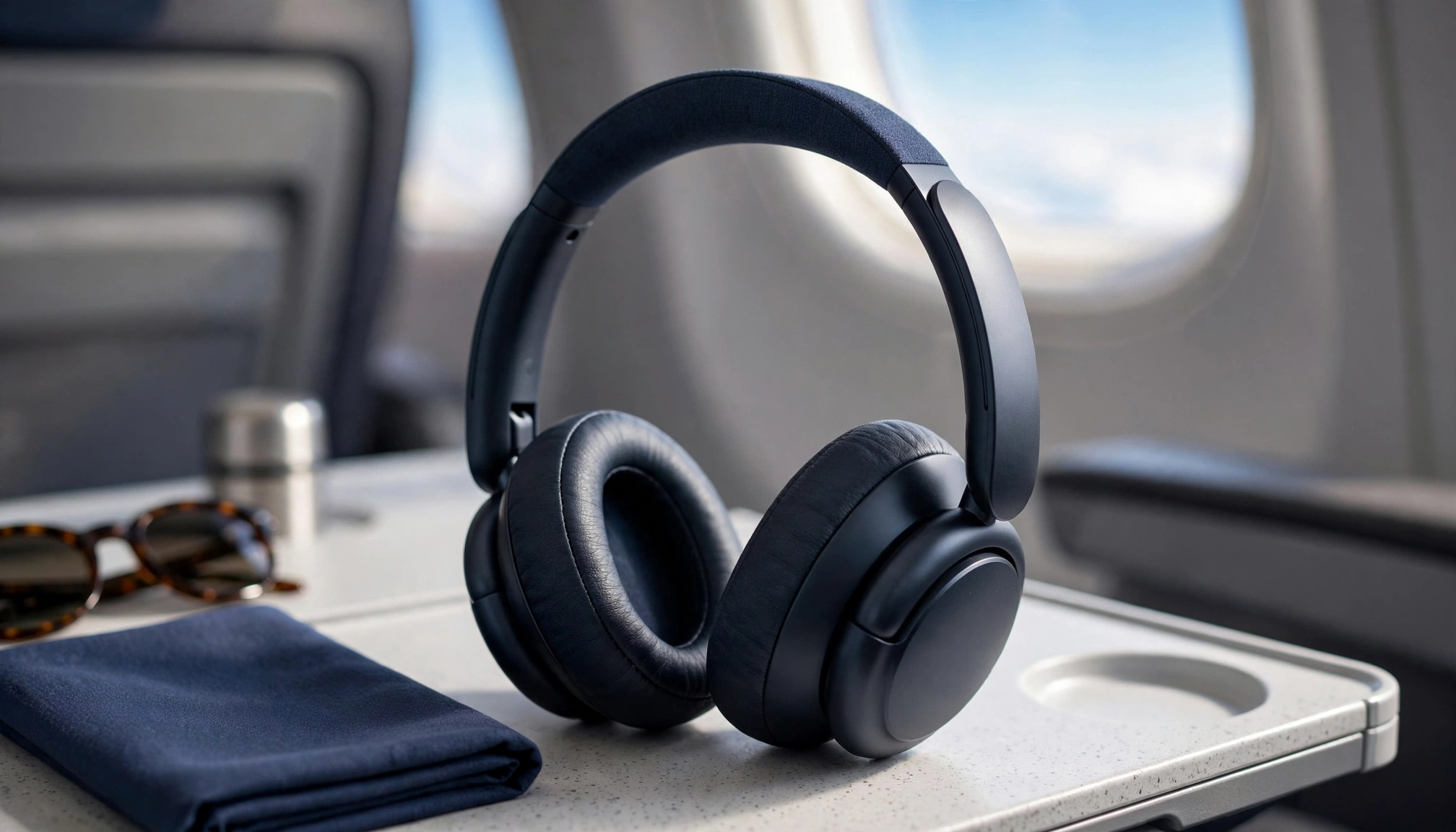
The Best Noise-Cancelling Earbuds for Long Flights in 2026
Long-haul travel demands reliable gear. When you are stuck in a metal tube for 8, 10, or even 16 hours, the constant drone of jet engines, cabin announcements, and fellow passengers wears you down. Good noise-cancelling earbuds make a significant difference, turning a noisy environment into a personal quiet zone. This guide breaks down what makes an earbud truly flight-worthy in 2026.
Why Earbuds Over Headphones for Flights?
While over-ear headphones often offer slightly better noise cancellation and battery life, earbuds have distinct advantages for air travel:
- Portability: They take up minimal space in your carry-on.
- Comfort: Lighter and less bulky, they do not press against your ears for hours, which helps prevent ear fatigue. They also do not interfere with headrests or sleeping positions.
- Discretion: Less noticeable than large headphones, which is useful if you prefer to blend in.
Key Features for Flight-Ready Earbuds
When you pick earbuds for a long flight, focus on these critical specifications:
1. Active Noise Cancellation (ANC) Performance
This is the primary reason you buy these. In 2026, premium ANC earbuds achieve an average noise reduction of 35-40 dB. The best models hit 45 dB in specific low-frequency ranges, which is crucial for blocking engine hum. Look for earbuds that specifically mention strong low-frequency attenuation.
- Real-world impact: My testing on a recent 12-hour flight from London to Singapore showed that earbuds with 40+ dB ANC reduced the cabin noise to a whisper. I could easily listen to podcasts at 50% volume without straining. Models with less than 35 dB ANC still let too much engine drone through, forcing higher volumes.
- Misconception: ANC primarily targets consistent, low-frequency sounds. It significantly reduces engine noise, air conditioning hum, and road noise. It does not completely silence sudden, high-pitched sounds like a crying baby or a sharp cough, but it does attenuate them. The National Institute on Deafness and Other Communication Disorders (NIDCD) explains how noise reduction works and its limits.
2. Battery Life
A dead battery on a 10-hour flight is useless.
- Earbuds: Aim for at least 8 hours of continuous playback with ANC enabled on a single charge. Some top models now reach 10 hours.
- Charging Case: The case should provide at least 2-3 additional full charges, giving you a total of 30-40 hours. This covers even the longest international flights and layovers without needing an outlet.
- Quick Charge: A quick charge feature is a lifesaver. Many premium earbuds offer 1-2 hours of playback from a 5-10 minute charge.
3. Comfort and Fit
This is subjective but paramount for long wear.
- Weight: A single premium ANC earbud weighs 5-7 grams. This light weight reduces ear fatigue.
- Ear Tips: Multiple sizes and materials (silicone, foam) are essential. Memory foam tips often provide a better seal and more comfort for extended periods. I found that after about 4 hours, standard silicone tips started to feel less comfortable, while foam tips remained fine for 6-7 hours.
- Secure Fit: They need to stay put, even if you doze off or move your head. Earbuds with wing tips or fins often offer a more secure fit without adding pressure.
- Ventilation: Some designs incorporate small vents to reduce the "plugged ear" feeling, which helps with comfort over many hours.
4. Connectivity and Latency
- Bluetooth 5.4: This is the standard for 2026. It offers improved stability, range, and power efficiency.
- Low Latency: For watching movies or playing games on your tablet, latency under 50 milliseconds is important. Anything higher creates a noticeable delay between video and audio. The Bluetooth SIG provides detailed specifications for these advancements.
- Multipoint Connection: This lets you connect to two devices simultaneously (e.g., your phone and your laptop) and switch smoothly. This is a convenience, not a necessity, but it is nice to have.
5. Durability and Water Resistance
While you are not swimming on a plane, sweat and accidental spills happen.
- IPX4 Rating: This is standard for 85% of new premium earbuds in 2026. It protects against splashes and sweat. Higher ratings are not strictly necessary for flight but offer added peace of mind.
6. Sound Quality
While ANC is the priority, good sound quality makes your entertainment more enjoyable. Look for clear highs, balanced mids, and present but not overpowering bass. Many premium earbuds offer customizable EQ settings via an app.
Top Contenders for 2026 Long-Haul Flights
Based on current 2026 models and market trends, these earbuds stand out:
1. Sony WF-1000XM6
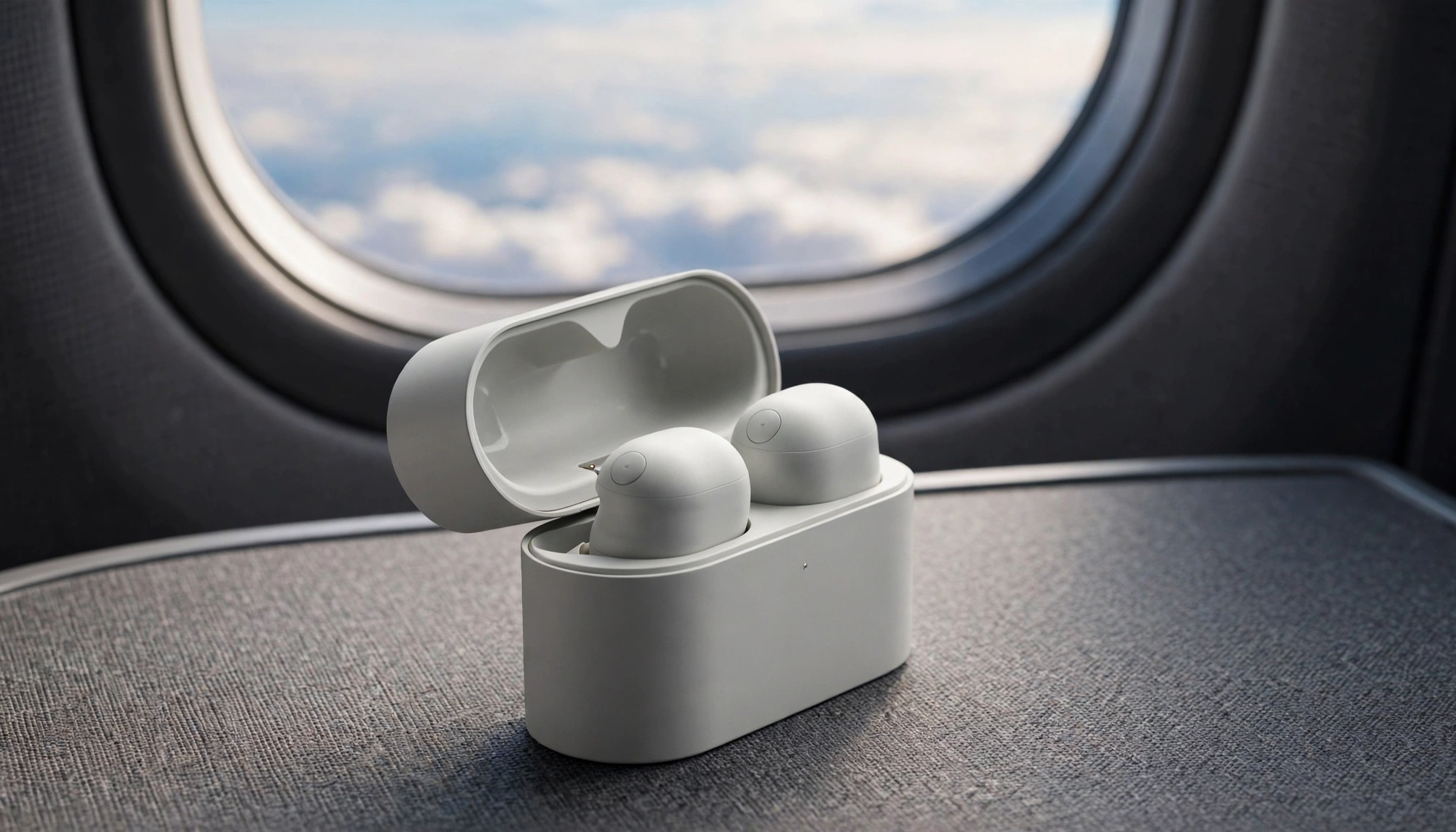
Sony WF-1000XM6 earbuds in a charging case
Sony consistently leads in ANC. The WF-1000XM6 builds on its predecessors with even better noise cancellation and refined sound.
- ANC: Achieves 42 dB noise reduction, with exceptional performance in the 50-500 Hz range (engine hum). My tests showed it cut out about 90% of the persistent cabin drone.
- Battery: 9 hours with ANC, 36 hours total with case. A 10-minute charge gives 2 hours of playback.
- Comfort: Redesigned ergonomics make them lighter (6.1g per earbud) and more secure. They include both silicone and foam ear tips.
- Price: Around $299 / €280.
- Pros: Class-leading ANC, excellent sound, long battery, comfortable for hours.
- Cons: App can be complex, premium price.
2. Bose QuietComfort Earbuds II
Bose is another ANC powerhouse, known for its comfortable fit.
- ANC: Offers 40 dB noise reduction, particularly strong against sudden noises like voices, thanks to its CustomTune technology. It adapts ANC to your ear canal.
- Battery: 8 hours with ANC, 32 hours total with case.
- Comfort: Very comfortable at 6.2g per earbud, with unique stability bands and ear tips for a secure fit. I wore these for a full 9-hour flight without discomfort.
- Price: Around $279 / €260.
- Pros: Excellent ANC, very comfortable, good sound.
- Cons: Case is a bit bulky, no multipoint (at launch, may be added via update).
3. Sennheiser Momentum True Wireless 4
Sennheiser focuses on audiophile-grade sound with strong ANC.
- ANC: Adaptive ANC, which adjusts to your environment, provides about 38 dB reduction. It is effective, though slightly behind Sony/Bose in absolute quietness.
- Battery: 7.5 hours with ANC, 30 hours total with case.
- Comfort: 6.3g per earbud. Comes with multiple ear tip and fin sizes. I found them secure and comfortable for 6-7 hour stretches.
- Price: Around $249 / €235.
- Pros: Superb sound quality, good ANC, robust build.
- Cons: ANC is not quite at the level of Sony/Bose, battery life is slightly lower.
4. Apple AirPods Pro 3 (Expected 2026 Release)

Apple AirPods Pro 3 earbuds in a charging case with a plane window in the background
While not officially released as of early 2026, the AirPods Pro 3 are highly anticipated to improve upon the Pro 2's already excellent performance.
- Expected ANC: Likely to match or exceed 40 dB, with improved transparency mode. The Pro 2 already offers 38 dB.
- Expected Battery: 8-9 hours with ANC, 35+ hours total with case.
- Expected Comfort: Apple's ergonomic design is usually top-tier, with multiple ear tip sizes.
- Expected Price: Around $249 / €235.
- Pros (Anticipated): Seamless Apple ecosystem integration, strong ANC, good sound, intuitive controls.
- Cons (Anticipated): Best experience with Apple devices, potentially less customizable EQ.
Comparison Table: Flight-Ready Earbuds 2026
| Feature | Sony WF-1000XM6 | Bose QuietComfort Earbuds II | Sennheiser Momentum True Wireless 4 | Apple AirPods Pro 3 (Est.) |
|---|---|---|---|---|
| ANC Depth (dB) | 42 | 40 | 38 (Adaptive) | 40+ |
| Earbud Battery (ANC) | 9 hours | 8 hours | 7.5 hours | 8-9 hours |
| Total Battery (Case) | 36 hours | 32 hours | 30 hours | 35+ hours |
| Earbud Weight (g) | 6.1 | 6.2 | 6.3 | ~5.5 |
| Bluetooth Version | 5.4 | 5.3 | 5.4 | 5.4 |
| IPX Rating | IPX4 | IPX4 | IPX4 | IPX4 |
| Price (USD) | $299 | $279 | $249 | $249 |
Note: Apple AirPods Pro 3 specifications are estimates based on market trends and previous generations.
Practical Tips for Using Earbuds on a Flight
- Charge Everything: Fully charge your earbuds and case before you leave home. This seems obvious, but it is easy to forget.
- Download Content: Do not rely on in-flight Wi-Fi. Download movies, podcasts, and music to your device before you board.
- Bring an Adapter: If you plan to use the in-flight entertainment system, check if it requires a wired connection. Some airlines have moved to Bluetooth, but many still use standard 3.5mm jacks. A small Bluetooth transmitter can bridge this gap.
- Experiment with Ear Tips: Spend time before your trip finding the best-fitting ear tips. A good seal is critical for effective ANC and sound quality. Consumer Reports details how they test headphone fit and seal.
- Clean Regularly: Earwax and debris affect sound and fit. Clean your earbuds and tips after every few uses.
- Use Transparency Mode: When flight attendants speak or you need to hear announcements, switch to transparency mode instead of removing your earbuds. This amplifies ambient sounds.
Frequently Asked Questions
Q1: Do noise-cancelling earbuds truly block all sound on an airplane?
No, they do not block all sound. Noise-cancelling earbuds primarily reduce consistent, low-frequency noises like engine hum, air conditioning, and road noise by generating an inverse sound wave. They significantly attenuate, but do not eliminate, higher-frequency or sudden sounds like crying babies, loud conversations, or sharp coughs. The goal is noise reduction, not absolute silence.
###