Navigating Travel Insurance for Israel in 2026
Traveling to Israel in 2026 presents unique challenges for insurance coverage. The U.S. Department of State maintains a Level 3: Reconsider Travel advisory due to terrorism and civil unrest. This advisory level significantly impacts what standard travel insurance policies cover. Many travelers mistakenly assume their basic policy protects them from all eventualities, including acts of war or terrorism. This is a critical misconception.
My experience reviewing claims and policies for high-risk regions shows that most off-the-shelf travel insurance plans explicitly exclude coverage for acts of war, civil unrest, or terrorism. If you plan a trip to Israel, you need to look for specialized "cancel for any reason" (CFAR) policies, "political evacuation" riders, and robust "medical evacuation" coverage. Without these, you risk paying out-of-pocket for potentially catastrophic events.
Why Standard Policies Fall Short
Standard travel insurance policies primarily cover common travel mishaps: trip cancellation due to illness, lost luggage, or minor medical emergencies. They are not designed for travel to areas with elevated government travel advisories related to conflict or terrorism.
Here's why a basic policy won't cut it for Israel in 2026:
- War/Terrorism Exclusions: Most policies have clear clauses stating they do not cover losses arising from acts of war, civil commotion, or terrorism. If an incident related to these occurs, your claim will likely be denied.
- Medical Evacuation Limitations: While some policies include medical evacuation, the limits might be too low, or the circumstances for activation might not cover political instability. Medical evacuation from Israel to a major European medical center costs upwards of $75,000. An air ambulance to the United States can exceed $150,000.
- Cancellation Restrictions: If the State Department issues a new, higher-level advisory (e.g., Level 4: Do Not Travel) after you buy your policy but before your trip, a standard policy might not let you cancel and get a full refund unless you have CFAR.
Key Insurance Types & What They Cover
When planning travel to Israel, you need to consider specific types of coverage beyond the basics.
1. "Cancel For Any Reason" (CFAR) Insurance
CFAR is the most flexible, but also the most expensive, type of trip cancellation coverage. It allows you to cancel your trip for any reason not covered by a standard policy and still recoup a portion of your non-refundable expenses.
- What it covers: If you decide not to go to Israel because of a new travel advisory, personal concerns about safety, or any other reason, CFAR lets you cancel.
- Limitations: CFAR policies typically reimburse 50% to 75% of your non-refundable trip costs. You must usually purchase it within 10-21 days of your initial trip deposit, and you must insure 100% of your pre-paid, non-refundable trip costs. The maximum payout for emergency medical expenses under a typical CFAR policy for Israel travel in 2026 is often capped at $250,000.
- Cost: Expect CFAR to add 40% to 60% to the cost of a standard comprehensive policy. For a 7-day trip for a 35-year-old, this means an additional $50-$150 on top of the base $125-$250.
2. Medical Evacuation & Repatriation
This is non-negotiable for travel to Israel. Your existing health insurance likely offers limited or no coverage outside your home country. The World Health Organization (WHO) stresses the importance of adequate medical coverage for international travel.
- What it covers: Costs for emergency medical treatment, transportation to the nearest adequate medical facility, and, critically, evacuation back to your home country or a major medical center if local care is insufficient. It also covers repatriation of remains if a death occurs.
- Why it's crucial for Israel: Given the potential for civil unrest or terrorism, access to specialized medical care might be disrupted, or you might need to be moved quickly from a dangerous area. The costs are astronomical without insurance.
- Coverage Limits: Look for policies with at least $500,000 in medical evacuation coverage. Some specialized policies offer $1,000,000 or more.
3. Political Evacuation & Security Evacuation
This is a specific rider or a feature of specialized policies that is distinct from medical evacuation.
- What it covers: Costs associated with evacuating you from Israel if a government authority (like the U.S. State Department) issues an evacuation order, or if civil unrest, war, or terrorism makes your location unsafe. This includes transportation, lodging, and other related expenses to get you to the nearest safe location.
- Why it's crucial for Israel: With a Level 3 advisory, the risk of political instability or security incidents is higher. If the situation escalates, you need a plan to get out.
- Providers: Only a few specialized insurers offer this, often through "crisis response" or "high-risk travel" policies.
4. Terrorism Coverage
Some comprehensive policies offer an optional terrorism rider, or it might be included in specialized plans.
- What it covers: Medical expenses, trip interruption, or cancellation if a certified act of terrorism impacts your travel plans or occurs near your location.
- Limitations: There are often strict definitions of what constitutes an "act of terrorism" and geographical limitations (e.g., must occur within a certain distance of your itinerary).
Comparing Top Travel Insurance Providers for Israel (2026)
Finding the "best" provider depends on your specific needs, age, health, and trip cost. However, for Israel in 2026, I recommend focusing on providers known for robust, specialized coverage.
Here's a comparison of typical offerings from providers often recommended for high-risk travel:
| Feature/Provider | World Nomads (Explorer Plan) | GeoBlue (Voyager Choice) | Battleface (Travel Medical) | Allianz Travel (Annual Plan w/ CFAR) |
|---|---|---|---|---|
| Medical Expenses | Up to $100,000 - $250,000 | Up to $1,000,000 | Up to $1,000,000 | Up to $50,000 - $250,000 |
| Emergency Evacuation | Up to $500,000 | Up to $1,000,000 | Up to $1,000,000 | Up to $500,000 |
| Political Evacuation | Often available as add-on | Yes, often included | Yes, often included | Not typically included |
| Terrorism Coverage | Limited, check policy wording | Yes, often included | Yes, often included | Limited, check policy wording |
| CFAR Option | Not typically available | No | No | Yes, as an add-on |
| Cost (7-day, 35yo, $3k trip) | ~$150 - $250 | ~$200 - $350 | ~$250 - $400 | ~$300 - $500 (with CFAR) |
| Key Advantage | Good for adventure activities | Strong medical/evac focus | High-risk specialist | Reputable, CFAR option |
| Consideration | May require specific riders | Primarily medical | May be more expensive | CFAR adds significant cost |
Note: Prices are estimates for a 7-day trip to Israel for a 35-year-old traveler with a $3,000 trip cost, as of October 2026. Actual costs vary based on age, duration, coverage limits, and specific policy terms.

A person looking at a travel insurance policy document with a magnifying glass.
How to Choose the Right Policy
Selecting the best travel insurance for Israel in 2026 involves careful consideration and direct communication with insurers.
- Assess Your Risk Tolerance: How concerned are you about potential unrest? Your comfort level dictates how much specialized coverage you need.
- Read the Fine Print (Seriously): Do not assume anything. Get a copy of the policy document before purchasing and specifically look for clauses related to:
- "War," "terrorism," "civil unrest," "insurrection."
- "Government travel advisories" or "warnings."
- "Political evacuation" and "security evacuation."
- The definition of "emergency medical condition" and "medical necessity."
- Exclusions for pre-existing conditions.
- Call the Insurer Directly: This is critical. Explain you are traveling to Israel, mention the U.S. Department of State's Level 3 advisory, and ask specific questions:
- "Does this policy cover medical emergencies if I'm injured in an act of terrorism?"
- "If the State Department issues a Level 4 advisory while I'm there, will I be covered for political evacuation?"
- "If I need to cancel my trip due to escalating conflict before I leave, what specifically is covered under this policy?"
- "What are the exact triggers for medical and political evacuation?"
- Consider a Specialized Provider: Companies like Battleface, Global Rescue, or AIG Travel Guard (for specific plans) often have more robust options for high-risk destinations. They understand the nuances of travel to places with advisories.
- Look for High Medical & Evacuation Limits: Aim for at least $500,000 for medical evacuation. The Centers for Disease Control and Prevention (CDC) also emphasizes the importance of comprehensive medical coverage.
- Purchase Early: For CFAR, you must buy it within a few weeks of your initial trip deposit. For other policies, buying early ensures you're covered for unforeseen events that might occur before your departure.
Practical Considerations for Israel Travel in 2026
Beyond insurance, several practical steps can enhance your safety and preparedness.
- Register with Your Embassy: For U.S. citizens, enroll in the Smart Traveler Enrollment Program (STEP) at step.state.gov. This helps the embassy locate you in an emergency.
- Stay Informed: Monitor local news and your government's travel advisories regularly.
- Have an Emergency Plan: Know the location of your embassy, local emergency numbers (e.g., 100 for police, 101 for ambulance in Israel), and have a communication plan with family.
- Keep Documents Secure: Carry copies of your passport, visa, and insurance documents separately from the originals.
- Understand Local Healthcare: Research the quality and accessibility of medical facilities in your planned destinations within Israel.
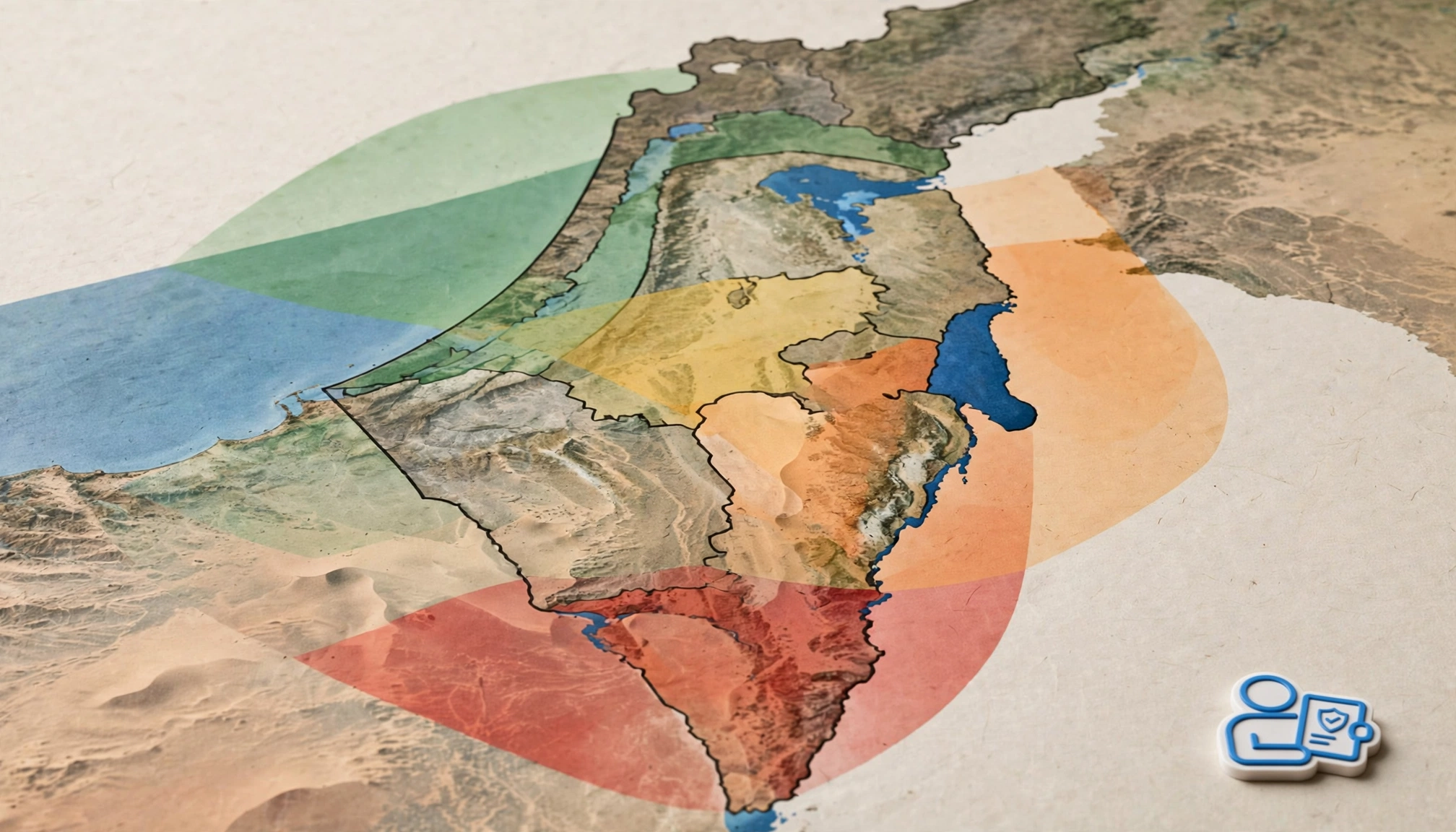
A map of Israel with various security zones marked, overlaid with a small icon of a person holding a travel insurance document.
Final Verdict & Practical Takeaways
For Israel