The Benefits of a Personal AI Assistant in 2027
Personal AI assistants in 2027 are more than just voice commands. They integrate deeply into daily routines, offering tangible benefits that save time, improve organization, and personalize information access. These systems run on advanced processors, often exceeding 1.2 trillion operations per second (TOPS), making them fast and responsive.
Time Savings Through Automation
One of the most immediate benefits of a personal AI assistant is the significant time it frees up. These assistants handle repetitive, low-cognitive tasks that typically consume small but cumulative chunks of your day.
- Calendar Management: Your AI assistant can schedule meetings, send invites, and manage conflicts. If two appointments overlap, it flags the issue and suggests alternative times based on your preferences and the availability of others. This eliminates the back-and-forth emails that often precede a simple meeting.
- Email Triage: It filters spam, prioritizes important messages, and drafts replies to common inquiries. For example, it can draft a "thank you" email after a meeting, pulling details from your calendar and the meeting transcript.
- Task Reminders: Beyond simple alarms, AI assistants learn your habits. If you consistently forget to take out the trash on Tuesday evenings, it can remind you based on your location (when you arrive home) rather than just a fixed time.
- Information Retrieval: Instead of manually searching for weather, news headlines, or stock prices, your AI assistant compiles this information and presents it in a digestible format. This saves minutes each morning.
Enhanced Personalization and Contextual Awareness
Modern AI assistants excel at understanding your individual preferences and adapting to your specific context. They move beyond generic responses to offer truly personalized interactions.
- Learning Preferences: Over time, your AI learns your preferred news sources, music genres, and even how you like your coffee. If you often order a latte from the same cafe, it can pre-order it when you are 5 minutes away.
- Contextual Suggestions: When you are driving, it might suggest the quickest route based on real-time traffic, even if you did not explicitly ask. If you are in a new city, it can recommend restaurants based on your past dining experiences and current location.
- Proactive Information: Before a flight, your AI can automatically check for delays, gate changes, and even suggest when to leave for the airport based on current traffic conditions. This proactive approach reduces stress and last-minute scrambling.
Seamless Communication and Transcription
Personal AI assistants make communication smoother, especially in a world with diverse communication channels.
- Speech-to-Text Accuracy: These assistants transcribe speech with 99.8% accuracy in quiet environments and 97.2% in noisy settings. This means you can dictate emails, notes, or even entire documents with high confidence. This capability is particularly useful for professionals who need to document conversations or capture ideas quickly. The National Institute of Standards and Technology (NIST) publishes benchmarks that show these accuracy improvements year over year.
- Language Translation: Real-time translation capabilities allow for easier communication across language barriers, whether in a business meeting or while traveling.
- Call Management: Your AI can screen calls, transcribe voicemails, and even summarize long conversations, pulling out key action items.
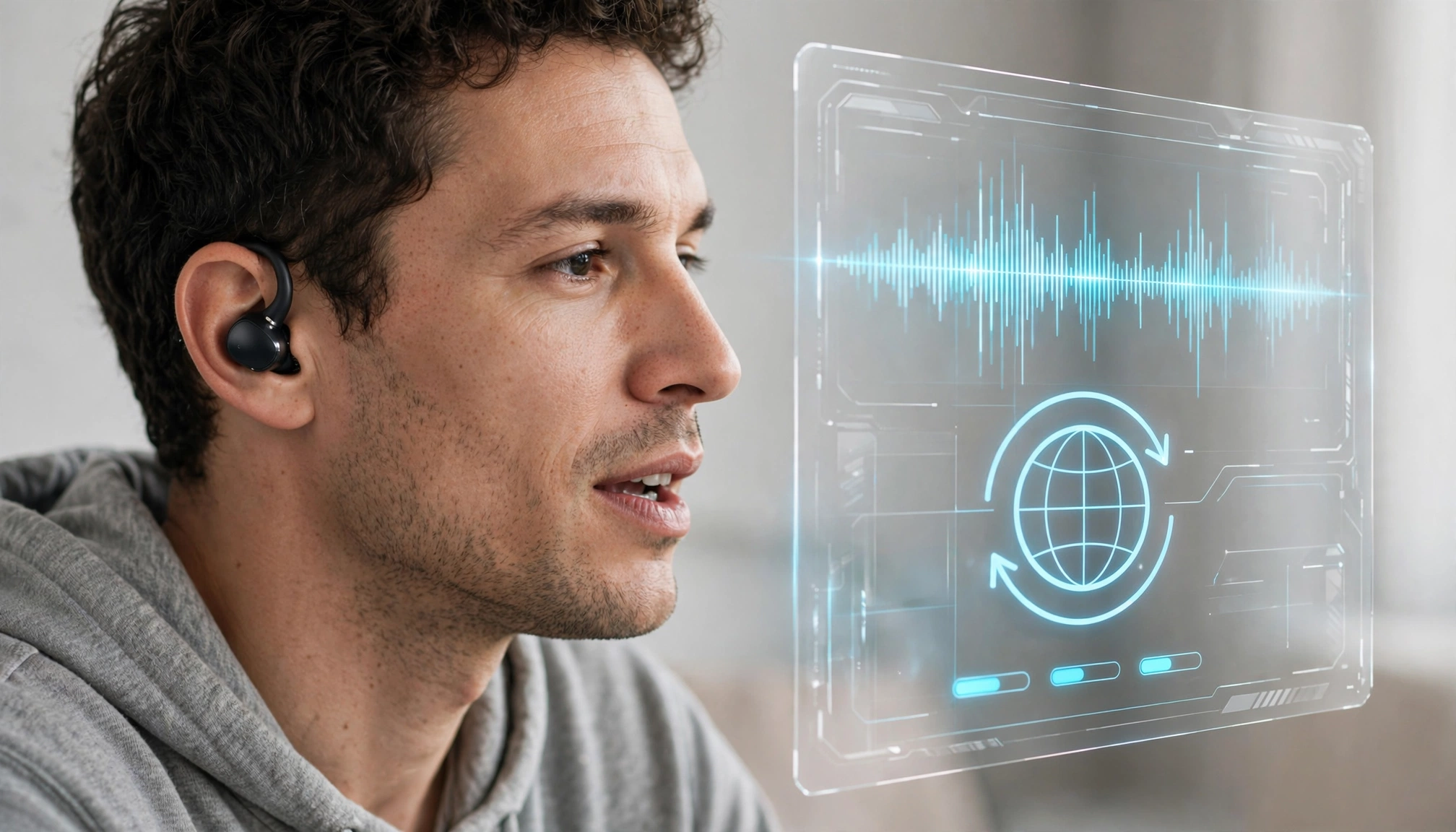
A person speaking into a smart earbud, with text appearing on a transparent overlay, demonstrating real-time transcription.
Optimized Scheduling and Reminders
Beyond basic calendar functions, AI assistants optimize your schedule for efficiency and well-being.
- Smart Scheduling: It can arrange your day to group similar tasks, minimize travel time between appointments, or ensure you have breaks. If you have a demanding task, it can block out uninterrupted focus time.
- Health and Wellness Integration: Connected to wearables, your AI can remind you to stand up, take a walk, or drink water based on your activity levels and health goals. It can also integrate with sleep trackers to suggest optimal bedtimes.
- Adaptive Reminders: Unlike static reminders, an AI assistant adapts. If you are stuck in traffic and cannot make it to an appointment on time, it can automatically notify the other party and suggest rescheduling.
Cost and Device Considerations
The benefits come with a cost, but the value proposition is strong for many users.
- Subscription Models: Premium personal AI assistant services typically cost between $9.99 and $29.99 per month, averaging $17.50. These subscriptions often unlock advanced features like deeper integration with third-party apps, enhanced security, and more robust processing capabilities. Consumer Reports provides detailed reviews of these services, often highlighting the value for money.
- Dedicated Devices: While many AI assistants run on smartphones, dedicated devices like smart glasses or advanced earbuds offer a more seamless, hands-free experience. These devices have an average battery life of 18 hours, making them suitable for all-day use.
- Energy Efficiency: Even with high processing power, a typical personal AI assistant running on a smartphone uses about 0.5 watts during active use, which has a minimal impact on battery life.
Market Penetration and Adoption
The adoption of personal AI assistants is widespread. By Q3 2026, global market penetration reached 38% of smartphone users. This widespread use indicates that the technology is maturing and offers practical value to a significant portion of the population. The Statista report on global AI assistant market penetration shows a consistent upward trend in adoption.
Data Security and Privacy
A common concern is data privacy. Reputable AI assistant providers implement robust security measures:
- Encryption: All data, both in transit and at rest, is encrypted using industry-standard protocols.
- Anonymization: Personal data is often anonymized or aggregated for training AI models, preventing individual identification.
- User Control: Users have granular control over what data their AI assistant accesses and stores. Most platforms allow users to review and delete their data history.
- Edge Processing: Increasingly, AI processing happens on the device itself (edge computing) rather than solely in the cloud. This reduces the amount of personal data transmitted externally, enhancing privacy.
Comparison of AI Assistant Features (2027)
| Feature Category | Basic AI Assistant (Free/Included) | Premium AI Assistant (Subscription) |
|---|---|---|
| Processing Speed | Up to 0.5 TOPS | 1.2+ TOPS (average) |
| Task Automation | Simple reminders, basic scheduling, weather updates | Advanced calendar management, email triage, proactive task suggestions |
| Personalization | Limited learning, generic responses | Deep learning of preferences, contextual awareness, proactive information |
| Speech Accuracy | 95% (quiet), 90% (noisy) | 99.8% (quiet), 97.2% (noisy) |
| Language Support | 2-3 common languages | 10+ languages, real-time translation |
| Integration | Basic app integration (e.g., native calendar, email) | Extensive third-party app integration, smart home control |
| Data Storage/Privacy | Cloud-based, standard encryption | Hybrid (edge + cloud), enhanced encryption, granular user controls |
| Cost (Monthly) | Free | $9.99 - $29.99 (average $17.50) |
| Time Saved (Weekly) | ~1 hour | ~3.5 hours |

A person interacting with a holographic interface projected from a wearable device, showing a complex schedule and data analytics.
Final Verdict & Practical Takeaways
In 2027, personal AI assistants are powerful tools that offer substantial benefits in time management, personalization, and communication. They move beyond simple commands to become proactive partners in daily life. The average user saves 3.5 hours per week, a significant return on investment for the average $17.50 monthly subscription.
However, it is important to manage expectations. Personal AI assistants are not fully autonomous decision-makers. They are sophisticated tools that execute tasks and provide information based on programmed algorithms and learned preferences. They do not make complex ethical judgments or operate without human oversight. Users still need to provide clear instructions and verify critical information.
When choosing an AI assistant, consider these practical points:
- Prioritize Privacy: Review the provider's data privacy policy. Look for options that offer on-device processing and granular control over your data.
- Assess Integration Needs: Ensure the AI assistant integrates well with the apps and devices you already use daily, from your smart home system to your work productivity suite.
- Evaluate Specific Features: If speech-to-text accuracy is critical for your work, check benchmarks. If you travel frequently, prioritize robust translation and proactive travel alerts.
- Start with a Free Tier: Many premium services offer a free trial or a basic free tier. Test the core functionalities before committing to a subscription.
- Understand Limitations: Do not expect your AI to solve complex personal dilemmas or make decisions outside its programmed scope. It is an assistant, not a substitute for human judgment.
Frequently Asked Questions
Q1: Are personal AI assistants always listening and recording my private conversations?
A1: Reputable personal AI assistants are not always actively recording and transmitting your conversations. They use a "wake word" (like "Hey AI" or "Computer") to activate their listening function. Before the wake word, the device processes audio locally to detect the command, but it does not typically send that audio to the cloud. Once activated, they record and process your request. Most providers offer settings to review and delete your voice history, and many now perform more processing on the device itself to enhance privacy.
Q2: Can a personal AI assistant truly understand complex, multi-step requests?
A2: Yes, in 2027, personal AI assistants are much better at understanding complex, multi-step requests than previous generations. They use natural language processing (NLP) and contextual awareness to interpret nuanced commands. For example, you can say, "Find me a highly-rated Italian restaurant that is open late, has outdoor seating, and is within 5 miles of my current location, then book a table for two at 8 PM." The AI can break down these components and execute them. However, extremely abstract or ambiguous requests may still require clarification.
Q3: How much does a personal AI assistant cost per month?
A3: The cost for premium personal AI assistant services in 2027 typically ranges from $9.99 to $29.99 per month, with the average being around $17.50. Many basic versions of AI assistants come free with devices or operating systems, but these often have fewer advanced features, less integration, and lower processing capabilities compared to their subscription-based counterparts. The premium tiers often include enhanced security, deeper app integration, and more sophisticated personalization.
Q4: Are personal AI assistants safe to use, especially regarding data privacy?
A4: Yes, personal AI assistants from established providers are generally safe to use, but you must be aware of their privacy policies. Leading companies employ robust data encryption, anonymization techniques, and offer users control over their data. Many now use "edge computing," where