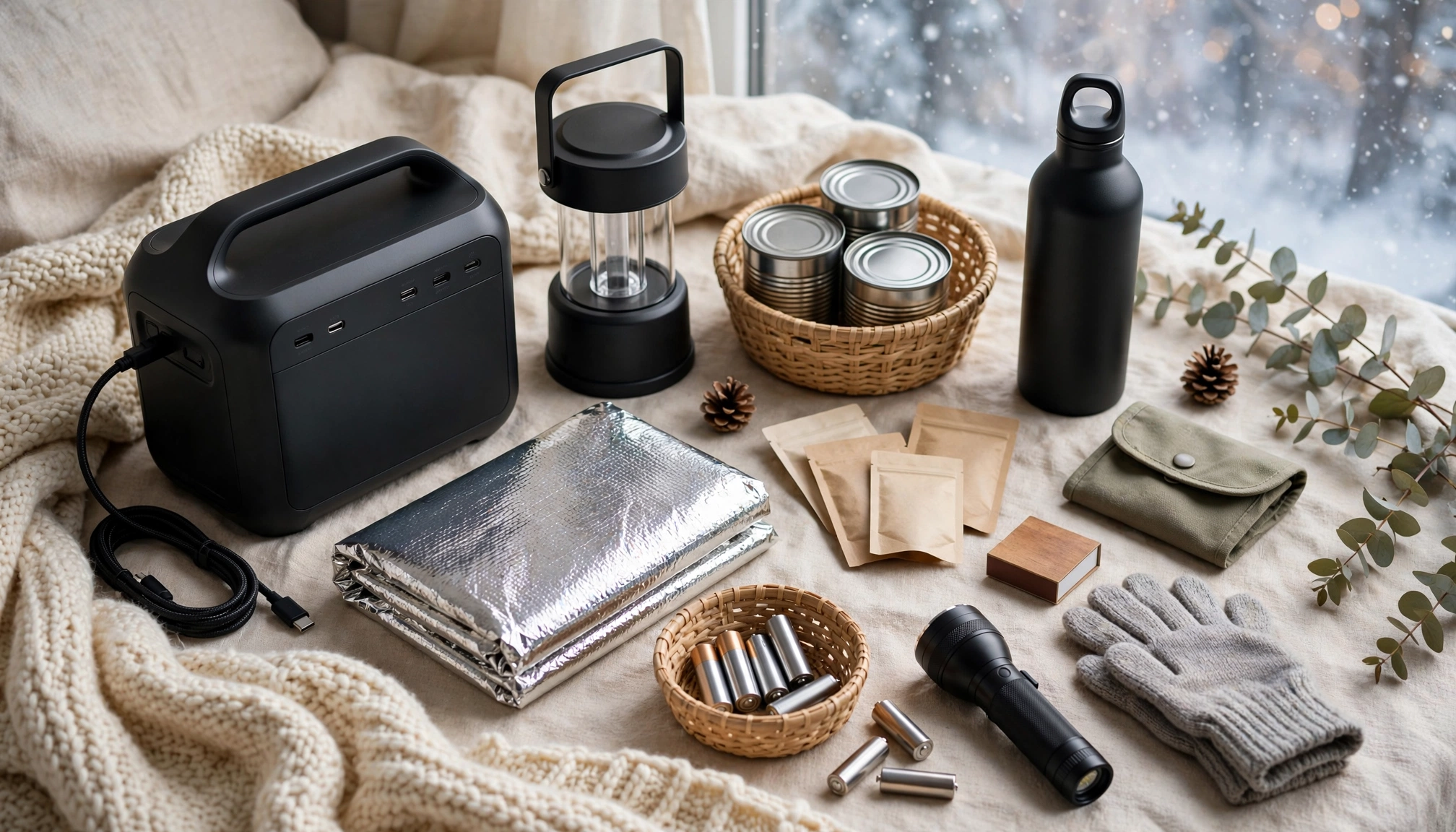
How to Prepare Your Home for Winter Power Outages in 2026
Winter power outages are disruptive and can turn dangerous quickly. In 2025, the average U.S. power outage lasted 7.3 hours, up from 6.8 hours in 2024, according to the U.S. Energy Information Administration (EIA). This means you need a plan that covers more than just a few hours. I've been through enough of these to know that preparation makes all the difference between a minor inconvenience and a serious problem.
This guide breaks down the practical steps you need to take to keep your home safe and functional when the grid goes down in cold weather.
1. Secure Alternative Heating Sources
Losing heat in winter is the most immediate danger. The U.S. Department of Energy recommends maintaining indoor temperatures above 60°F (15.6°C) to prevent hypothermia risks. Relying on your home's central heating during an outage is not an option.
Portable Propane or Kerosene Heaters
These are effective for heating a single room. I use a 30,000 BTU propane heater for my living room. A 20-pound (9.07 kg) propane tank lasts about 10-12 hours on a medium setting with this unit.
- Cost: Heaters run $80-$250. Propane tanks cost $30-$60, and refills are $15-$25. Kerosene is similar.
- Safety: Always ensure proper ventilation. Crack a window slightly (1 inch is usually enough) and use a battery-operated carbon monoxide detector. Never use indoor heaters in enclosed spaces without ventilation.
- Fuel Storage: Store propane tanks outdoors, away from your home. Kerosene has a longer shelf life but needs proper sealed containers.
Wood Stoves or Fireplaces
If you have one, ensure your chimney is clean and inspected annually. This is a primary heat source for many rural homes.
- Fuel: Stock at least a cord of seasoned firewood (costs $200-$400) for extended outages.
- Maintenance: A chimney sweep costs $150-$300.
Insulation & Draft Proofing
This is your first line of defense. Before an outage, seal drafts around windows and doors with weatherstripping ($10-$30 per roll) and caulk ($5-$10 per tube). During an outage, hang blankets over windows and exterior doors to create an insulating barrier. Close off unused rooms to concentrate heat in one area.
2. Establish Reliable Lighting
Flashlights and headlamps are far safer than candles.
Battery-Powered Lighting
- Flashlights & Headlamps: Have at least one per family member. Stock plenty of spare batteries (AA, AAA, D-cell). A pack of 24 AA batteries costs about $15-$20.
- LED Lanterns: These provide ambient light for a room. A good LED lantern costs $20-$50 and runs for 30-100 hours on a set of D-cell batteries.
- Battery Stock: I keep at least two full sets of batteries for every device. Check expiration dates annually.
Solar-Powered Lights
Small solar-powered garden lights can be brought indoors at night for soft, emergency lighting. They are not bright but provide enough light to navigate.
Candles (Use with Extreme Caution)
If you must use candles, place them in sturdy, non-flammable holders on a stable surface, away from anything combustible. Never leave them unattended. I avoid them entirely due to fire risk.
3. Plan for Communication & Charging
When the power is out, your cell phone is your lifeline.
Portable Power Stations (Battery Banks)
These are rechargeable lithium-ion batteries with AC outlets, USB ports, and sometimes DC car ports. They are quiet, emission-free, and safe for indoor use.
- Cost: A decent 500Wh unit costs $400-$700. A 1000Wh unit costs $800-$1,200.
- Capacity: A 500Wh unit can charge a smartphone 40-50 times or run a small LED lamp for 100+ hours.
- Charging: Charge them fully before winter. Re-charge every 3-6 months to maintain battery health.
Car Chargers & Inverters
Your car's 12V outlet can charge phones. A car inverter ($30-$80) plugs into the 12V outlet and provides standard AC outlets for laptops or small electronics.
- Safety: Run your car in a well-ventilated area (outdoors, away from windows and doors) to avoid carbon monoxide poisoning. Do not run it in an attached garage.
- Fuel: Keep your car's fuel tank at least half full during winter.
Hand-Crank or Solar Radios
These provide weather alerts and news without relying on grid power. Many also have a USB port for emergency phone charging. A good one costs $25-$50.
Landline Phone (If You Still Have One)
Corded landline phones (not cordless) often work during power outages because they draw power directly from the phone line.
4. Food & Water Management
Refrigerators and freezers stop working quickly.
Non-Perishable Food
Stock at least a 3-day supply, ideally a 7-day supply, per person. Focus on items that need no cooking or refrigeration.
- Examples: Canned goods (vegetables, fruits, meats, beans), dried fruits, nuts, granola bars, peanut butter, crackers, ready-to-eat cereals.
- Shelf Life: Commercially packaged emergency food rations (MREs) typically last 5 years when stored properly. Canned goods last 2-5 years.
- Manual Can Opener: Essential. Costs $5-$15.
Water Storage
You need at least 1 gallon (3.8 liters) of water per person per day for drinking and basic hygiene.
- Storage: Store water in clean, food-grade containers. Costs $10-$30 for a 5-gallon container.
- Emergency Supply: Fill bathtubs with water when an outage is imminent for flushing toilets (gravity feed) or non-potable uses.
- Water Purification: Keep purification tablets ($10-$20) or a portable filter ($30-$60) as a backup.
Cooking Without Power
- Propane Camp Stove: Safe for outdoor use only. A small stove costs $30-$70. A 1-pound propane cylinder costs $5-$8 and lasts 1-2 hours of cooking.
- Charcoal Grill: Also for outdoor use only.
- Sterno Cans: Small, portable heat source for warming food indoors, but not for cooking.
5. Generator Considerations
Generators provide the most power but require careful handling. A portable generator capable of powering essential appliances (refrigerator, some lights, phone charging) typically costs between $600 and $1,500 in 2026.
Types of Generators
- Portable Generators: Run on gasoline or propane. They are loud and require manual setup.
- Inverter Generators: Quieter and more fuel-efficient than conventional portable generators. Costs $800-$2,500.
- Standby Generators: Permanently installed, automatically turn on when power fails. Costs $5,000-$20,000, plus installation.
Fuel Storage
This is critical. My generator uses about 1 gallon of gasoline per hour under a moderate load. For a 72-hour outage, I need 72 gallons.
- Gasoline: Store in approved, clearly labeled containers (red plastic cans, $20-$30 each). Use fuel stabilizer to extend shelf life (6-12 months). Rotate fuel every 6-12 months.
- Propane: Store tanks outdoors. Propane does not degrade over time.
Safe Operation
- Outdoor Use ONLY: Generators produce carbon monoxide, a colorless, odorless, deadly gas. Always operate generators outdoors, at least 20 feet (6 meters) from your home, windows, and doors. Point the exhaust away from your house.
- Carbon Monoxide Detectors: Install battery-operated CO detectors inside your home, especially near sleeping areas. Costs $30-$60 each.
- Extension Cords: Use heavy-duty, outdoor-rated extension cords. Ensure they are properly sized for the load.
- Transfer Switch: For connecting a generator directly to your home's electrical panel, a professionally installed transfer switch ($500-$1,500) is essential to prevent backfeeding electricity into the grid, which can injure utility workers.
| Feature | Portable Generator (Gasoline) | Portable Power Station (Battery) |
|---|---|---|
| Cost (Typical) | $600 - $1,500 | $400 - $1,200 |
| Fuel Type | Gasoline, Propane | Lithium-ion Battery |
| Run Time (Avg) | 5-15 hours per tank (depends on load/tank size) | 5-100+ hours (depends on load/capacity) |
| Noise Level | High (60-80 dB) | Silent |
| Emissions | Yes (Carbon Monoxide, NOx) | None |
| Indoor Use | NEVER (Carbon Monoxide Risk) | Yes (Safe) |
| Maintenance | Fuel rotation, oil changes, spark plug checks | Charge retention, occasional full discharge/recharge |
| Power Output | 2,000-10,000+ Watts (can run refrigerator, furnace, some lights) | 300-2,000 Watts (can run refrigerator, lights, charging) |
| Fuel Storage | Requires safe, outdoor storage of flammable fuel | No fuel storage needed, just charging |
6. Health & Safety Kit
A well-stocked first-aid kit is always important, but especially during an outage when emergency services might be delayed.
- First-Aid Kit: Bandages, antiseptic wipes, pain relievers, prescription medications (at least a 7-day supply), any necessary medical devices.
- Warmth: Extra blankets, sleeping bags, warm clothing layers.
- Hygiene: Hand sanitizer, wet wipes, garbage bags for waste.
- Cash: ATMs and credit card machines might not work. Keep small bills on hand ($100-$200).
7. Emergency Plan & Drills
A plan is only good if everyone knows it.
- Meeting Point: Designate an indoor and outdoor meeting point.
- Contact List: Keep a written list of emergency contacts (family, doctors, utility company, local emergency services). Your phone might die.
- Practice: Periodically "practice" an outage. Turn off your main breaker for an hour and see how your family manages. This highlights gaps in your preparation.
- Know Your Neighbors: Establish a buddy system with neighbors, especially if you have elderly or vulnerable individuals nearby.
8. Vehicle Preparedness
Your car can be a lifesaver.
- Fuel: Keep your gas tank at least half full.
- Emergency Kit: Jumper cables, blankets, first-aid kit, non-perishable snacks, water, flashlight, shovel, sand/cat litter for traction.
- Charging: Use your car to charge phones or small devices with a car charger or inverter. Remember to run the car outdoors.