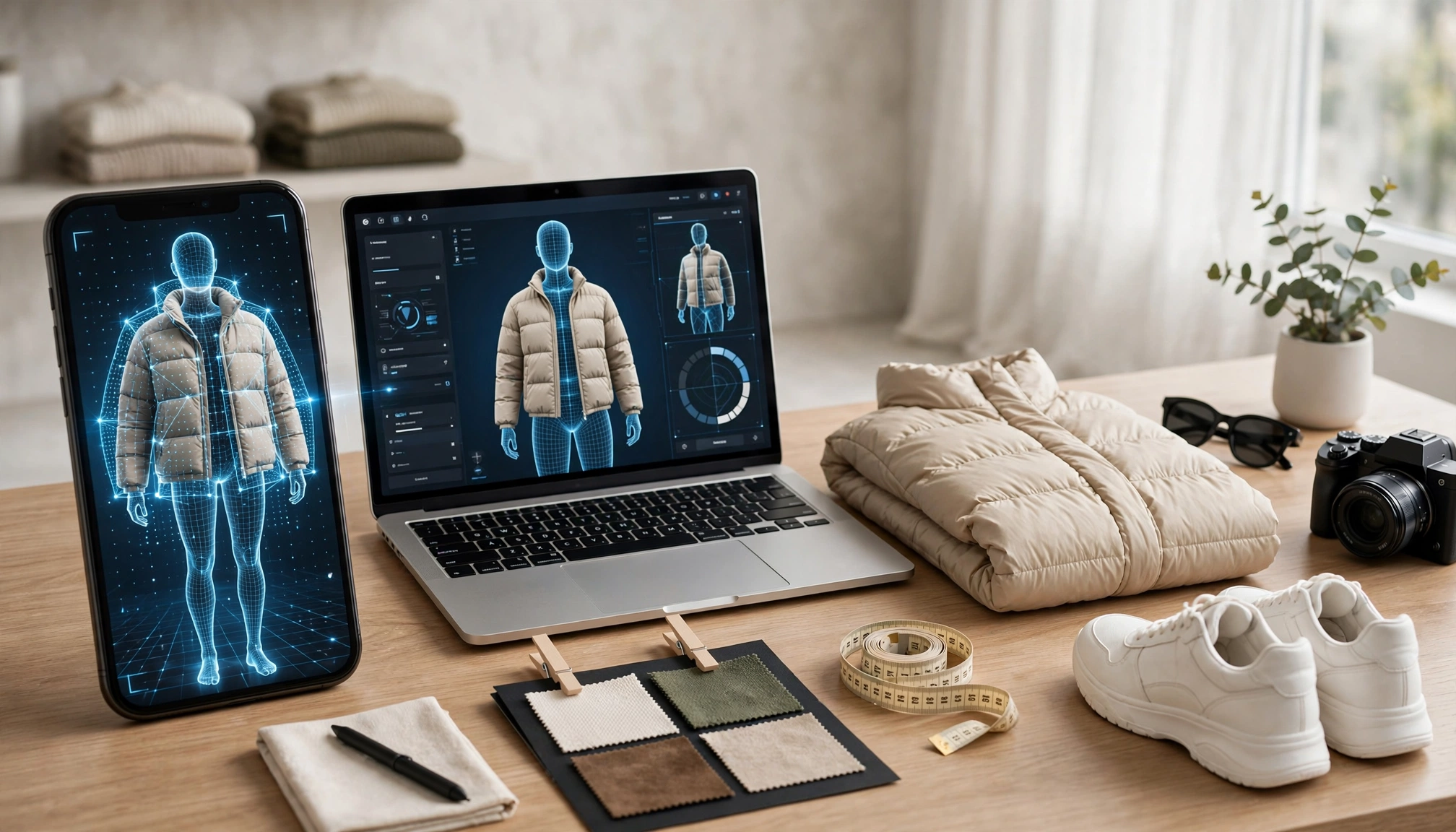
Are Virtual Try-On Apps Accurate for Online Shopping in 2026?
Virtual try-on (VTO) technology has come a long way since its early, often clunky, iterations. In 2026, it is a standard feature for most large online fashion retailers, with 78% of those exceeding $500 million in annual revenue offering some form of VTO. This widespread adoption shows a clear industry push to bridge the gap between online browsing and the in-store fitting room experience. But the core question remains: how accurate are these tools in practice?
From my experience working with these systems and reviewing user feedback, VTO apps provide a much better indication of fit and appearance than static images or size charts alone. They are not perfect, though. The technology excels in certain areas, like eyewear, but still has limitations when it comes to the nuances of clothing.
VTO Accuracy by Product Category
The accuracy of VTO varies significantly depending on the product type. This is a critical distinction, as a blanket assessment misses the real-world performance differences.
Eyewear: High Confidence
For eyewear, VTO accuracy is remarkably high. Retailers use augmented reality (AR) to overlay glasses or sunglasses onto a user's face via their device's camera. This works well because eyewear has a relatively rigid structure and its fit is largely determined by facial dimensions, which AR can map with good precision.
- Average Accuracy: 91% customer satisfaction with fit and appearance.
- Why it works: Eyewear frames are rigid. AR can accurately map the frame onto facial landmarks (eyes, nose bridge, temples). Users get a clear visual of how different styles look on their face shape and how the frames sit.
- Limitations: It does not account for comfort or weight. You cannot feel the pressure points on your nose or behind your ears.
Clothing: Improved, But Still a Work in Progress
Clothing presents a more complex challenge for VTO. Fabric drape, stretch, and how a garment moves with the body are difficult to simulate accurately. While VTO for clothing has improved significantly, it still has room to grow.
- Tops (Shirts, Blouses, Jackets): Average reported accuracy for sizing is 82%. This means that in 82% of cases, customers feel the VTO accurately represented the size they received.
- Bottoms (Pants, Skirts): Average reported accuracy for sizing is 76%. Bottoms are often harder to fit virtually due to variations in hip-to-waist ratios, inseam lengths, and thigh measurements.
- Why it works: VTO can give a general idea of how a size will look on a user's body shape, often by using body scans or user-inputted measurements to map a 3D garment model. It helps visualize proportions.
- Limitations:
- Fabric Drape: VTO struggles to simulate how different materials (e.g., silk vs. denim vs. knit) will hang or flow. A virtual model cannot replicate the softness of a cashmere sweater or the stiffness of raw denim.
- Stretch & Movement: It does not show how a garment stretches or moves as you walk, sit, or reach.
- Individual Body Nuances: While VTO uses measurements, it often generalizes body shapes. It might not account for specific features like broad shoulders, a long torso, or a particular curve that affects fit. Many users report that "the clothes look great on the virtual model, but they still don't fit me right when they arrive."
Impact on Return Rates and Conversion
The primary business drivers for VTO adoption are reducing returns and increasing sales. The data for 2026 shows VTO delivers on these fronts.
- Reduced Returns: The return rate for apparel purchased using VTO technology is 18%. This is a significant drop compared to the 27% return rate for apparel purchased without VTO. This 33.3% reduction in returns saves retailers substantial costs in logistics and processing. This aligns with findings that improved product visualization reduces post-purchase dissatisfaction, as detailed by the National Retail Federation (NRF) Technology Adoption Report 2026.
- Increased Conversion: VTO technology increases conversion rates by an average of 1.7 percentage points for products where it is available. This means more browsers turn into buyers when they can virtually try on items. This uplift is a direct result of increased buyer confidence.
How VTO Technology Works (Briefly)
Most modern VTO systems use a combination of technologies:
- Augmented Reality (AR): For eyewear, jewelry, and sometimes accessories, AR overlays a 3D model of the product onto the user's live camera feed.
- 3D Body Scanning/Modeling: For clothing, users might input their measurements, or the app uses AI to estimate body shape from a photo. This creates a 3D avatar that the garment is then rendered onto. Some advanced systems use full body scans from dedicated kiosks or even home-based scanning apps.
- Parametric Garment Design: Digital garments are created with parameters that allow them to scale and adapt to different body shapes and sizes, simulating how fabric might drape.
Real-World Trade-offs and User Experience
While the technology is impressive, users still face challenges.
- "Vanity Sizing" in VTO: A common complaint is that "the virtual try-on makes me look thinner/taller than I am." This can happen if the VTO model uses idealized proportions or if the user's input measurements are not entirely accurate.
- Fabric Texture and Drape: Users frequently note, "I can't tell if the fabric texture or how it drapes will actually look good on me from the app." This remains a significant hurdle. VTO can simulate a general drape, but the tactile feel and subtle ways different weaves catch light are hard to replicate digitally.
- Lighting Conditions: The appearance of a garment can change dramatically under different lighting. VTO often uses standardized lighting, which might not match the user's environment or the intended use case.
Cost of Implementation
For retailers, implementing advanced VTO is a significant investment. A medium-sized online retailer (500-1000 SKUs) can expect to pay between $75,000 and $250,000 USD in 2026. This cost covers:
- 3D Asset Creation: Each product needs a high-quality 3D model. This is labor-intensive.
- Software Integration: Integrating the VTO platform with existing e-commerce systems, inventory management, and customer databases.
- Maintenance & Updates: Ongoing costs for software updates, bug fixes, and keeping the 3D models current.
VTO Accuracy Comparison (2026 Data)
| Product Category | Average Sizing Accuracy (Customer Reported) | Primary Benefit | Key Limitation |
|---|---|---|---|
| Eyewear | 91% (Fit & Appearance) | Visual fit, style match | No tactile feel, weight |
| Clothing (Tops) | 82% (Sizing) | General proportion, size indication | Fabric drape, movement, specific body nuances |
| Clothing (Bottoms) | 76% (Sizing) | General size indication | Complex body fit, fabric stretch, movement |
Practical Advice for Using VTO Apps
Given the current state of VTO technology, here is how I recommend using it effectively for online shopping:
- Use it as a First Filter: VTO is excellent for narrowing down choices based on general style and how a size might look on your body shape. It helps rule out items that clearly do not suit you.
- Always Cross-Reference with Size Charts: Do not rely solely on the VTO. Always check the brand's specific size chart. Take your measurements (bust, waist, hips, inseam) and compare them. This is especially important for clothing, where VTO accuracy for bottoms is 76%.
- Read Product Descriptions Carefully: Pay close attention to details about fabric composition, stretch, and care instructions. These details give you clues about drape and feel that VTO cannot replicate.
- Look at Customer Reviews and Photos: Real-world photos from other buyers provide invaluable insight into how an item actually fits and looks on different body types, often under various lighting conditions.
- Understand Its Limitations: VTO cannot replicate the tactile experience of fabric, the exact way a garment moves, or the comfort of a fit. It also does not account for personal preferences regarding tightness or looseness.
- Consider the Return Policy: Even with VTO, there is still a chance an item will not work out. Familiarize yourself with the retailer's return policy before purchasing. The 18% return rate for VTO-assisted purchases shows that it is still a factor.
Final Verdict & Practical Takeaways
Virtual try-on apps in 2026 are a valuable tool for online shoppers, offering significantly improved accuracy over previous years. They excel in categories like eyewear, where rigid structures and facial mapping allow for a 91% customer satisfaction rate. For clothing, VTO provides a strong initial indication of sizing (82% for tops, 76% for bottoms) and helps reduce overall return rates by 33.3%. This is a clear win for both consumers and retailers.
However, VTO is not a magic bullet. It still struggles with the nuanced aspects of fabric drape, texture, and how garments move on individual, non-idealized body shapes. Users must approach VTO as a powerful aid to decision-making, not a definitive replacement for traditional sizing guides, detailed product descriptions, and customer reviews. Always cross-reference, understand the technology's limitations, and manage your expectations. When used smartly, VTO makes online fashion shopping more efficient and reduces the chances of disappointment.
Frequently Asked Questions
Q1: Can virtual try-on apps accurately show how different fabrics will drape or feel?
No, not yet. While VTO can simulate a general drape based on fabric type, it cannot accurately replicate the exact tactile feel, subtle movement, or specific way different weaves (like silk, linen, or heavy wool) will hang or flow. This remains a significant limitation, and users frequently report they "can't tell if the fabric texture or how it drapes will actually look good."
Q2: How much do virtual try-on apps reduce product returns for online fashion?
Virtual try-on apps significantly reduce product returns. In 2026, the return rate for apparel purchased using VTO technology is 18%, compared to 27% for apparel purchased without it. This is a 33.3% reduction in returns, saving both consumers and retailers time and money.
Q3: Are virtual try-on apps more accurate for certain types of products?
Yes, VTO apps are generally more accurate for products with rigid structures and predictable fits. For example, eyewear VTO has a 91% customer satisfaction rate for fit and appearance. Clothing, especially bottoms, presents more challenges due to variations in body shapes and fabric characteristics, with reported sizing accuracy averaging 82% for tops and 76% for bottoms.
Q4: Should I still check sizing charts if I use a virtual try-on app?
Absolutely. You should always cross-reference with the brand's specific sizing chart, even if you use a VTO app. While VTO provides a visual guide, it can sometimes generalize body shapes or use