Are Virtual Try-On Apps Accurate for Formal Wear in 2026?
Virtual try-on (VTO) apps for formal wear have made significant strides by 2026, largely driven by advancements in AI and 3D body scanning. These tools offer a much more precise fit prediction than ever before, but they still have limitations, especially when dealing with the nuanced characteristics of formal attire.
The Current State of VTO Accuracy
As of Q3 2026, 78% of formal wear VTO apps use AI-powered 3D body scanning technology. This marks a 15% increase since 2022, showing rapid adoption of more sophisticated measurement techniques. This technology allows apps to create a detailed digital avatar of the user, which then tries on the virtual garment.
The average accuracy for fit prediction in leading formal wear VTO apps now stands at 92.5% for standard sizing. This means for a size 8 dress or a 40R suit, the app's prediction of how it will sit on your body is highly reliable. For bespoke or highly tailored garments, this accuracy drops slightly to 88%. The complexity of custom measurements and unique garment constructions introduces more variables that even advanced algorithms struggle to perfectly model.
This level of accuracy has a tangible impact on consumer behavior and retailer operations. A 2026 study by the National Retail Federation found that return rates for formal wear purchased online after using VTO apps are 18% lower than purchases made without VTO. This reduction in returns saves retailers significant costs and improves customer satisfaction.
How VTO Apps Work for Formal Wear
Modern VTO apps for formal wear rely on sophisticated data capture and rendering.
- 3D Body Scanning: Users typically use their smartphone camera to perform a 3D body scan. This process takes about 45 seconds and requires adequate lighting (a minimum of 500 lux, similar to a brightly lit office). The app guides the user through a series of poses, capturing multiple angles to build a precise digital twin.
- AI-Powered Fit Prediction: Once the 3D model is ready, AI algorithms analyze the user's measurements against the garment's digital pattern. These algorithms consider factors like body shape, posture, and even subtle variations in muscle mass to predict how different sizes will fit.
- Virtual Draping and Simulation: The app then overlays the chosen formal wear item onto the user's 3D avatar. Advanced physics engines attempt to simulate how the fabric would drape and move. This is where the technology faces its biggest hurdles.
Key Strengths of Formal Wear VTO in 2026
- Accurate Sizing: For standard sizes, the fit prediction is very good. You can confidently determine if a size medium suit jacket will be too tight across your shoulders or if a size 10 gown will cinch correctly at your waist.
- Visualizing Proportions: VTO helps visualize how different styles (e.g., A-line vs. sheath, single-breasted vs. double-breasted) will look on your specific body shape. This is especially useful for formal wear where silhouette is crucial.
- Reduced Returns: The 18% reduction in returns highlights the practical benefit for both consumers and retailers. Fewer returns mean less hassle for buyers and lower operational costs for sellers.
- Convenience: Trying on multiple outfits from home saves time and effort, particularly for formal wear which often requires specialized shopping trips.
Limitations and Challenges
Despite the advancements, VTO apps for formal wear in 2026 still have notable limitations.
- Fabric Drape and Texture: This remains the biggest challenge. As one user noted, "My virtual try-on makes the dress look great, but when it arrives, the fabric drapes completely differently." While VTO apps use advanced rendering, they cannot perfectly replicate the subtle nuances of different fabrics - the weight of silk, the stiffness of brocade, the stretch of crepe, or the shimmer of sequins. The IEEE Transactions on Visualization and Computer Graphics continues to publish research on improving 3D garment simulation, but perfect tactile replication is still elusive.
- Tactile Experience: You cannot feel the fabric. Formal wear often involves luxurious or delicate materials, and the feel against your skin, the way it moves with you, and its overall quality are critical factors that VTO cannot convey. This is the "crucial tactile experience" that users often overlook.
- Movement Simulation: While some apps attempt to simulate movement, it is often rudimentary. How a ball gown flows as you walk or how a tuxedo jacket moves when you raise your arms is difficult to render accurately.
- Lighting and Environment: The accuracy of the initial 3D scan depends heavily on proper lighting. Users often struggle with this, leading to less accurate body models. "The app keeps telling me to take more pictures, and I'm not sure if my lighting is good enough for an accurate scan," is a common complaint.
- Layering and Accessories: Simulating complex layering (e.g., a suit with a vest and shirt) or how accessories like jewelry or a clutch interact with the garment is still challenging for most apps.
- Bespoke and Highly Tailored Items: The accuracy drop to 88% for bespoke items shows that while good, these apps are not a perfect substitute for an experienced tailor taking physical measurements and making adjustments.
Cost of Advanced VTO Features
While many basic VTO features are free, premium subscriptions offer enhanced capabilities. A premium subscription to a formal wear VTO app, offering advanced fabric simulation and personalized styling, costs approximately $14.99/month or $129.99/year in 2026. These subscriptions often include:
- Higher resolution 3D body scans.
- More detailed fabric texture rendering.
- Access to virtual stylists for personalized recommendations.
- Ability to save multiple body profiles (e.g., for weight fluctuations).
Comparison: VTO vs. Traditional Try-On
Here is a comparison of virtual try-on versus traditional in-store try-on for formal wear:
| Feature | Virtual Try-On (VTO) in 2026 | Traditional In-Store Try-On |
|---|---|---|
| Fit Accuracy | High (92.5% for standard, 88% for bespoke) | Excellent (physical garment on body) |
| Fabric Drape/Movement | Good visual simulation, but not perfect tactile | Excellent (real-world drape, movement, and feel) |
| Tactile Experience | None | Full (can feel material, weight, quality) |
| Convenience | Very High (from home, 24/7) | Low (requires travel, store hours) |
| Time Investment | Low (45-second scan, quick virtual changes) | Moderate to High (travel, changing rooms, sales assistance) |
| Cost | Free for basic, $14.99/month for premium | Free (cost of garment if purchased) |
| Returns Reduced | Yes (18% lower than non-VTO purchases) | N/A (try-on before purchase) |
| Lighting Dependency | High (requires 500 lux for accurate scan) | Low (store lighting is usually adequate) |
| Personalized Styling | Available with premium subscriptions | Available with sales associates/personal shoppers |
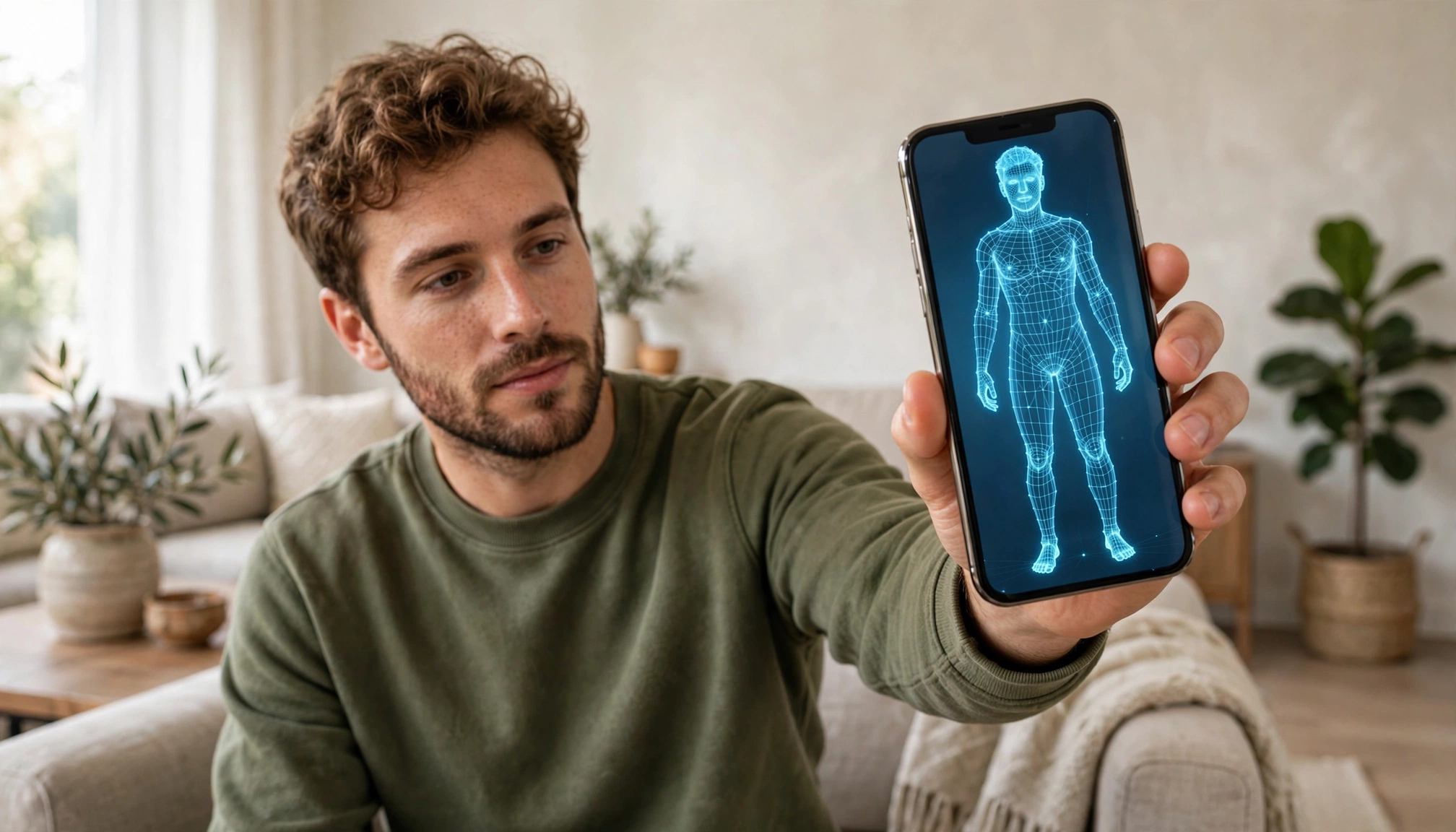
A person using a smartphone to perform a 3D body scan for a virtual try-on app. The phone screen shows a wireframe model of a body.
Practical Advice for Using VTO Apps for Formal Wear
If you plan to use VTO apps for formal wear, keep these points in mind:
- Prioritize Fit Over Fabric: Use the app primarily to confirm sizing and how the garment's cut will sit on your body. This is where its accuracy shines.
- Read Fabric Descriptions Carefully: Since the app cannot replicate feel, pay close attention to the detailed fabric descriptions provided by the retailer. Look for information on material composition, weight, and care instructions.
- Check Customer Reviews: Look for reviews that specifically mention how the fabric drapes or feels in person. This can fill the gap left by the VTO app.
- Understand Return Policies: Even with VTO, always check the return policy for formal wear. Some items may have stricter return conditions.
- Ensure Optimal Scanning Conditions: When performing your 3D body scan, make sure you have bright, even lighting (at least 500 lux) and wear form-fitting clothing for the most accurate results. Avoid baggy clothes that obscure your body shape.
- Consider Premium Features: If you are investing in an expensive formal wear item, a premium VTO subscription might be worth the $14.99/month to access more detailed simulations and styling advice.
- Use as a Pre-Selection Tool: Think of VTO as an excellent tool for narrowing down your choices before making a final purchase. It helps eliminate items that clearly won't fit or suit your body shape, saving you time.
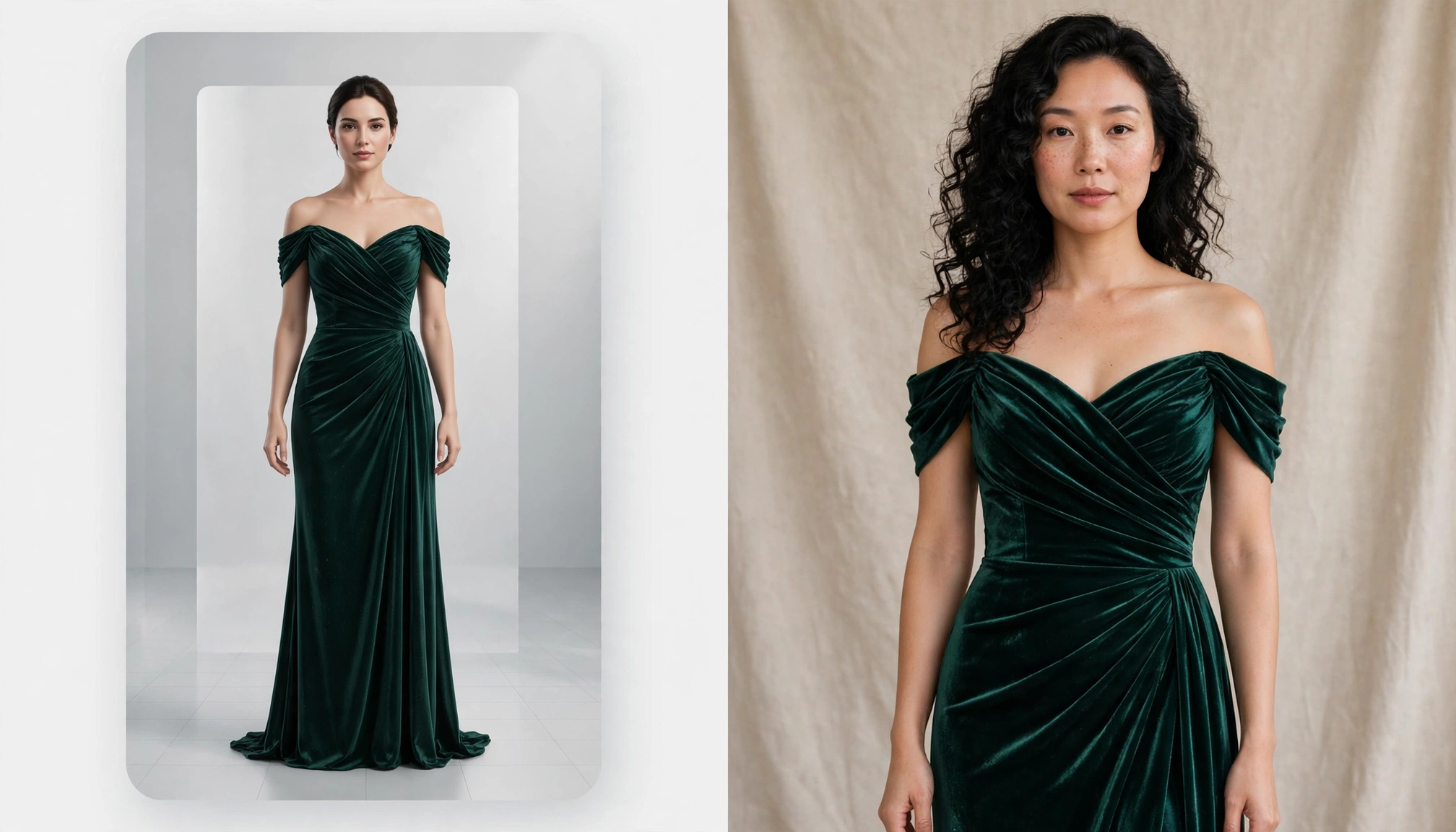
A split screen showing a virtual try-on app interface on one side with a 3D model wearing a formal dress, and on the other side, a real person wearing the same dress.
The Future of VTO in Formal Wear
The technology continues to evolve. Researchers are actively working on improving fabric simulation, as highlighted by publications like the MIT Technology Review. Future iterations may incorporate haptic feedback to simulate fabric texture or more advanced AI to predict how garments will stretch and move with the wearer. For now, VTO apps are powerful tools for fit and visual assessment, but they do not replace the need to understand fabric properties or, ideally, to physically try on high-stakes formal wear.
Final Verdict & Practical Takeaways
In 2026, virtual try-on apps for formal wear are highly accurate for fit prediction, averaging 92.5% for standard sizes. This precision, driven by AI-powered 3D body scanning, significantly reduces online returns by 18%. These apps excel at showing how a garment's cut and size will look on your body.
However, they fall short in replicating the tactile experience and the nuanced drape of formal wear fabrics. The weight, texture, and movement of materials like silk, satin, or brocade are still difficult for virtual simulations to capture perfectly. Users must supplement VTO insights with careful attention to fabric descriptions, customer reviews, and, for critical purchases, a physical try-on if possible. Use VTO as an effective pre-selection tool to confidently narrow down choices based on fit and silhouette, but remain aware of its limitations regarding the sensory aspects of formal attire.
Frequently Asked Questions
1. How accurate are virtual try-on apps for formal wear sizing in 2026?
Virtual try-on apps for formal wear are quite accurate for sizing in 2026, averaging 92.5% for standard sizes. This accuracy comes from advanced AI and 3D body scanning technology. For bespoke or highly tailored garments, the accuracy drops slightly to 88%. This means you can generally trust the app's recommendation for fit, especially for common sizes.
2. Can virtual try-on apps accurately show how formal wear fabric will drape and feel?
No, virtual try-on