How to Stop Fruit Flies in Your Kitchen Naturally (September 2026)
Fruit flies are a persistent kitchen nuisance, especially as ripening produce becomes more common in late summer and early fall. They breed fast, and a few flies quickly become an infestation. A single female fruit fly (Drosophila melanogaster) lays up to 500 eggs over her 30-day lifespan, with peak egg-laying between days 5 and 10. These eggs hatch into larvae within 24-30 hours at 75°F (24°C). The entire life cycle, from egg to adult, takes just 8-10 days under ideal conditions (75-80°F / 24-27°C) with abundant food. This guide focuses on natural, chemical-free methods to break that cycle and clear your kitchen.
1. Eliminate All Food Sources & Breeding Grounds
This is the most critical step. Fruit flies are attracted to fermenting sugars and can detect volatile organic compounds (VOCs) from ripening produce from distances up to 0.6 miles (1 kilometer). If they have nothing to eat or breed in, they leave or die.
- Inspect and Store Produce:
- Refrigerate: Immediately refrigerate all ripe fruits and vegetables, especially bananas, tomatoes, potatoes, and onions. Don't leave them on counters.
- Wash Thoroughly: When you bring produce home, wash it under running water. This removes any existing fruit fly eggs or larvae that might be on the skin.
- Seal: Store any non-refrigerated produce (like whole melons or squash) in sealed containers or paper bags to prevent access.
- Clean Up Spills Immediately: Any sugary spill, fruit juice, or even a drop of wine attracts fruit flies. Use paper towels (a 6-pack costs $2.00-$3.50 USD) and a general cleaner.
- Empty Trash Cans Daily: Food scraps in open trash cans are prime breeding sites. Use trash bags with a tight seal and take the trash out every evening. Wash the inside of your trash can weekly with hot, soapy water.
- Address Recycling Bins: Rinse all recyclable containers (soda cans, wine bottles, milk jugs) before placing them in the recycling bin. Sugary residues are highly attractive. Store recycling bins outside if possible.
- Clean Drains and Disposals: This is a common, overlooked breeding spot. Fruit flies don't just come from fruit; they also breed in drains, garbage disposals, and even damp mops.
- Pour 1/2 cup of baking soda down the drain, followed by 1 cup of white vinegar. Let it sit for 30 minutes to an hour, then flush with hot water. Do this daily for 3-4 days.
- For garbage disposals, grind a few ice cubes with citrus peels (lemon, orange) to clean the blades and remove food residue.
- Check Under Appliances: Food debris often collects under refrigerators, stoves, and dishwashers. Pull them out and clean thoroughly.
- Discard Old Sponges and Mops: Damp cleaning tools can harbor fruit fly larvae. Replace sponges regularly (every 1-2 weeks) and ensure mops dry completely after use.
2. Set Up Natural Traps
While sanitation removes breeding grounds, traps catch existing adult flies. These are most effective when combined with thorough cleaning.
Apple Cider Vinegar Trap (Most Effective)
This trap uses the fermenting smell of apple cider vinegar (ACV) to lure flies. A 16-ounce (473 mL) bottle of ACV typically costs $3.50-$6.00 USD.
- Method 1 (Cone Trap):
- Pour about 1 inch (2.5 cm) of apple cider vinegar into a small bowl or jar.
- Add 1-2 drops of dish soap. The soap breaks the surface tension of the vinegar, so flies sink instead of landing and flying away.
- Roll a piece of paper into a cone shape, with a small opening (about 1/4 inch / 0.6 cm) at the bottom.
- Place the cone, narrow end down, into the jar. The flies enter but struggle to find their way out.
- Method 2 (Plastic Wrap Trap):
- Pour about 1 inch (2.5 cm) of apple cider vinegar into a small bowl or jar.
- Add 1-2 drops of dish soap.
- Cover the top tightly with plastic wrap.
- Poke several small holes (pencil-tip size) in the plastic wrap with a toothpick. Flies enter through the holes and get trapped.
Wine or Beer Trap
Similar to ACV, the fermenting smell of old wine or beer attracts fruit flies.
- Pour a small amount of leftover red wine or beer into a shallow dish.
- Add 1-2 drops of dish soap.
- Flies will be attracted to the liquid and drown.
Overripe Fruit Trap
If you have a piece of very overripe fruit (like a banana peel or a bruised apple), you can use it as bait.
- Place the overripe fruit in a bowl.
- Cover tightly with plastic wrap.
- Poke small holes in the plastic wrap.
- Once flies accumulate inside, take the bowl outside and release them, or discard the fruit and flies. This is less effective for killing them, more for collection.
3. Environmental Controls
Adjusting your kitchen environment can make it less hospitable for fruit flies.
- Temperature: Maintaining indoor temperatures below 60°F (15.5°C) significantly slows fruit fly development and reproduction, extending their life cycle to 20-30 days or more. While not always practical for comfort, cooler temperatures help.
- Ventilation: Good air circulation can help dissipate the attractive odors of fermenting food. Use exhaust fans when cooking and open windows when possible.
- Seal Entry Points: Check windows and doors for gaps or torn screens. Repair these to prevent new flies from entering. Fruit flies are tiny and can get through very small openings.
4. Consistent Maintenance
Fruit fly control is an ongoing process, not a one-time fix.
- Daily Wipe-Downs: Wipe down all kitchen surfaces, including counters, stovetops, and sinks, daily with a general cleaner.
- Weekly Deep Clean: Dedicate time each week to a more thorough cleaning, focusing on areas prone to food debris and moisture.
- Monitor Produce: Regularly check your fruit bowl and pantry for overripe or rotting items. Discard anything past its prime immediately.
- Address Pet Food Areas: If you have pets, clean their food bowls regularly. Leftover wet food or even dry kibble crumbs can attract flies.
Comparison of Natural Fruit Fly Traps
| Trap Type | Primary Attractant | Key Ingredient Cost (Approx.) | Effectiveness | Setup Time | Maintenance Frequency |
|---|---|---|---|---|---|
| Apple Cider Vinegar | Fermenting sugars | $3.50-$6.00 (16 oz ACV) | High | 2 minutes | Every 2-3 days |
| Red Wine/Beer | Fermenting alcohol | Varies (leftovers) | Medium-High | 1 minute | Every 2-3 days |
| Overripe Fruit | Fruit VOCs | Free (existing fruit) | Medium | 1 minute | Daily |
| Dish Soap & Water | Moisture, general scent | Minimal (existing soap) | Low-Medium | 1 minute | Daily |
Note: All traps benefit from adding 1-2 drops of dish soap to break surface tension.
Why Fruit Flies Keep Coming Back
"My fruit flies keep coming back even after I clean everything." This is a common frustration. The most likely reasons are:
- Missed Breeding Sites: You might have cleaned visible surfaces but overlooked drains, garbage disposals, recycling bins, or even a forgotten potato under the counter. The University of California IPM program emphasizes checking all potential breeding sites, not just fruit.
- Rapid Life Cycle: Because their life cycle is so short (8-10 days), new generations emerge quickly. If you don't break the cycle completely by eliminating all breeding grounds, you'll see new flies daily.
- New Introductions: New fruit flies often hitchhike on fresh produce from the grocery store. Always wash produce when you bring it home.
- Neighboring Infestations: If you live in an apartment or close quarters, flies might be coming from a neighbor's unit. Sealing entry points helps here.
"I don't want to use harsh chemicals around my food, but nothing else works." The natural methods outlined here are highly effective when applied consistently and thoroughly. The key is persistence and a comprehensive approach to sanitation. The EPA promotes Integrated Pest Management (IPM) which prioritizes non-chemical methods like sanitation and exclusion.
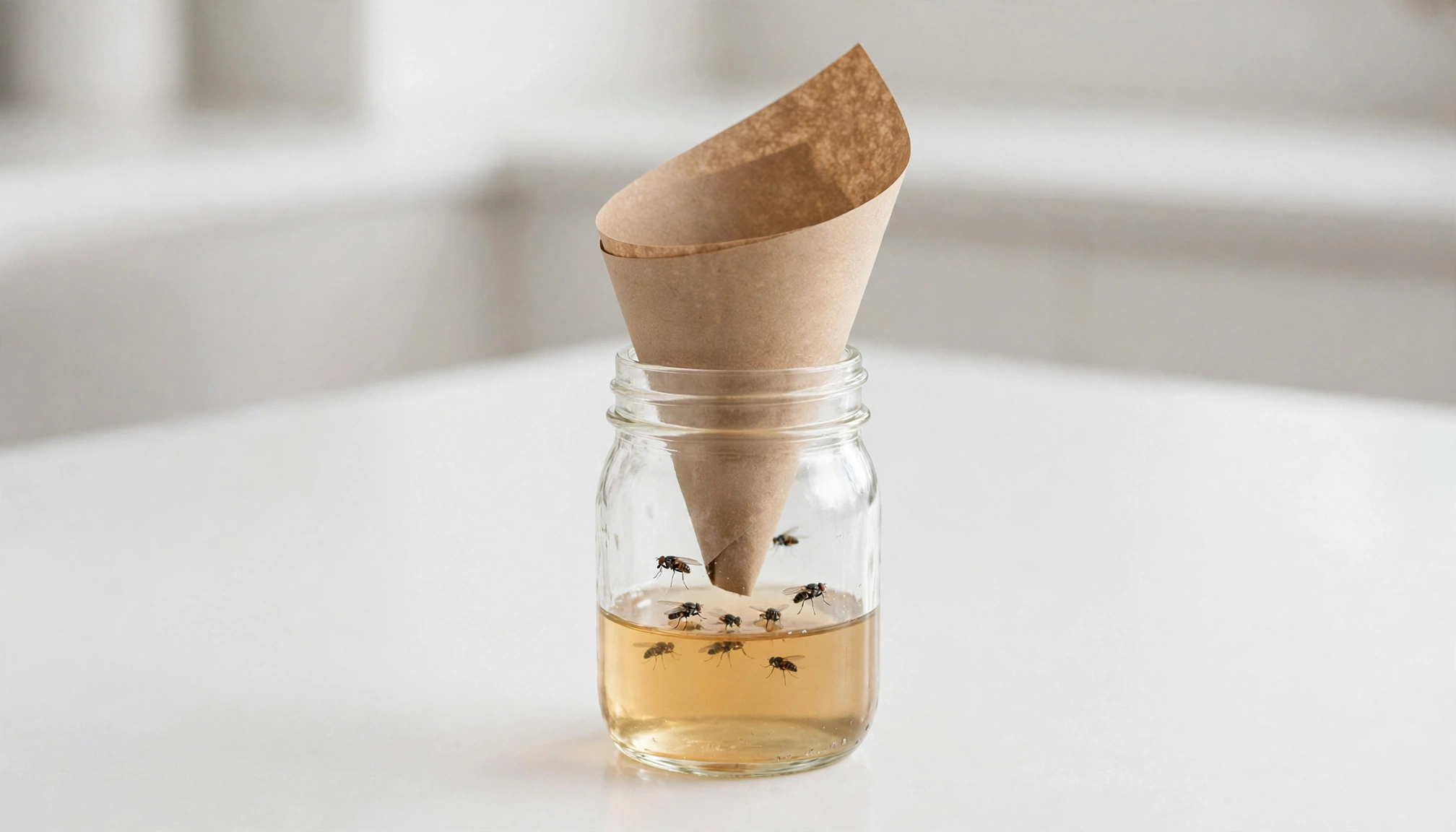
A clean kitchen counter with a small glass jar containing apple cider vinegar and a paper cone trap, catching several fruit flies.
Final Verdict & Practical Takeaways
Stopping fruit flies naturally in September 2026 comes down to relentless sanitation and strategic trapping. You must remove their food and breeding sources first. If you don't clean every nook and cranny, especially drains and forgotten produce, the flies will return. Traps are effective for catching existing adults, but they are a band-aid if you haven't addressed the root cause.
Practical Takeaways:
- Sanitation is King: This is non-negotiable. Clean up every crumb, spill, and sticky residue immediately. Empty trash and recycling daily.
- Refrigerate or Seal Produce: Don't leave ripe fruit exposed on counters.
- Attack Drains: Treat your drains and garbage disposal as potential breeding sites, not just plumbing.
- Consistent Trapping: Set up multiple apple cider vinegar traps and refresh them every few days.
- Be Patient and Persistent: It takes about 1-2 weeks of diligent effort to break the fruit fly life cycle and clear an infestation. New flies will emerge for a few days even after you clean, as eggs hatch.
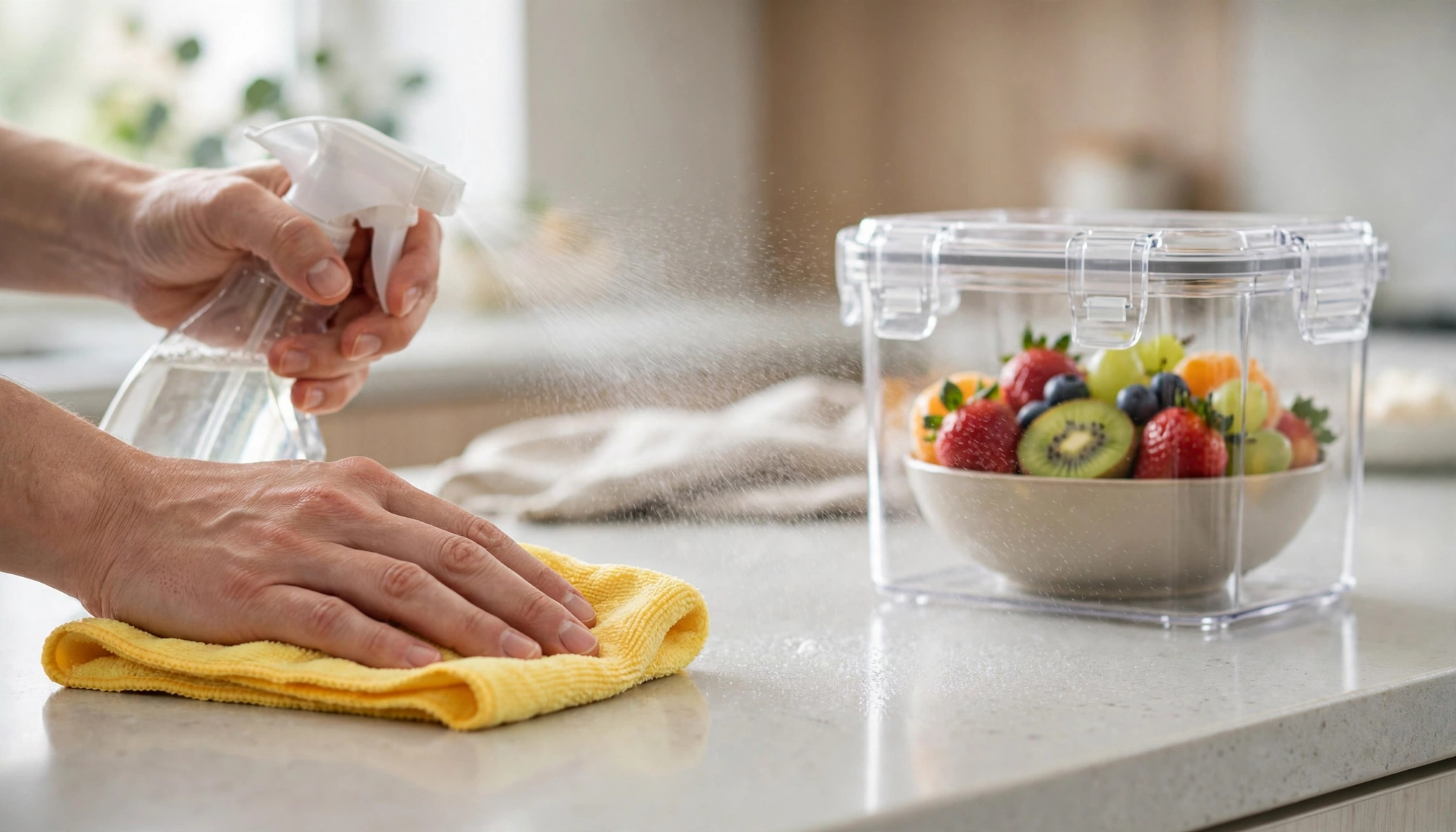
A person carefully wiping down a kitchen counter with a spray bottle and a cloth, with a bowl of fresh fruit stored in a sealed container in the background.
Frequently Asked Questions
Q1: How long does it take to get rid of fruit flies completely?
It typically takes 1 to 2 weeks of consistent effort to eliminate a fruit fly infestation. This is because you need to allow time for all existing eggs and larvae to hatch into adults (about 8-1