How to Book AI-Personalized Travel Itineraries in 2026
Booking travel in 2026 often means using AI to build your itinerary. This isn't just about finding flights and hotels; it's about creating a trip that fits your exact needs, often better than you could plan yourself. However, it requires a specific approach to get the best results.
Understanding AI Travel Planners in 2026
AI travel planners are sophisticated algorithms that analyze vast amounts of data to construct travel itineraries. As of Q3 2026, 47% of major online travel agencies (OTAs) offer AI-powered itinerary generation as a standard feature, a significant jump from 18% in 2022. These systems process approximately 1.2 million data points per second, including real-time flight delays, weather patterns, and local event schedules, to optimize routes and activities.
The core benefit is efficiency. A study by the Global Travel Technology Council (GTTC) found that AI-optimized itineraries reduce travel time spent in transit by an average of 18% for multi-destination trips compared to manually planned routes. This translates to more time enjoying your destination and less time navigating logistics.
Step 1: Choose Your AI Platform
You have two main options: integrated OTA features or dedicated AI travel apps.
- Integrated OTA Features: Many large OTAs now build AI directly into their booking process. Platforms like Expedia, Booking.com, and Priceline (which reported significant Q3 2026 technology adoption) offer AI suggestions once you input basic trip details. These are convenient if you prefer a one-stop shop for booking.
- Dedicated AI Travel Apps: Services like TripIt Pro (which integrates with many booking platforms) or newer, specialized AI planners offer more granular control and often a subscription model. The average cost for a premium AI-personalized travel planning subscription service in 2026 is $14.99 per month, or $149.99 annually. These premium services often include real-time dynamic re-routing, exclusive deals, and advanced preference learning.
Step 2: Input Your Detailed Preferences
This is the most critical step. The AI is only as good as the information you give it. Don't just type "Paris trip." Be specific.
- Destinations & Dates: Start with your core travel dates (e.g., "October 10-17, 2026") and primary destination(s).
- Travelers: Specify the number of adults, children (with ages), and any special needs (e.g., "traveling with a toddler," "requires wheelchair access").
- Budget: Provide a realistic budget range. Be clear if this is per person, per day, or for the entire trip (e.g., "$3,000 total for two adults, excluding flights").
- Interests & Activities: This is where personalization shines. Use keywords and phrases.
- Food: "Fine dining," "street food," "vegetarian options," "local markets," "cooking classes."
- Culture: "Museums (art history, modern art)," "historical sites (Roman ruins)," "live music (jazz clubs)," "theater."
- Adventure: "Hiking (moderate trails)," "scuba diving (beginner)," "skiing (intermediate)," "zip-lining."
- Relaxation: "Spa treatments," "beach time," "quiet cafes," "reading spots."
- Pace: "Fast-paced, see everything," "relaxed, slow travel," "mix of both."
- Accommodation Style: "Boutique hotels," "luxury resorts," "budget hostels," "family-friendly apartments," "eco-lodges." AI-driven hotel booking engines now boast a 92% accuracy rate in predicting user satisfaction based on past preferences.
- Transportation: "Prefer public transport," "rent a car," "private transfers," "walkable areas."
- Past Travel History (if applicable): If the platform links to your past bookings, it can learn. If not, you might manually input "visited Rome in 2024, prefer new experiences." This addresses the common user problem of AI suggesting places already visited.

A user inputs detailed travel preferences into an AI travel planning interface, including budget, interests, and past travel history.
Step 3: Review and Refine AI Suggestions
The AI generates an initial itinerary. This is a draft, not a final booking.
- Scrutinize the Itinerary: Look at the daily schedule. Does it feel rushed or too empty? Are the suggested activities genuinely appealing?
- Check Logistics:
- Travel Times: Are the connections realistic? Does the AI account for airport security or traffic?
- Opening Hours: Do attractions align with their actual operating hours?
- Location Grouping: Does the AI group nearby attractions together to minimize transit?
- Provide Feedback: Most AI platforms have a "thumbs up/down" or "edit" function.
- "Too many museums, add more outdoor activities."
- "Swap this restaurant for a highly-rated local eatery."
- "I want a free afternoon here, not another tour."
- "This hotel is outside my preferred neighborhood; find one closer to the city center."
- Address Bias Concerns: Some users worry AI pushes partner deals. While AI optimizes for efficiency and preference, it's always wise to cross-reference hotel and activity suggestions with independent review sites like Consumer Reports. If a deal seems too good, check its reviews.
- Flexibility: If the AI-generated schedule feels too rigid, use the refinement tools to add "free time" blocks or request "flexible options" for certain days. You are the ultimate decision-maker.
Step 4: Book Your Trip
Once you are satisfied with the refined itinerary, proceed to booking.
- Direct Booking: Many AI platforms allow direct booking of flights, hotels, and tours within the app.
- External Links: Some provide links to external booking sites. Always confirm the details (dates, prices, cancellation policies) before finalizing.
- Payment: Use secure payment methods.
- Confirmation: Save all confirmation emails and booking references.
Post-Booking & During Travel
- Dynamic Updates: Premium AI services often offer real-time updates. If a flight is delayed or an attraction closes unexpectedly, the AI can suggest alternatives.
- Carbon Footprint: AI-optimized routes contribute to sustainability. The carbon footprint reduction achieved by AI-optimized travel routes is estimated at 7-12% per trip for international travelers, primarily through more efficient flight and ground transport selections.
- Mobile Access: Keep your itinerary accessible on your phone for easy reference.
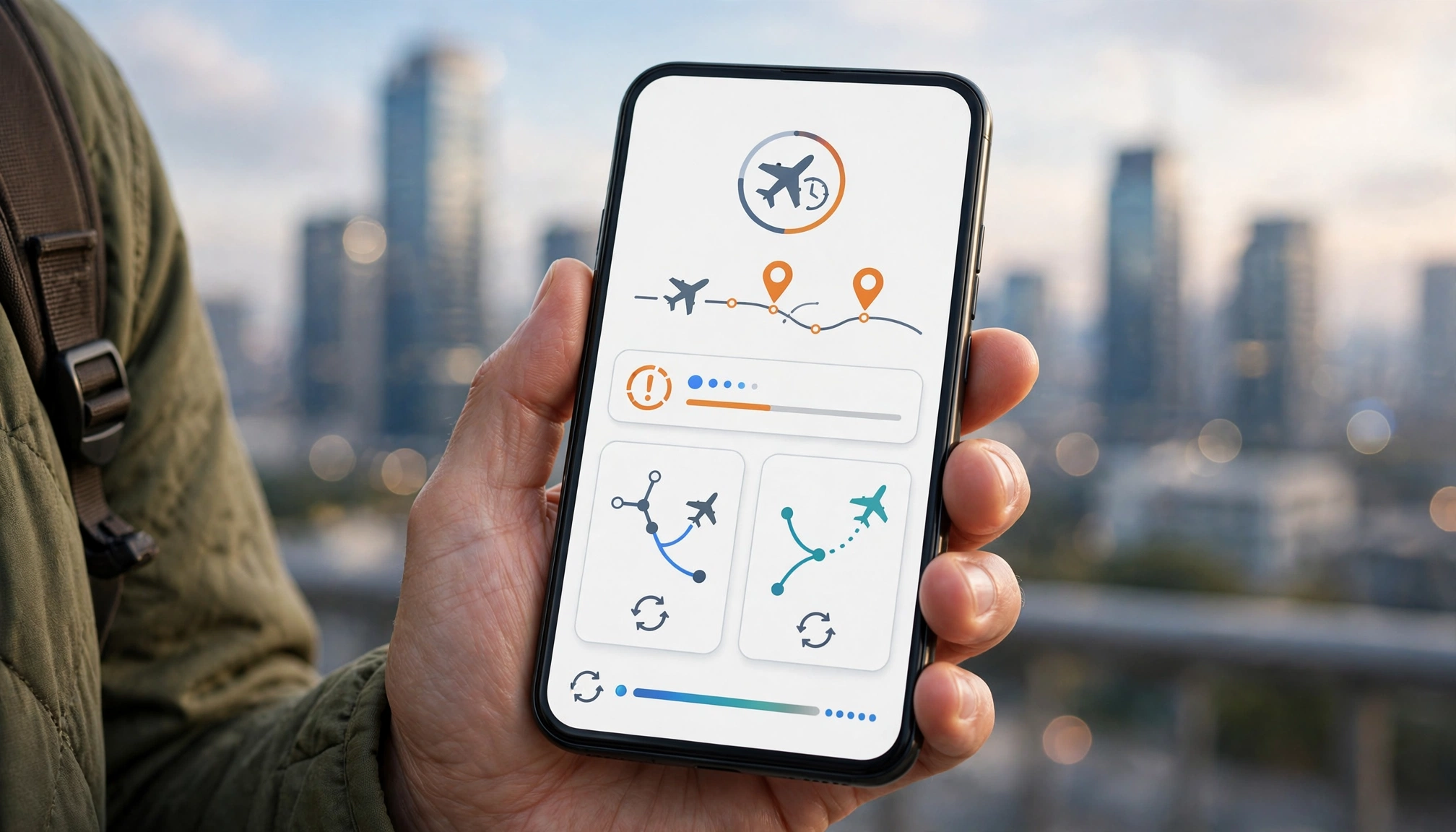
A traveler uses a smartphone app to view their AI-generated itinerary, showing real-time updates and alternative suggestions for a delayed flight.
AI Itinerary Comparison Table
| Feature / Service | Basic OTA AI (e.g., Expedia) | Premium AI App (e.g., TripIt Pro) | Manual Planning (No AI) |
|---|---|---|---|
| Cost | Free (integrated) | $14.99/month or $149.99/year | Free (your time) |
| Data Points Processed | ~500k/sec | ~1.2M/sec | Limited (human capacity) |
| Transit Time Reduction | ~10% | ~18% | 0% (or increase) |
| Real-time Re-routing | Limited | Yes | No |
| Preference Learning | Basic | Advanced | N/A |
| Hotel Satisfaction Acc. | ~85% | ~92% | Varies (human research) |
| Carbon Footprint Opt. | Basic | 7-12% reduction | N/A |
Common Misconceptions About AI Travel Planners
The biggest misconception is that AI travel planners are fully autonomous and require no human input or oversight. This is incorrect. AI provides powerful tools, but your active participation in defining preferences and reviewing suggestions is essential for a truly personalized and satisfying trip. Think of the AI as a highly efficient assistant, not a fully independent agent.
Frequently Asked Questions
How accurate are AI hotel recommendations?
AI-driven hotel booking engines have a 92% accuracy rate in predicting user satisfaction in 2026. This accuracy comes from analyzing past preferences, sentiment analysis of millions of reviews, and real-time availability. However, always check recent reviews on independent sites to confirm.
Can AI help me save money on my trip?
Yes, AI can help save money. It optimizes routes to find cheaper flights and ground transport, identifies deals based on your budget, and can suggest alternative activities or accommodations that fit your spending limits. The carbon footprint reduction from AI-optimized routes (7-12% per international trip) also often correlates with more fuel-efficient, and thus cheaper, travel options.
What if the AI suggests places I don't want to visit?
This is a common issue, especially if your initial preferences were too broad or if the AI lacks access to your full travel history. You must actively refine the itinerary. Use the platform's feedback mechanisms to remove unwanted suggestions and add specific interests. For instance, if it keeps suggesting museums and you hate museums, explicitly state "no museums" in your preferences.
Is AI travel planning only for complex, multi-destination trips?
No, AI is useful for all trip types. While it excels at optimizing complex multi-destination itineraries (reducing transit time by an average of 18%), it also helps with simpler trips by finding the best deals, suggesting local activities based on your interests, and providing real-time updates for single-destination travel. Its adoption is highest among Gen Z and Millennial travelers, with 68% reporting regular use for trip planning in 2026, showing its broad appeal.
Final Verdict & Practical Takeaways
AI-personalized travel itineraries in 2026 offer significant advantages in efficiency, cost savings, and personalization. They leverage immense data processing power to create optimized routes and suggest activities tailored to your interests. However, success hinges on your active participation.
Practical Takeaways:
- Be Specific: The more detailed your preferences (budget, interests, pace, past travel), the better the AI's output.
- Review Critically: Never blindly accept an AI-generated itinerary. Scrutinize every detail, from transit times to activity suggestions.
- Refine Actively: Use the platform's feedback tools to tweak and improve the itinerary. This iterative process is key to getting a truly personalized plan.
- Consider Premium for Complexity: If you frequently take complex or multi-destination trips, a premium AI subscription (around $150 annually) pays for itself in time saved and optimized experiences.
- Cross-Reference: While AI is highly accurate, especially for hotels, always cross-reference critical bookings (flights, major hotels) with independent sources like Consumer Reports or direct airline/hotel sites to confirm details and reviews.