Navigating Sustainable Travel in 2027
The global sustainable tourism market is set to hit $520.4 billion by the end of 2026, growing at a 12.8% CAGR since 2021. This growth means more options, but also more noise. Finding genuinely sustainable destinations and operators requires looking past marketing claims. You need to check for certifications, local community involvement, and transparent environmental policies.
Many travelers worry about the cost and the carbon footprint. While a round-trip economy flight from New York (JFK) to Paris (CDG) in 2026 emits about 1.9 metric tons of CO2 per passenger, many destinations and operators now offer carbon offsetting programs or focus on local, low-impact activities. Sustainable travel doesn't always mean roughing it; it means making conscious choices.
What Makes a Destination Sustainable?
A truly sustainable destination balances environmental protection, social equity, and economic viability. It means:
- Environmental Conservation: Protecting natural habitats, reducing waste, conserving water and energy. Over 1,200 hotels worldwide now hold Green Globe certification, which requires a 20% reduction in water use and 15% in energy use compared to non-certified properties.
- Community Benefit: Ensuring tourism benefits local people directly, providing fair wages, and respecting cultural heritage.
- Economic Viability: Creating long-term economic opportunities that do not deplete resources or harm the environment.
- Responsible Management: Having clear policies and regulations to manage tourism impacts. The United Nations World Tourism Organization (UNWTO) outlines these principles.
Top Sustainable Travel Destinations for 2027
These destinations consistently rank high for their commitment to sustainability, offering concrete examples of eco-conscious practices.
1. Costa Rica
Costa Rica is a long-standing leader in eco-tourism. Its commitment to renewable energy is impressive; the country expects to supply 99.5% of its electricity grid from renewable sources in 2026, primarily hydroelectric, geothermal, and wind power, according to the Costa Rican Electricity Institute (ICE).
- Why it's sustainable: Over 25% of its land is protected national parks and wildlife refuges. It has a robust Certification for Sustainable Tourism (CST) program for hotels and tour operators.
- What you can do: Stay in eco-lodges, volunteer for conservation projects, explore cloud forests, and visit active volcanoes.
- Practical tip: A 7-day, 6-night eco-lodge stay in the Amazon rainforest (Peru, a similar eco-tourism market) with guided tours and sustainable meals averages $2,850 USD per person in 2026. Expect similar pricing for high-quality eco-lodges in Costa Rica. Book directly with CST-certified operators.
2. Iceland
Iceland uses 100% renewable energy for electricity and heating, primarily from geothermal and hydropower. This significantly reduces the carbon footprint of daily life and tourism infrastructure.
- Why it's sustainable: Its entire energy grid is green. The country actively manages tourism impact on fragile landscapes through designated trails and strict regulations.
- What you can do: Hike glaciers, explore volcanic landscapes, enjoy geothermal spas, and witness the Northern Lights.
- Practical tip: The average daily temperature in Reykjavik during July 2026 is forecast to be 57°F (14°C), making it a popular summer destination for cooler climate sustainable tourism. Travel during the shoulder seasons (May/June or September/October) to reduce crowds and potentially lower costs by 15-20%.
3. Norway
Norway consistently ranks high in environmental performance indexes. It invests heavily in public transport and has a strong focus on preserving its natural fjords and wilderness areas.
- Why it's sustainable: High adoption of electric vehicles, extensive public transport networks, and a strong emphasis on preserving natural beauty. Many tour operators are certified by programs like Eco-Lighthouse.
- What you can do: Hike in national parks, explore fjords by electric ferry, cycle, or kayak.
- Practical tip: Consider the "Norway in a Nutshell" tour, which uses trains and ferries, minimizing individual car travel. A 7-day trip focusing on the fjords can cost around $2,000-$3,500 USD per person, excluding international flights, if you opt for mid-range accommodations and self-guided activities.
4. Palau
This small island nation in Micronesia is a global leader in marine conservation. It established the Palau National Marine Sanctuary, protecting 80% of its territorial waters from fishing and mining.
- Why it's sustainable: Strict environmental laws, including the "Palau Pledge" where visitors sign a commitment to responsible tourism. The sanctuary protects critical marine ecosystems.
- What you can do: Dive or snorkel in pristine waters, kayak through mangroves, and learn about local conservation efforts.
- Practical tip: Visitors pay a $100 conservation fee upon arrival, directly funding conservation initiatives. A 5-day dive package can easily run $1,500-$2,500 USD, not including flights.
5. Slovenia
Slovenia was the first country to be declared a "Green Destination" based on the Green Destinations Standard. Its capital, Ljubljana, was named the European Green Capital in 2016.
- Why it's sustainable: Over 60% of the country is covered by forest. It has a robust national Green Scheme of Slovenian Tourism, certifying accommodations and experiences.
- What you can do: Explore Triglav National Park, cycle through vineyards, hike in the Julian Alps, and visit Lake Bled.
- Practical tip: Slovenia is generally more affordable than its Western European neighbors. A week-long trip focusing on outdoor activities and local cuisine might cost $800-$1,500 USD per person, excluding flights. Public transport is efficient for intercity travel.
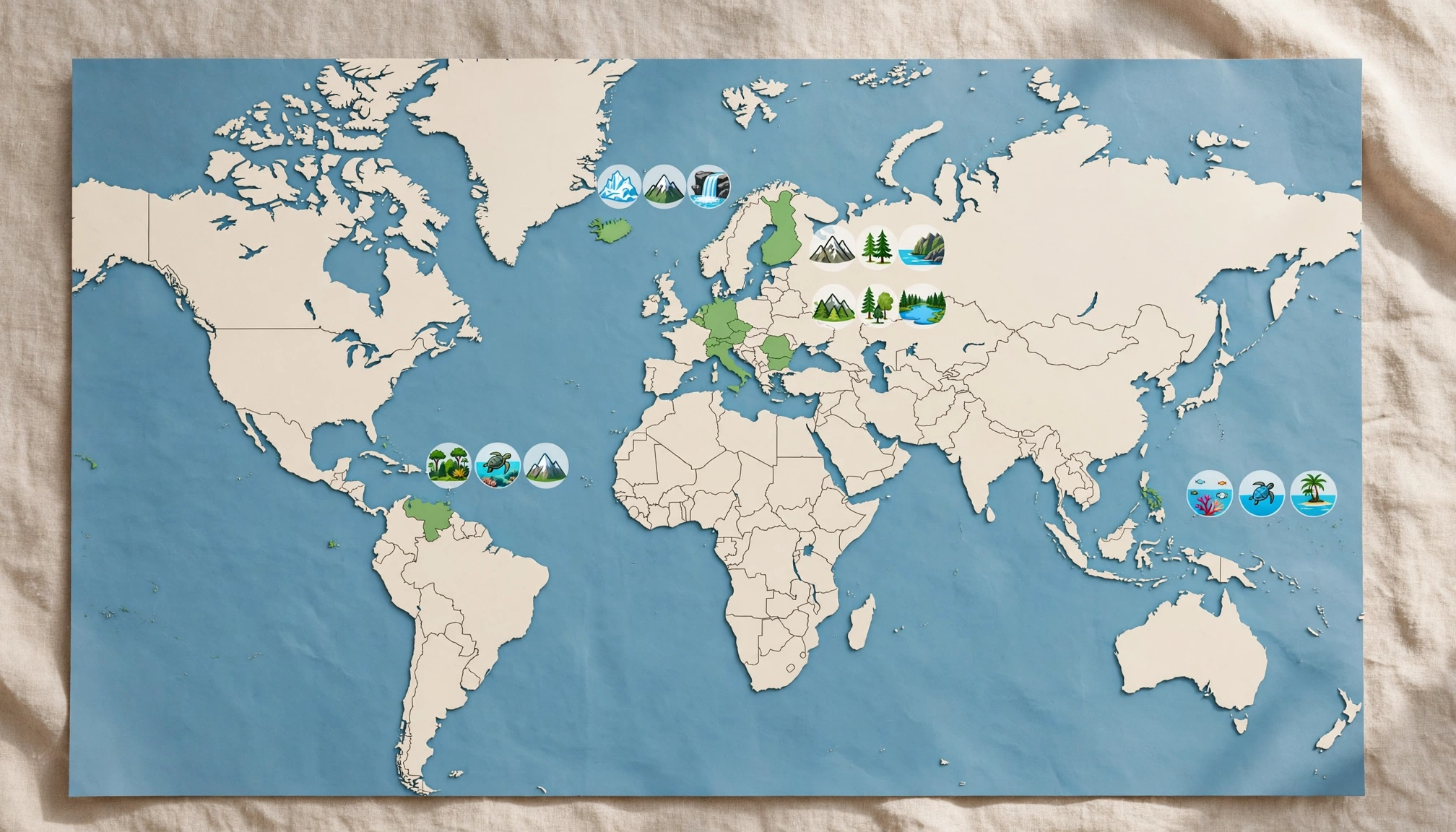
Map showing sustainable travel destinations
How to Identify Genuinely Green Operators
The term "greenwashing" is real. Here's how to cut through it:
- Look for Certifications: Reputable certifications include Green Globe, EarthCheck, LEED (for buildings), and national schemes like Costa Rica's CST or Slovenia's Green Scheme. Check the Green Globe Certification Standards to understand what they require.
- Transparency: Does the operator clearly state their environmental policies? Do they publish impact reports?
- Local Engagement: Do they employ local staff, source local goods, and contribute to local community projects? Ask about fair wages and cultural respect.
- Specific Actions: Instead of vague claims, look for concrete actions: waste reduction targets, renewable energy use, water conservation measures, and wildlife protection policies.
- Small Group Sizes: Smaller groups generally have less environmental impact and offer more authentic experiences.
Minimizing Your Carbon Footprint
Air travel is often the largest component of a trip's carbon footprint. The International Civil Aviation Organization (ICAO) provides reports on aviation emissions.
- Choose Direct Flights: Take-offs and landings consume the most fuel. Direct flights are more efficient.
- Fly Economy Class: Business and first-class seats take up more space, meaning fewer passengers per flight and a higher per-passenger carbon footprint.
- Carbon Offsetting: While not a perfect solution, offsetting programs invest in projects that reduce greenhouse gases. Choose reputable programs certified by organizations like Gold Standard or Verified Carbon Standard.
- Stay Longer: One long trip has a lower per-day carbon footprint than several short trips.
- Ground Transport: Once at your destination, prioritize trains, buses, cycling, or walking over internal flights or private cars. The European Union's "Fit for 55" package aims for a 55% net reduction in greenhouse gas emissions by 2030, with policy implementations in 2026 already boosting sustainable transport options across Europe.
Cost Considerations for Sustainable Travel
Sustainable travel does not always mean more expensive. It often means different spending priorities.
| Aspect | Traditional Travel (Example) | Sustainable Travel (Example) | Cost Implication |
|---|---|---|---|
| Accommodation | Large chain hotel, often with high energy use | Eco-lodge, locally owned guesthouse, certified green hotel | Can be similar, sometimes lower for guesthouses. Certified hotels might be slightly higher. |
| Transportation | Multiple short flights, rental car | Direct flights, trains, buses, cycling, walking | Often lower due to fewer flights and reliance on public transport. |
| Food | Imported goods, international chains | Local, seasonal produce, farm-to-table, community restaurants | Often similar or lower, especially when eating at local markets. |
| Activities | Theme parks, motorized tours | Hiking, wildlife viewing, cultural workshops, volunteer tourism | Can be significantly lower (e.g., free hiking) or similar for specialized tours. |
| Overall Value | Focus on amenities, convenience | Focus on authentic experiences, local impact, environmental peace | Often perceived as higher value due to unique experiences and positive impact. |

A person hiking on a scenic trail in a national park, with lush greenery and mountains in the background, representing sustainable outdoor activities.
Final Verdict & Practical Takeaways
Sustainable travel in 2027 is more accessible and diverse than ever. It requires a conscious effort to research and choose operators and destinations that align with genuine environmental and social responsibility.
- Do your homework: Look for specific certifications like Green Globe or national schemes. Don't just trust "eco-friendly" labels.
- Prioritize impact: Choose destinations and activities that directly benefit local communities and conserve natural resources.
- Mind your footprint: Opt for direct flights, economy class, and ground transportation. Consider carbon offsetting.
- It's not always more expensive: Sustainable travel often means reallocating your budget towards authentic local experiences and away from high-impact, mass-market options. You might save money on transport by taking trains instead of internal flights, or on food by eating local.
- Embrace the experience: Sustainable travel often leads to deeper, more meaningful interactions with nature and culture.
Frequently Asked Questions
How can I tell if a tour operator is genuinely sustainable and not just greenwashing?
Look for specific, verifiable certifications from recognized bodies like Green Globe, EarthCheck, or national tourism boards (e.g., Costa Rica's CST). Genuine operators will also be transparent about their environmental policies, show how they support local communities, and provide concrete examples of their practices, such as waste reduction targets or renewable energy use. Ask direct questions about their supply chain and employee practices.
Is sustainable travel always more expensive than traditional travel?
Not necessarily. While some high-end eco-lodges can be pricey, sustainable travel often involves choices that can save money. For example, using public transport (trains, buses) instead of rental cars or internal flights, eating at local markets and restaurants, and participating in free or low-cost outdoor activities like hiking or cycling. The cost difference often comes down to prioritizing authentic, lower-impact experiences over luxury amenities or mass-tourism activities.
How can I minimize my carbon footprint when flying to a sustainable destination?
To minimize your flight-related carbon footprint, choose direct flights whenever possible, as take-offs and landings consume the most fuel. Fly economy class, as it allocates less space per passenger, making it more efficient. Consider reputable carbon offsetting programs certified by organizations like Gold Standard, though these are a compensatory measure, not a reduction. Finally, plan longer trips to reduce the frequency of flights over time.
###