How to Choose the Right Formal Dress for a Wedding Guest
Decoding the Dress Code: Your First Step
The wedding invitation is your primary guide. About 60% of wedding invitations in 2026 specify a dress code. Ignoring it means you risk feeling out of place. Here's a breakdown of common formal designations and what they actually mean for a female guest:
Black Tie
This is the highest level of formality for most weddings.
- What it means: A floor-length evening gown is the standard. Think elegant fabrics like silk, satin, or velvet. Darker colors (black, navy, deep jewel tones) are common, but rich metallics or sophisticated prints also work.
- What to avoid: Short cocktail dresses, anything too casual like cotton or linen, or overly bright, distracting colors.
- Real-world example: For a "Black Tie" wedding I attended last year at The Plaza Hotel in New York, most women wore full-length silk gowns. One guest chose a sophisticated, floor-length jumpsuit in black crepe, which fit perfectly.
Black Tie Optional
This is the most common formal designation in 2026. It gives you a bit more flexibility.
- What it means: You can wear a floor-length gown, but a chic cocktail dress (knee-length to midi) is also appropriate. A sophisticated pantsuit or an elegant separates ensemble (like a formal skirt and top) also works here. The key is still elegance and refined fabrics.
- What to avoid: Anything that looks like office wear. While a pantsuit is okay, a standard business suit is not. Avoid casual fabrics.
- Real-world example: At a "Black Tie Optional" wedding in Napa Valley, I saw a mix. Some guests wore long gowns, others wore elegant midi dresses in rich fabrics. I chose a deep emerald green midi dress in a silk-blend fabric, which felt appropriate without being over-the-top.
Formal or Cocktail Attire
These terms are often used interchangeably, but "Formal" can lean slightly more towards longer dresses than "Cocktail."
- What it means: A cocktail dress is the go-to. This means a dress that falls anywhere from just above the knee to mid-calf. Elegant fabrics, refined silhouettes, and thoughtful accessories are important. Jumpsuits are also a strong option.
- What to avoid: Ball gowns are too much. Anything too short, too revealing, or in a casual fabric (like jersey cotton) is out.
- Real-world example: For a "Cocktail Attire" wedding at a trendy art gallery, I wore a structured, knee-length dress in a brocade fabric. It felt festive and chic without being overly formal.
Dress Code Comparison
| Dress Code | Length Recommendation | Fabric Examples | Common Colors | Price Range (USD) |
|---|---|---|---|---|
| Black Tie | Floor-length gown | Silk, satin, velvet, lace | Black, navy, jewel tones, metallics | $300 - $750 |
| Black Tie Optional | Floor-length or elegant midi/cocktail | Silk, satin, crepe, chiffon | Wide range of sophisticated colors | $250 - $600 |
| Formal/Cocktail | Knee-length to midi dress | Brocade, heavy silk, refined synthetics | Brighter colors, patterns, pastels | $150 - $450 |
| Semi-Formal | Knee-length to midi dress | Chiffon, lighter silks, quality cotton blends | Wider range of colors and prints | $100 - $300 |
Considering the Venue and Season: Practicality Matters
Once you understand the dress code, the venue and time of year dictate the practicalities of your choice. A beautiful dress is useless if you are shivering or sweating through the event.
Outdoor Weddings
Outdoor weddings, especially in warmer climates, demand specific considerations.
- Fabrics: Lightweight, breathable fabrics are key. Chiffon, linen blends, and lighter silk-blends are excellent choices. Silk-blend fabrics are projected to account for 35% of formal dress sales in Q4 2026 due to their breathability and luxurious drape. Avoid heavy satins or velvets.
- Footwear: Stilettos sink into grass or sand. Opt for block heels, wedges, or dressy flats.
- Temperature: For outdoor weddings in regions with average October temperatures above 70°F (21°C), lightweight fabrics are essential. Evenings can cool down, so a chic wrap or pashmina is a smart addition.
- Real-world example: I attended an outdoor vineyard wedding in Tuscany in late September. The daytime was 75°F (24°C), but it dropped to 60°F (15°C) after sunset. My chiffon midi dress was perfect for the day, and I brought a cashmere wrap for the evening.
Indoor Weddings (Ballrooms, Churches, etc.)
These venues offer more control over climate, but you still need to think about comfort.
- Fabrics: You have more flexibility here. Heavier silks, satins, velvets, and brocades work well.
- Temperature: Air conditioning can be strong in ballrooms. A light shawl or jacket is often a good idea, even if it is warm outside.
- Real-world example: For a winter wedding in a grand ballroom, I chose a velvet gown. It was warm and luxurious, fitting the opulent setting and the chilly weather outside.
Beach Weddings
These are typically more relaxed, even if "formal" is specified.
- Fabrics: Light, flowing fabrics like chiffon, lightweight silk, or even a high-quality cotton voile.
- Footwear: Dressy sandals or elegant flats are a must. Heels are impractical.
- What to avoid: Anything too structured, heavy, or that will drag in the sand.
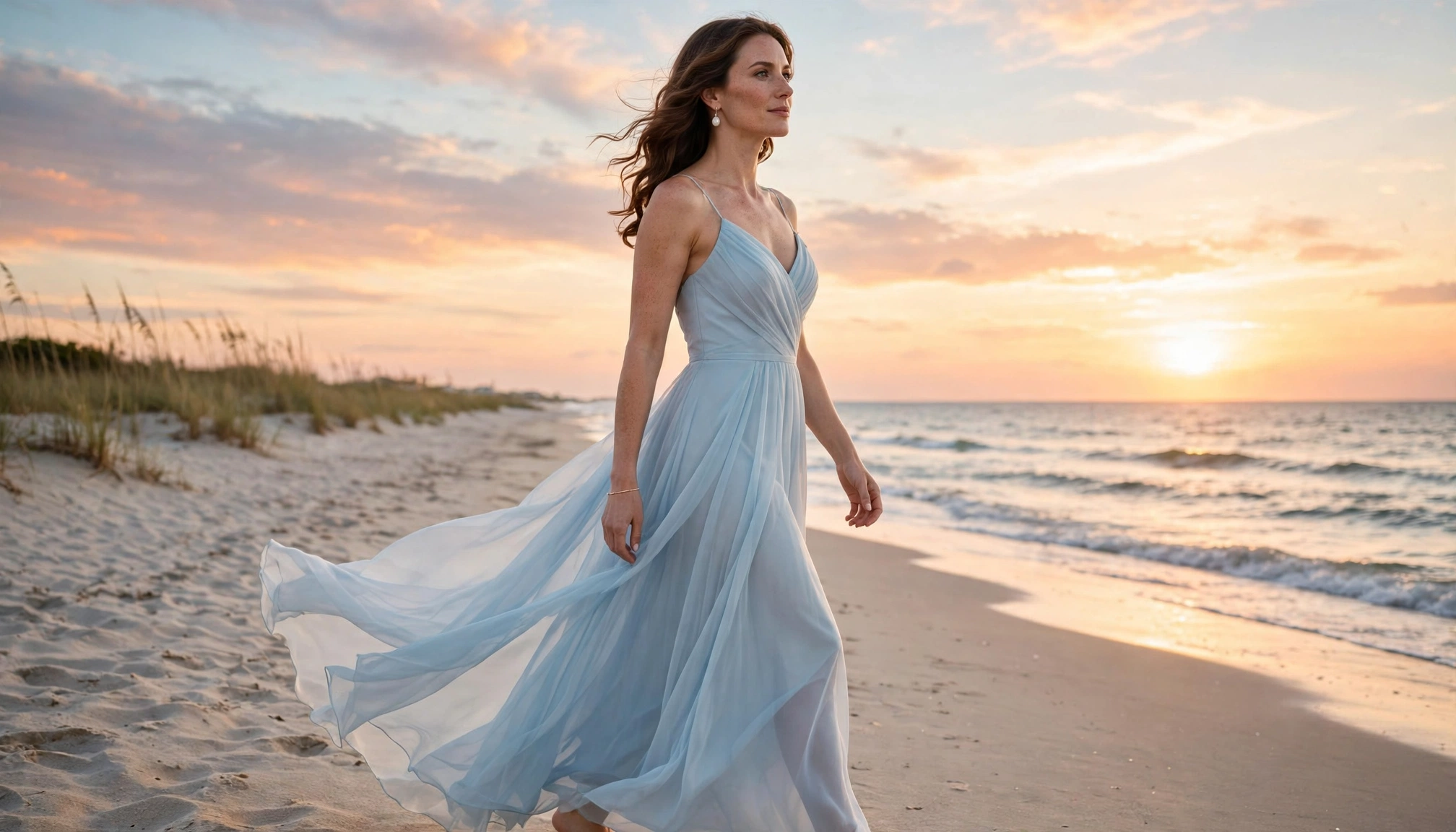
A woman in a flowing, light blue chiffon dress walking on a beach at sunset, suitable for a formal beach wedding
Fit and Comfort: Do Not Underestimate It
A dress that fits well and feels comfortable makes a huge difference in how you enjoy the event.
- Alterations: Almost every formal dress needs some tailoring. The average lead time for custom formal dress alterations in metropolitan areas is 2-3 weeks. Rush services cost an additional 25-50%. Budget for this time and expense.
- Movement: Can you sit, dance, and walk comfortably? Test this before the event. A dress that looks great standing still but restricts movement will ruin your evening.
- Undergarments: Plan your undergarments. A seamless bra, shapewear, or even stick-on options can make a dress look much better.
Color and Pattern: Making a Statement (Carefully)
- Avoid White/Ivory: This is the golden rule. Do not wear anything that could be mistaken for a bridal gown. This includes off-white, cream, or champagne if the silhouette is bridal.
- Black: Always a classic and appropriate for most formal evening weddings, especially Black Tie.
- Bright Colors/Patterns: These are generally fine for cocktail or semi-formal events, especially during spring or summer. Just ensure the pattern is elegant, not casual.
- Metallics/Jewel Tones: Excellent choices for formal evening events, adding a touch of glamour.
- Real-world example: I once saw a guest at a formal wedding wear a stunning deep teal gown. It was vibrant but still sophisticated, fitting the evening perfectly.
Accessorizing: The Finishing Touches
Accessories elevate your look and complete the outfit.
- Jewelry: Choose pieces that complement your dress, not compete with it. For a busy dress, simple earrings and a bracelet work. For a simple dress, a statement necklace or earrings can be perfect.
- Clutch/Bag: A small, elegant clutch is ideal. It holds your essentials (phone, lipstick, ID) without being bulky.
- Shoes: Match the formality of your dress and the venue. Elegant heels (block or stiletto depending on venue) or dressy flats.
- Outerwear: A chic wrap, pashmina, or tailored jacket is practical for temperature changes and adds an element of style.
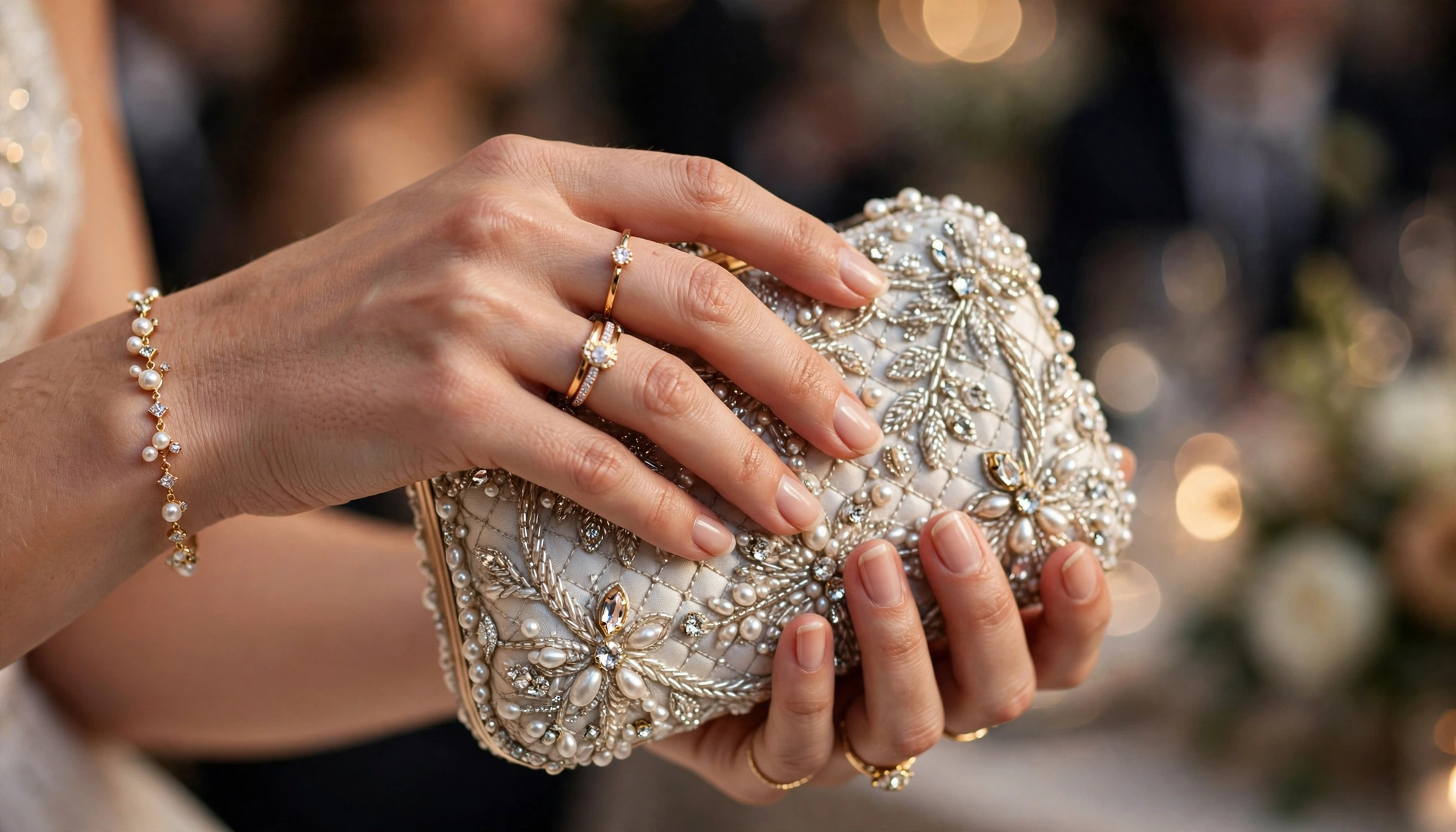
A close-up of a woman's hands holding a small, embellished clutch bag, with a delicate bracelet and rings, against a blurred background of a formal event
Budgeting for Your Dress
The average cost of a formal wedding guest dress in 2026 is $285 USD. However, this varies significantly.
- Budget-Friendly ($100-$250): Many online retailers and department stores offer stylish options in this range. Look for quality synthetic blends or simpler silhouettes.
- Mid-Range ($250-$500): This range opens up to better quality fabrics like silk-blends, more intricate designs, and established contemporary brands.
- Designer ($500-$750+): For high-end fabrics, unique designs, and luxury brands.
Final Verdict & Practical Takeaways
Choosing the right formal dress for a wedding guest comes down to careful consideration of the invitation's dress code, the venue, and the weather. Do not assume "formal" always means a floor-length gown; many formal codes, like "Black Tie Optional" or "Cocktail," permit elegant knee-length or midi dresses. Prioritize comfort and a good fit, allowing ample time for alterations. Your goal is to look elegant and appropriate, celebrating the couple without drawing undue attention.