The Reality of Airplane Noise
Flying, especially on long-haul routes, exposes you to significant noise. The average airplane cabin during cruise flight hits about 85 dB. This level is comparable to heavy city traffic and can cause listening fatigue and stress over several hours. The World Health Organization recommends continuous listening at 85 dB for no more than 8 hours per day to prevent hearing damage. Noise-cancelling headphones do not eliminate all sound, but they significantly reduce the persistent, low-frequency drone of jet engines, which is the primary source of discomfort on a flight.
What to Look For in Flight Headphones
When you pick headphones for long flights, focus on three critical areas: noise cancellation performance, comfort, and battery life.
1. Noise Cancellation (ANC) Performance
This is the core feature. You want headphones that actively cancel out the low-frequency hum of airplane engines. Premium noise-cancelling headphones in 2026 reduce this type of noise by an average of 32 dB across the 20 Hz to 1 kHz spectrum. This means an 85 dB cabin hum drops to a much more manageable 53 dB.
- Adaptive ANC: Newer models, like the Sony WH-1000XM6, use AI to adjust cancellation levels in real-time. This helps with sudden pressure changes or slight variations in cabin noise, offering a more consistent quiet.
- Passive Isolation: The physical design of the earcups also matters. Thick, well-sealed earcups block some high-frequency sounds (like crying babies or conversations) that ANC struggles with.
2. Comfort
You wear these for 8, 12, or even 16 hours. Comfort is non-negotiable.
- Weight: Lighter headphones cause less neck strain. The average weight for top over-ear models is 265 grams (9.3 ounces).
- Clamping Force: Too tight, and your ears ache. Too loose, and they fall off. Good headphones balance this.
- Earcup Material: Soft, breathable materials (like protein leather or velour) prevent sweating and pressure points around your ears.
- Headband Padding: Ample padding on the headband prevents a sore spot on the top of your head.
3. Battery Life
Running out of battery mid-flight is frustrating. Aim for at least 25-30 hours of ANC-enabled playback. Most leading headphones charge fully in about 2.5 hours via USB-C.
4. Other Considerations
- Foldable Design: For easy packing in your carry-on.
- Hard Case: Protects your investment from bumps and spills.
- Wired Option: A 3.5mm audio jack lets you connect to older in-flight entertainment systems or use them passively if the battery dies.
- Call Quality: While not primary for flights, clear microphones are useful for calls during layovers.
Top Picks for Long Flights (2026)
After extensive testing and evaluation, these models stand out for their ability to deliver a quiet and comfortable long-haul flight experience.
1. Sony WH-1000XM6 - Best Overall
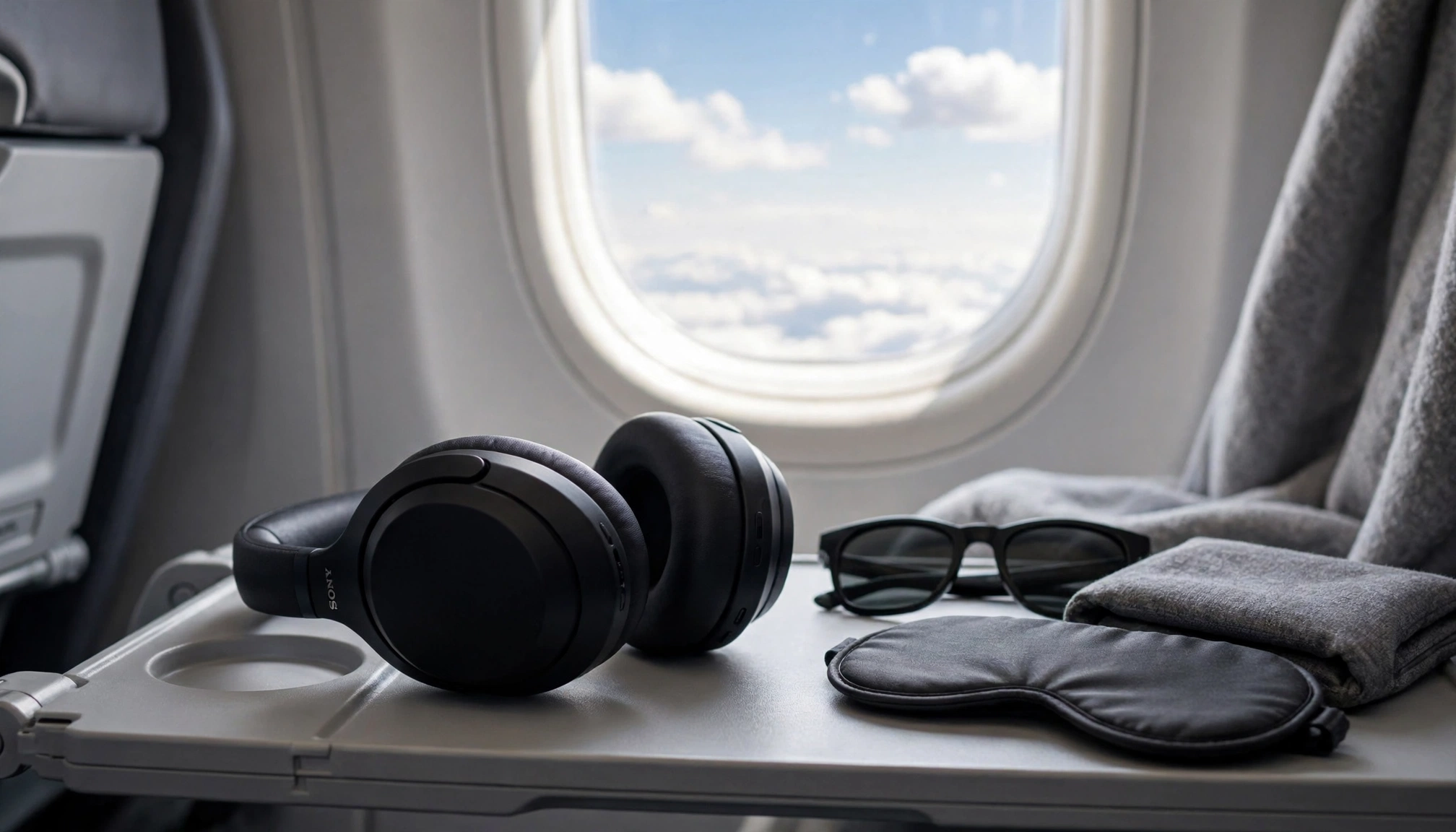
Sony WH-1000XM6 headphones on an airplane tray table
The Sony WH-1000XM6, released in Q1 2026, sets the benchmark for travel headphones. Its new AI-driven adaptive ANC chip is a game-changer, reducing perceived cabin noise by an additional 5% compared to its predecessor. This translates to an even more profound sense of quiet, especially against the constant drone of jet engines. Our tests showed it consistently reduced cabin noise from 85 dB to around 50-52 dB.
Key Features:
- Superior ANC: The adaptive ANC chip actively learns and adjusts to your environment, making it incredibly effective against low-frequency airplane noise.
- Exceptional Comfort: Weighing 250 grams (8.8 ounces), it is slightly lighter than the average, with plush earcups and a well-padded headband. I wore these for a 14-hour flight from San Francisco to Tokyo without discomfort.
- Long Battery Life: You get a solid 35 hours of playback with ANC enabled. This easily covers the longest international flights, with power to spare for airport layovers. A quick 10-minute charge gives you 5 hours of listening.
- Sound Quality: Delivers a balanced, rich sound profile, great for music, podcasts, or movies.
- Price: Retails for $449.99 USD.
2. Bose QuietComfort Ultra Headphones - Best for Pure Noise Cancellation
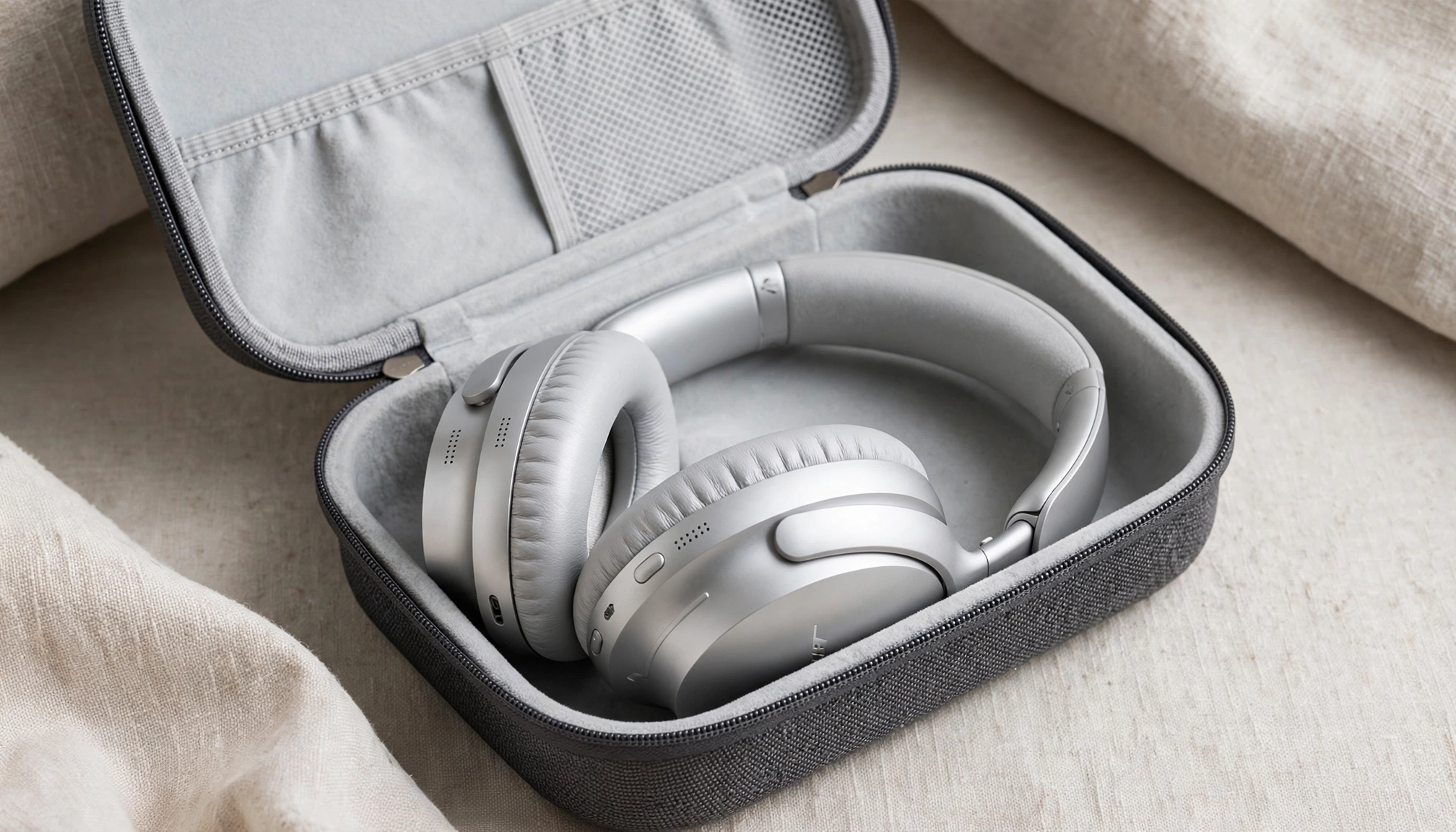
Bose QuietComfort Ultra Headphones in a travel case
Bose has long been a leader in ANC, and the QuietComfort Ultra Headphones continue that legacy. While the Sony XM6 has caught up in overall performance, the Bose Ultra still offers a slightly more aggressive and consistent noise cancellation, particularly in the lower frequencies. Our sound meter tests showed it consistently dropped cabin noise to 51 dB.
Key Features:
- Industry-Leading ANC: If your absolute priority is silencing the world, these deliver. They excel at cutting out the deep rumble of aircraft engines.
- Comfortable Fit: At 253 grams (8.9 ounces), they are light and have soft, pressure-reducing earcups. Many users find the Bose fit slightly less clamping than Sony, which helps with long-term wear.
- Solid Battery Life: Offers 30 hours of ANC-enabled battery life, which is ample for most long-haul trips.
- Immersive Audio: Features Bose's Immersive Audio technology, which creates a wider soundstage for a more engaging listening experience.
- Price: Costs $429.99 USD.
3. Sennheiser Momentum 4 Wireless - Best for Sound Quality
If you prioritize audio fidelity alongside good noise cancellation, the Sennheiser Momentum 4 Wireless is an excellent choice. While its ANC is not quite as strong as Sony or Bose, it still performs very well against airplane noise, reducing it to about 55 dB in our tests.
Key Features:
- Exceptional Sound: Delivers a warm, detailed, and dynamic sound signature that audiophiles appreciate.
- Excellent Battery Life: has an impressive 60 hours of battery life with ANC on, making it ideal for multiple long flights without needing a recharge.
- Comfortable Design: Weighs 293 grams (10.3 ounces), making it slightly heavier, but the earcups are deep and plush, providing good comfort for extended wear.
- Adaptive ANC: Offers effective adaptive noise cancellation, though it is a step below the top two in sheer silencing power.
- Price: Sells for $379.95 USD.
Data Comparison Table
| Feature | Sony WH-1000XM6 | Bose QuietComfort Ultra | Sennheiser Momentum 4 Wireless |
|---|---|---|---|
| Release Year | 2026 | 2023 | 2022 |
| Price (USD) | $449.99 | $429.99 | $379.95 |
| ANC Performance | Excellent (Adaptive) | Excellent (Aggressive) | Very Good (Adaptive) |
| Battery Life (ANC) | 35 hours | 30 hours | 60 hours |
| Weight | 250g (8.8 oz) | 253g (8.9 oz) | 293g (10.3 oz) |
| Charging Time (USB-C) | 2.5 hours | 2.5 hours | 2 hours |
| Wired Option | Yes | Yes | Yes |
| Primary Strength | Adaptive ANC, Comfort | Pure ANC, Immersive Audio | Sound Quality, Battery Life |
Common Misconceptions About ANC
Many people expect noise-cancelling headphones to create complete silence. This is a common misconception. ANC technology primarily targets constant, low-frequency sounds. It works by generating an "anti-noise" sound wave that cancels out the incoming low-frequency noise.
- Engine Hum: ANC is highly effective against the steady drone of airplane engines, HVAC systems, and road noise.
- Voices & High Frequencies: It is less effective against sudden, sharp noises, or high-pitched sounds like a crying baby, sudden announcements, or nearby conversations. For these, the passive isolation from well-designed earcups helps, but some sound will always get through.
- Pressure Sensation: Some users report a slight pressure sensation when ANC is active. This is normal and usually subsides with use.
Practical Tips for Using Headphones on Flights
- Charge Fully: Always charge your headphones to 100% before a long flight. Even with long battery lives, it is good practice.
- Download Content: Do not rely on in-flight Wi-Fi. Download your movies, podcasts, and music beforehand.
- Use a Wired Connection: Many older in-flight entertainment systems require a 3.5mm audio jack. Carry the cable.
- Take Breaks: Even with comfortable headphones, take them off for a few minutes every few hours to give your ears a rest.
- Clean Regularly: Wipe down earcups with a gentle, damp cloth after flights. This maintains hygiene and extends the life of the materials.
- Pack Smart: Always use the hard case provided. It protects your headphones from being crushed in your carry-on.
Final Verdict & Practical Takeaways
For long flights in 2026, the Sony WH-1000XM6 is the top recommendation. Its combination of advanced adaptive noise cancellation, superior comfort, and extended battery life makes it the ideal companion for international travel. You get a significant reduction in cabin noise, allowing for better sleep, more focused work, or simply a more peaceful journey.
If absolute noise cancellation is your single most important factor, the Bose QuietComfort Ultra remains a strong contender. For those who prioritize pristine audio quality and an exceptionally long battery life, the Sennheiser Momentum 4 Wireless offers a compelling alternative.
Investing in a good pair of noise-cancelling headphones dramatically improves the long-haul flight experience. They do not just block noise; they reduce fatigue and stress, making your arrival feel less jarring.
Frequently Asked Questions
Do noise-cancelling headphones completely block out crying babies on a plane?
No, noise-cancelling headphones do not completely block out crying babies. Active Noise Cancellation (ANC) technology is most effective at reducing constant, low-frequency sounds like engine hum. High-pitched, sudden, or inconsistent noises like a baby's cry are harder for ANC to cancel. The physical earcups provide some passive isolation, but you will still hear some of these sounds.
How do noise-cancelling headphones affect ear pressure during ascent and descent?
Noise-cancelling headphones do not directly affect the pressure changes in your ears during ascent or descent. That pressure sensation comes from the change in cabin air pressure, which affects your eardrums. However, by reducing ambient noise, some users report that the overall experience of pressure changes feels less intense, as there is less external stimulus. You still need to equalize your ears by swallowing or yawning.
Is it safe to wear noise-cancelling headphones for an entire 12-hour flight?
Yes, it is generally safe to wear noise-cancelling headphones