Why Eco-Friendly Halloween Matters in 2026
Every year, Halloween generates a significant amount of waste. A typical U.S. household discards 15-20 pounds (6.8-9.1 kg) of Halloween waste, mostly decorations. About 85% of these decorations are made from non-biodegradable plastics. A single-use plastic decoration costs around $4.75 USD. Manufacturing new plastic decorations uses 1.5-2.0 kWh of energy per kilogram, which is much higher than for recycled paper or natural materials.
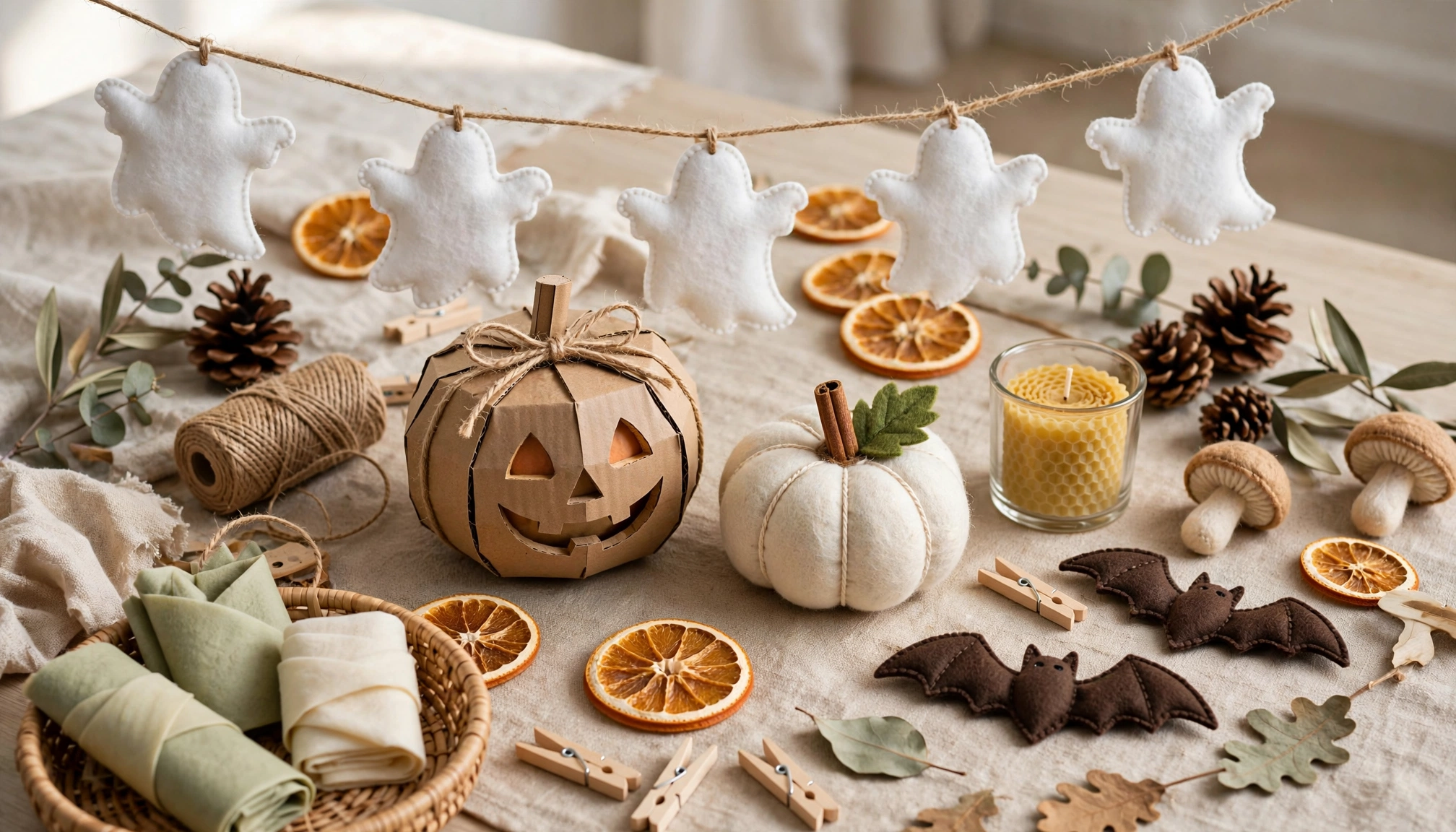
Choosing eco-friendly options reduces landfill waste, conserves resources, and teaches children about sustainability. It also saves money, as many projects use materials you already have or can find for free. You do not need to be an expert crafter, and sustainable options are not just brown and boring.
Easy DIY Eco-Friendly Halloween Decorations
These projects are simple, use readily available materials, and are fun for kids of all ages.
1. Cardboard Cutouts and Silhouettes
Cardboard is a versatile, free material. Most households have plenty of delivery boxes.
- Materials: Cardboard boxes, scissors, non-toxic paint (e.g., tempera or acrylic), paintbrushes, string or yarn.
- Cost: Essentially free, assuming you have boxes. Non-toxic paint costs $3-5 per bottle. FSC-certified recycled paperboard costs about $0.12 per 8.5x11 inch sheet if you buy it new.
- Time: 15-30 minutes per decoration, plus drying time.
- Instructions:
- Flatten cardboard boxes.
- Draw Halloween shapes: ghosts, bats, pumpkins, spooky trees, gravestones. Keep shapes simple for younger kids.
- Cut out the shapes. An adult should handle sharp scissors or box cutters.
- Kids paint the shapes. White for ghosts, black for bats, orange for pumpkins.
- Once dry, punch a hole at the top with a hole punch.
- Thread string through the hole to hang them from windows, doorways, or trees.
- Eco-Benefit: Uses recycled material, avoids new plastic production. Cardboard is easily recyclable or compostable after use.
2. Leaf Ghosts and Bats
Nature provides excellent, free craft supplies. This activity gets kids outdoors.
- Materials: Fallen leaves (large, flat ones work best), white non-toxic paint, black permanent marker, string.
- Cost: Free, except for paint and marker.
- Time: 10-20 minutes per ghost/bat, plus drying time.
- Instructions:
- Collect sturdy, dry leaves from your yard or a local park. Oak or maple leaves work well.
- For ghosts: Paint one side of the leaf white. Let it dry completely (10-15 minutes).
- For bats: Paint one side of the leaf black. Let it dry.
- Once dry, use a black marker to draw eyes and a mouth on the white ghosts.
- For bats, draw small white eyes and fangs.
- Attach a string to the stem or punch a small hole and thread string for hanging.
- Eco-Benefit: Uses natural, biodegradable materials. Leaves compost back into the earth.
3. Mason Jar Lanterns
These are reusable and create a warm, spooky glow.
- Materials: Empty glass jars (pickle, jam, spaghetti sauce jars work well), non-toxic paint (orange, white, black), paintbrushes, tea lights (LED preferred for safety).
- Cost: Jars are free if recycled. Paint costs $3-5. A pack of 12 LED tea lights costs about $10-15.
- Time: 20-40 minutes per jar, plus drying time.
- Instructions:
- Wash and dry jars thoroughly. Remove labels.
- Kids paint spooky faces (pumpkins, ghosts, Frankenstein monsters) directly onto the outside of the jars.
- Let the paint dry completely (30-60 minutes).
- Place an LED tea light inside each jar.
- Eco-Benefit: Reuses glass jars, which reduces demand for new glass production. LED tea lights are energy-efficient and reusable.
4. Fabric Scrap Garland
Use old clothes, sheets, or fabric scraps to make a colorful, reusable garland.
- Materials: Fabric scraps (old t-shirts, sheets, pillowcases), scissors, string or twine.
- Cost: Free if using existing scraps. Twine costs $3-5.
- Time: 30-60 minutes, depending on length.
- Instructions:
- Cut fabric into strips, about 1 inch wide and 6-8 inches long. Kids can help with fabric scissors.
- Tie each fabric strip onto a long piece of string or twine, leaving a small gap between each knot.
- Continue until the garland reaches the desired length.
- Hang across a mantel, doorway, or window.
- Eco-Benefit: Upcycles textile waste, reduces landfill burden. This garland is durable and reusable year after year.
5. Pinecone Spiders
Another nature-based craft that is simple and effective.
- Materials: Pinecones, black non-toxic paint, googly eyes (optional, but reusable), pipe cleaners (black or brown), non-toxic glue.
- Cost: Pinecones are free. Paint costs $3-5. Googly eyes cost $2-3 for a pack. Pipe cleaners cost $3-4 for a pack.
- Time: 15-25 minutes per spider, plus drying time.
- Instructions:
- Collect pinecones.
- Paint the pinecones black. Let them dry.
- Cut pipe cleaners into 3-4 inch segments. You need 8 segments per spider (4 for each side).
- Glue the pipe cleaner segments onto the sides of the pinecone as legs. Bend them slightly to look like spider legs.
- Glue googly eyes onto the front of the pinecone.
- Eco-Benefit: Uses natural, biodegradable materials. Pinecones can be composted. Googly eyes and pipe cleaners can be reused.
6. "Ghost" Milk Jugs
This project turns plastic waste into fun, glowing decorations.
- Materials: Empty, clean plastic milk jugs (gallon size works best), black permanent marker, string of LED fairy lights or small LED puck lights.
- Cost: Free if using recycled jugs. LED fairy lights cost $8-15.
- Time: 5-10 minutes per ghost.
- Instructions:
- Wash and dry milk jugs thoroughly.
- Draw ghost faces (eyes and a wavy mouth) on one side of each jug with a black permanent marker.
- Cut a small opening in the back or bottom of the jug, large enough to insert the LED lights.
- Place a string of LED fairy lights inside several jugs, or put one small LED puck light in each jug.
- Arrange them on a porch or walkway.
- Eco-Benefit: Repurposes plastic waste, extending its life before recycling. LED lights are energy-efficient.
Sustainable Material Choices: A Comparison
Choosing the right materials makes a big difference in the environmental impact of your decorations.
| Material Type | Cost (Approx. per unit) | Environmental Impact