Best Sustainable Living Subscription Boxes for 2027
Choosing a sustainable living subscription box in 2027 means navigating a market that has grown significantly, but also one where "greenwashing" remains a real concern. The goal is to find services that genuinely reduce your environmental footprint, offer value, and align with your actual needs, preventing unwanted items from piling up. We looked at services across various categories, focusing on transparency, product quality, packaging, and overall impact.
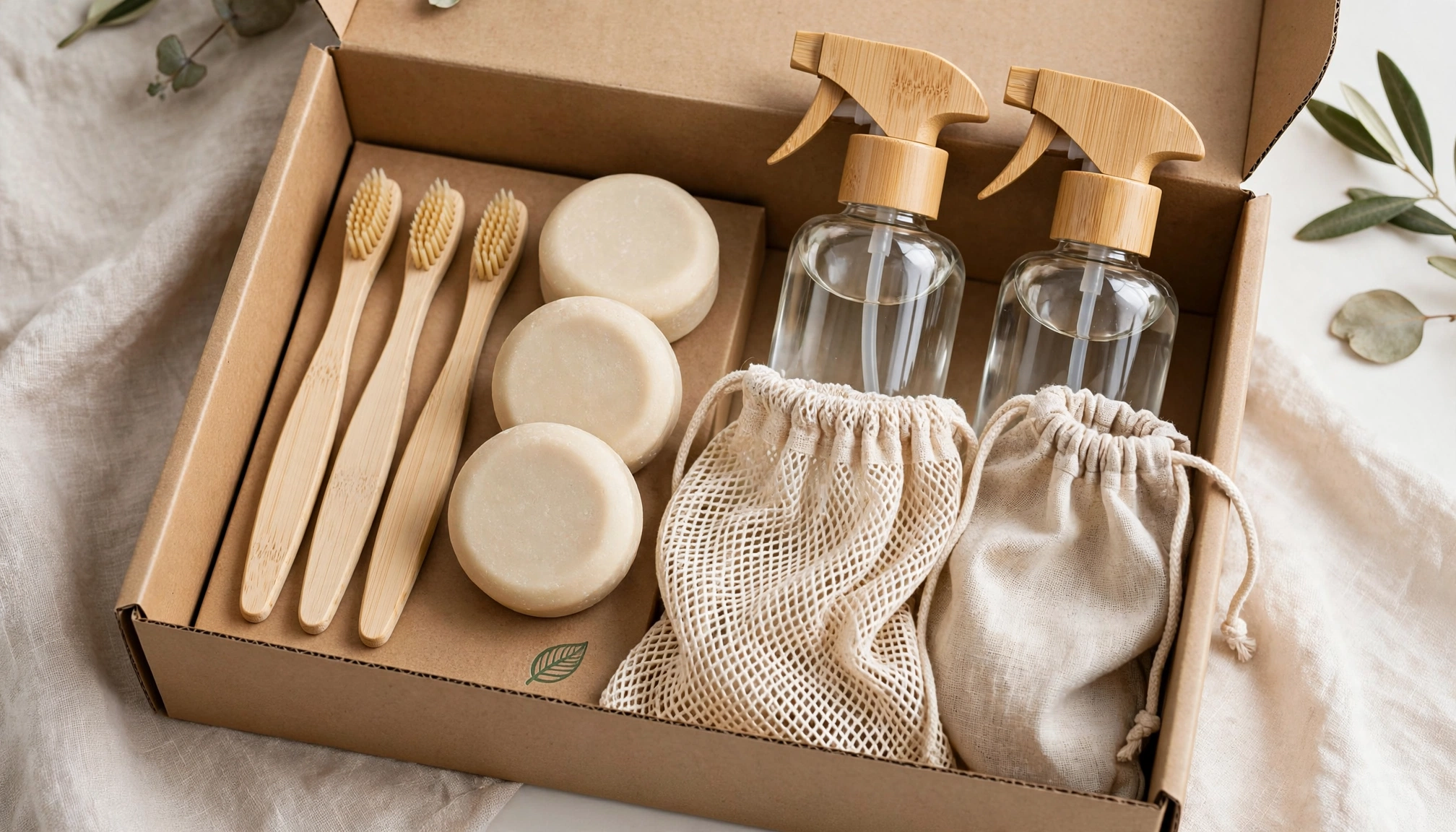
Assortment of eco-friendly cleaning products, personal care items, and reusable kitchen goods neatly arranged in a compostable box
1. Best for Zero-Waste Home & Cleaning: Grove Collaborative
Grove Collaborative has been a consistent leader in the eco-friendly home space. They offer a highly customizable model, which directly addresses the "things I don't need" problem. You build your own box from a wide selection of cleaning concentrates, personal care refills, and reusable household items.
What We Like:
- Customization: You choose every item. This prevents waste and ensures you only get what you use.
- Refill System: Many products come as concentrates or in refillable glass/aluminum containers. This significantly cuts down on single-use plastics.
- Packaging: Over 95% of their packaging is compostable or recyclable. They use recycled content for shipping boxes and paper-based internal packing.
- Carbon Neutral Shipping: Grove offsets 100% of its shipping emissions. A recent survey showed that 55% of consumers are willing to pay up to 15% more for products delivered via a certified carbon-neutral shipping method.
- B Corp Certified: Grove Collaborative is a certified B Corporation, meaning they meet high standards of verified performance, accountability, and transparency on factors from employee benefits and charitable giving to supply chain practices and input materials. B Lab Global provides details on B Corp Certification.
Trade-offs:
- You need to actively manage your cart to avoid unwanted auto-shipments.
- Some products, while better than conventional, still have complex ingredient lists. Always check individual product pages.
2. Best for Sustainable Personal Care: Ethique (via various retailers)
While not a traditional subscription box with a curated mix, Ethique specializes in solid personal care bars (shampoo, conditioner, body wash, face wash). Many retailers (like Amazon, Grove Collaborative, or direct from Ethique's site) offer subscription options for individual products. This focuses on a specific, high-impact area of waste reduction.
What We Like:
- Zero Plastic: All products are solid bars, eliminating plastic bottles entirely. Their packaging is compostable.
- Concentrated Formulas: Each bar is equivalent to 2-3 bottles of liquid product, meaning less water shipped and a longer-lasting product. A shampoo bar costs about $16 and lasts me 2-3 months, comparable to two high-quality liquid shampoos.
- Ethical Sourcing: Ethique uses sustainably sourced, palm-oil-free, and often fair-trade ingredients.
- Effectiveness: Their bars perform well; my hair felt clean and soft after switching.
Trade-offs:
- It's a single-brand focus, so you won't get a variety of sustainable products.
- Some people find the transition to solid bars takes getting used to.
3. Best for Eco-Friendly Food & Pantry Staples: Thrive Market
Thrive Market is an online membership-based retailer that offers organic, non-GMO, and sustainable groceries and household products at wholesale prices. While not a "box" in the curated sense, their auto-ship feature functions like a highly customizable subscription for pantry staples.
What We Like:
- Wide Selection: Thousands of products, including organic foods, snacks, cleaning supplies, and personal care items.
- Cost Savings: Members save an average of $30 per order compared to retail. The annual membership costs $59.95, which pays for itself quickly if you buy regularly.
- Dietary Filters: Easy to find products that fit specific diets (e.g., vegan, gluten-free, keto).
- Ethical Sourcing & Transparency: They vet products for ingredients and sourcing practices.
- Packaging: They prioritize recyclable and compostable packaging for their own brand products and shipping.
Trade-offs:
- Requires an annual membership fee.
- You still need to be discerning about what you buy; "natural" doesn't always equal "sustainable."
- Shipping can take 5-7 business days, so it's not for urgent needs.
4. Best for Curated Discovery & Gifting: Earthlove
Earthlove offers a quarterly subscription box focused on ethical, sustainable, and eco-friendly products for a holistic lifestyle. Each box has a theme and contains 6-8 full-size items, including beauty, wellness, home, and fashion accessories.
What We Like:
- Curated Experience: Great for discovering new brands and products you might not find otherwise.
- High Value: Boxes typically contain products worth over $100 for a subscription cost of $69.95 per quarter (roughly $23.30/month).
- Ethical Vetting: Products are vetted for being cruelty-free, vegan, non-GMO, and free from harsh chemicals.
- Donates to Charity: Each box supports an environmental cause.
- Packaging: Uses recyclable and compostable materials, including water-soluble packing peanuts.
Trade-offs:
- Less Customization: You get what they send, which can lead to unwanted items if not carefully chosen. This is a common user problem: "My 'eco-friendly' box keeps sending me things I don't actually need or use."
- Quarterly Delivery: Not suitable for regular replenishment of consumables.
- Higher upfront cost per box, though the per-item value is good.
Comparison Table: Sustainable Subscription Boxes 2027
| Feature | Grove Collaborative | Ethique (via retailers) | Thrive Market | Earthlove |
|---|---|---|---|---|
| Primary Focus | Home, Cleaning, Personal Care | Personal Care (Solid Bars) | Organic Groceries, Home | Curated Lifestyle Discovery |
| Average Monthly Cost | $45-$55 (customizable) | $12-$17 (for 3-4 items) | $35-$50 + $5/month membership | $23.30 (quarterly box $69.95) |
| Customization | High (you choose items) | High (you choose products) | High (you choose items) | Low (curated box) |
| Packaging | >95% Compostable/Recyclable | 100% Compostable | Prioritizes Recyclable/Compostable | Recyclable/Compostable |
| Shipping | Carbon Neutral | Varies by retailer | Carbon Neutral | Carbon Neutral |
| Certifications | B Corp | B Corp, Vegan, Cruelty-Free | B Corp, Organic, Non-GMO | Vegan, Cruelty-Free, Non-GMO |
| Waste Reduction | Refills, Concentrates | Eliminates Plastic Bottles | Bulk options, vetted products | Focus on Reusable, Ethical |
| Best For | Everyday household essentials | Reducing plastic in bathroom | Healthy pantry stocking | Gifting, discovering new brands |
What to Look For in a Truly Sustainable Subscription Box
The market for sustainable subscription boxes is projected to reach $3.8 billion globally by the end of 2026. With this growth, it's critical to distinguish genuine efforts from "greenwashing." Here's what to prioritize:
- Transparency in Sourcing: Does the company clearly state where their ingredients come from? Are they fair trade, organic, or locally sourced? Look for certifications like USDA Organic for food items USDA Organic Certification Program.
- Packaging Commitment: Approximately 68% of sustainable subscription boxes use compostable or recyclable packaging for over 90% of their contents. Look for companies that go beyond just "recyclable" and use post-consumer recycled content, compostable materials, or offer refill systems. Avoid excessive plastic.
- Product Efficacy & Need: The biggest user problem is receiving items you don't use. A truly sustainable box delivers products you need and will use. Prioritize boxes with customization options or those focused on essential consumables.
- Ingredient Scrutiny: Don't just trust "natural." Research ingredients. The National Institutes of Health (NIH) provides resources on chemical exposure in consumer products. Look for products free from parabens, phthalates, synthetic fragrances, and harsh chemicals.
- Carbon Footprint of Shipping: Many companies now offer carbon-neutral shipping by offsetting emissions. This is a significant factor, especially for heavier items.
- Certifications: Look for third-party certifications like B Corp, Leaping Bunny (cruelty-free), Ecocert, or EWG Verified. These indicate a commitment to higher standards. Consumer Reports offers guidance on evaluating eco-friendly product claims.
- Value for Money: The average monthly cost for a sustainable living subscription box in Q3 2026 is $42.75 USD. While sustainability often costs more, ensure the products are high quality and last. Compare the per-use cost, not just the upfront price.
Common Misconceptions About Sustainable Subscription Boxes
Misconception: All "sustainable" subscription